The Jinlin crater, a newly confirmed 900‑metre impact site in Guangdong, China, formed within the last 10,000 years. Scientists identified diagnostic planar deformation features in quartz — evidence of shock pressures of ~10–35 GPa — and used granite weathering rates to constrain the age. The impactor is estimated at ~30 metres across, and Jinlin is roughly three times larger than Russia's Macha crater, suggesting Holocene impacts may be more common than previously thought.
900‑Metre Jinlin Impact Crater Discovered in Guangdong — Formed Within the Last 10,000 Years

Giant, Very Recent Crater Confirmed in Southern China
Researchers have identified a 900‑metre‑wide, bowl‑shaped depression in Guangdong Province and confirmed it is an asteroid impact crater. The structure, now called the Jinlin crater, appears to have formed within the last 10,000 years — exceptionally recent in geological terms.
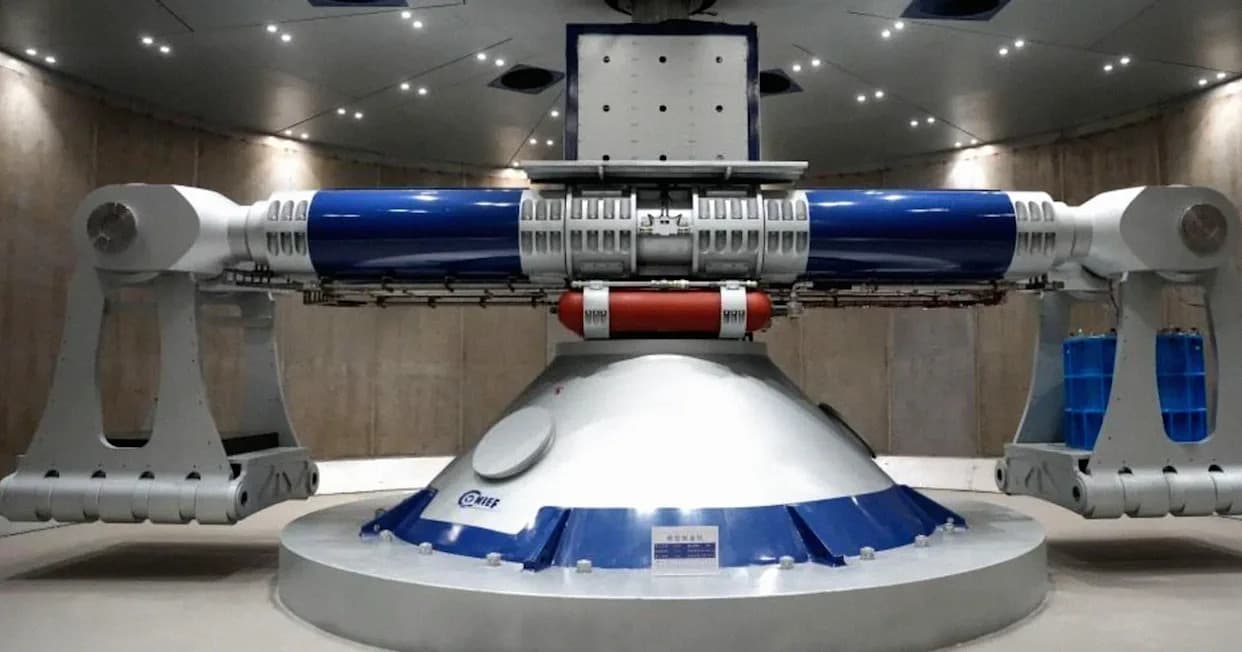
To verify an impact origin, scientists from China's Center for High Pressure Science collected mineral samples from the site. High‑velocity impacts generate shock waves that produce diagnostic microscopic damage inside minerals such as quartz and feldspar. These appear as planar deformation features (PDFs), structures that form only under extreme pressures on the order of roughly 10–35 gigapascals — conditions typically associated with extraterrestrial impacts.
The research team examined quartz from Jinlin and found paired shock‑damage textures that are considered definitive evidence of an impact event. That microscopic confirmation, combined with the crater's form, supports the conclusion that Jinlin was created by a meteor strike.
Jinlin's relatively intact rim is notable because Guangdong's wet climate and the loose, sandy material composing the rim normally encourage rapid erosion. The crater's preservation therefore suggests a recent age. To narrow that age estimate, investigators analyzed tiny granite fragments at the site. Under the local weathering conditions, granite of that size is expected to chemically break down into soil on a timescale of about 10,000 years. The persistence of some fragments smaller than ~30 cm implies the impact occurred less than 10,000 years ago.
Ming Chen: "The Jinlin crater shows that the scale of impacts of small extraterrestrial objects on the Earth in the Holocene is far greater than previously recorded."
From the crater dimensions, the team estimates the incoming meteor measured roughly 30 metres across. That size is tiny compared with the dinosaur‑killer asteroid but is substantially larger than the object that disintegrated over the Philippines in recent years. The impactor's composition has not yet been determined.
Jinlin is about three times the diameter of Russia's Macha crater, which until now was regarded as the largest confirmed Holocene impact site. Although there were no written records from 10,000 years ago, people lived in the Guangdong region at the time and may well have witnessed a dramatic atmospheric and ground event associated with the impact.
The discovery highlights that relatively small but still destructive extraterrestrial impacts occurred in the Holocene more frequently than previously recognized and underscores the scientific value of searching for well‑preserved, young craters.
Help us improve.