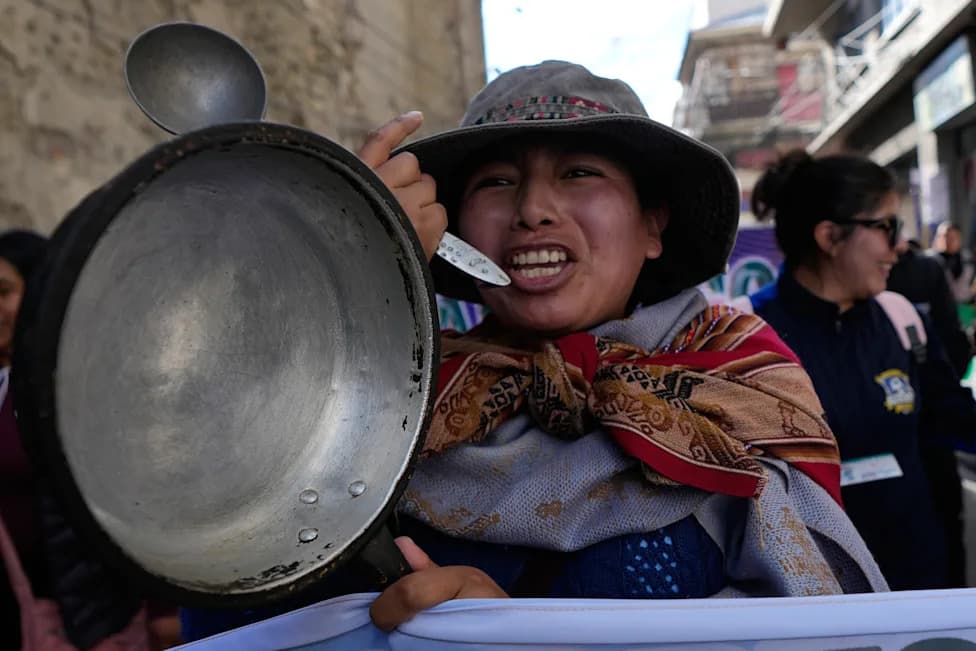
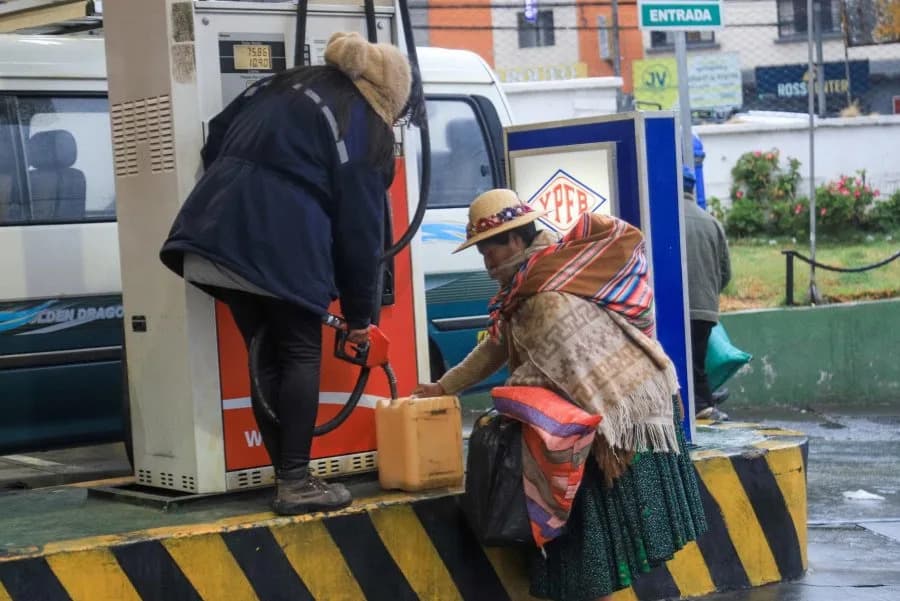
Bolivia is facing shortages of the heavily subsidized marraqueta roll, putting immediate pressure on President Rodrigo Paz as bakers struggle with delayed state flour imports and rising costs. The roll's price has been fixed for 17 years and customers say its size has shrunk from about 100g to 60g, with long queues forming. EMAPA halted flour deliveries after missed payments, and while Paz has pledged subsidy reform, officials warn changes are technically complex and politically sensitive.
Bolivia's Marraqueta Shortage Puts President Paz's Subsidy Plans to an Early Test

Shortages of Bolivia's state-subsidized marraqueta roll have become an immediate challenge for newly inaugurated President Rodrigo Paz as dwindling wheat supplies and rising costs squeeze bakers and anger consumers across the country.
Bakers say delays in government-imported flour and other supply shortfalls have made it difficult to meet demand for the iconic roll, whose retail price has been kept fixed for 17 years under the previous administration. Many customers report the marraqueta has shrunk from about 100 grams two years ago to roughly 60 grams today, while some shoppers queue for hours.
Local impact: Bolivia imports roughly three-quarters of its wheat, mainly from Argentina, leaving the country exposed to regional supply disruptions and payment delays. State-run food agency EMAPA suspended flour deliveries in September after the state was unable to pay suppliers on time, forcing some bakeries to cut production or halt bread sales altogether.
Baker Roberto Rengel said he had still not received the ingredients promised by the state supplier for September. "The subsidy is killing us," he said. Some vendors have shifted to higher-priced items such as cheese-filled buns called sarnitas because they offer better margins, while others have stopped selling bread entirely.
Political and economic context
Years of state-led policies and nationalizations under the previous leftist government discouraged foreign investment and strained public finances. Bolivia, a major producer of natural gas and agricultural products, is now grappling with one of its worst economic crises in decades, complicating any immediate fixes to subsidized basic goods.
Paz, who assumed office on November 8, has pledged to reform broad subsidy programs that cover energy, transport and staple goods, but he has so far avoided sweeping changes. Economy Minister Jose Gabriel Espinoza said the government is considering cutting some subsidies, such as for diesel, but offered no concrete timetable or details for other key items.
"Subsidies create distortions and blind price signals, leading people to believe cheap bread and cheap fuel are entitlements," said Gonzalo Chavez, an economist at Universidad Catolica Boliviana, warning that removing subsidies is technically complex and politically risky.
Street vendor Natividad Zabala summed up ordinary concerns: "If bread goes up, everything goes up." That fear underscores the political sensitivity of any reform that raises costs for low-income households.
For President Paz, the marraqueta shortage is both a practical crisis—keeping a staple food on the shelves—and a symbolic test of whether he can balance fiscal repair with social stability. Short-term measures to ensure flour deliveries and smoother supplier payments will be crucial while longer-term subsidy reforms are designed and communicated to the public.
Reporting by Lucinda Elliott (Montevideo) and Monica Machicao (La Paz); Edited by Daina Solomon and Lisa Shumaker.
Help us improve.