
Bolivian Indigenous women — often called cholitas — have reclaimed the layered pollera skirt as a powerful symbol of cultural pride and practical identity, wearing it while climbing peaks, working in mines and playing sports. While the skirt affirms roots and resilience, the recent shift to a center-right government has raised concerns: officials have removed Indigenous symbols like the wiphala from some state spaces, and ex-President Luis Arce was recently arrested on allegations of fund misuse. Despite uncertainty, cholitas say they will continue to press the new administration for recognition and rights.
Cholitas Turn the Pollera Into a Symbol of Strength and Identity

Fernanda Romero wrestles during a ticketed wrestling show in El Alto, Bolivia, Saturday, May 3, 2025. (AP Photo/Juan Karita)(ASSOCIATED PRESS)
Before setting out for the wide white expanse of the high Andes, Ana Lia González Maguiña took stock of her gear: a chunky sweater to guard against the chill, a harness and climbing rope to scale a 6,000-meter summit, aviator glasses to shield her eyes from the intense highland sun — and, most importantly, a billowing hot-pink skirt.
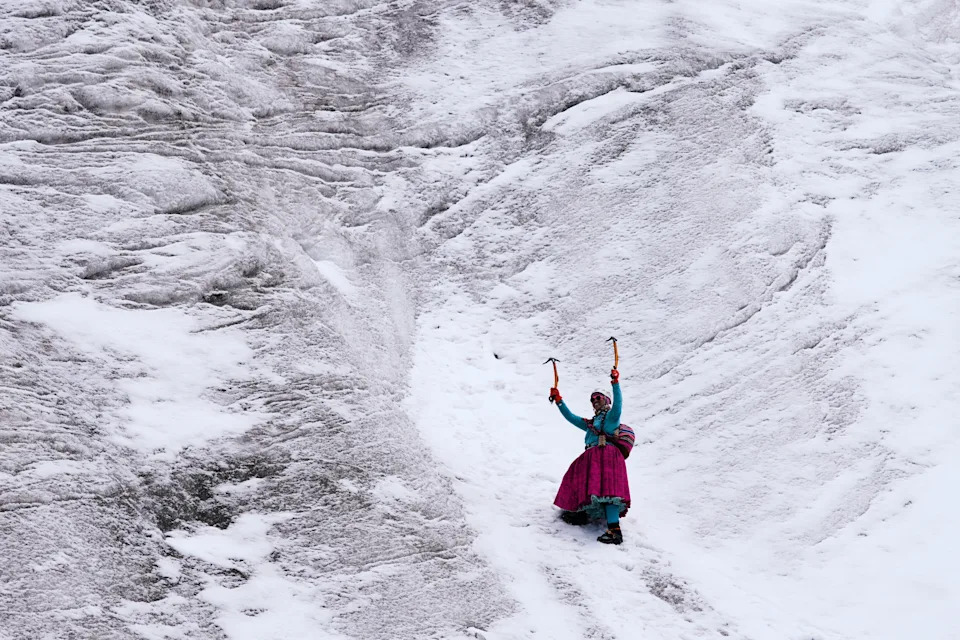
Mountain guide Ana Lia Gonzales climbs the Huayna Potosí glacier near El Alto, Bolivia, Monday, April 14, 2025. (AP Photo/Juan Karita)(ASSOCIATED PRESS)
The bell-shaped garment with layered petticoats — the pollera (pronounced po-YEH-rah) — is the traditional dress of Indigenous women in Bolivia's highlands. Though the pollera was imposed centuries ago by Spanish colonizers, women here have long remade it in vivid fabrics and patterns and reclaimed it as a visible emblem of identity and pride in Bolivia, the region’s only Indigenous-majority country.

FILE - Voters stand in line at a polling station during general elections in Jesus de Machaca, Bolivia, Aug. 17, 2025. (AP Photo/Juan Karita, File)(ASSOCIATED PRESS)
A Skirt of Work, Sport and Cultural Pride
Far from being a hindrance, many Andean Indigenous women — often called cholitas — wear polleras while doing physically demanding work and sports. Climbers, miners, skaters, soccer players and wrestlers describe the skirt as empowering rather than limiting.
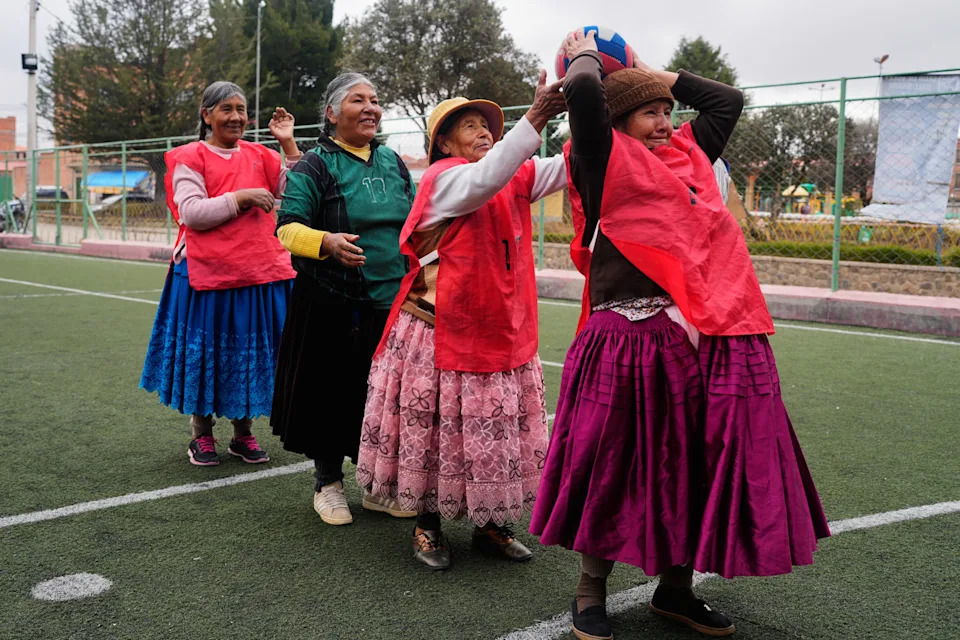
FILE - An Aymara grandmother passes the ball during a warm up before the start of a handball match in El Alto, Bolivia, Dec. 9, 2025. (AP Photo/Juan Karita, File)(ASSOCIATED PRESS)
“Our sport is demanding, it’s super tough. So doing it in pollera represents that strength, it’s about valuing our roots,” said González Maguiña, 40, a professional mountaineer standing beneath the snow-capped Huayna Potosí peak north of La Paz. “It’s not for show.”
Similarly, Macaria Alejandro, a 48-year-old miner in Oruro, described wearing her pollera on the job as a statement for her family and community. “I work like this and wear this for my children,” she said, her skirt marked by the dust of a day underground.
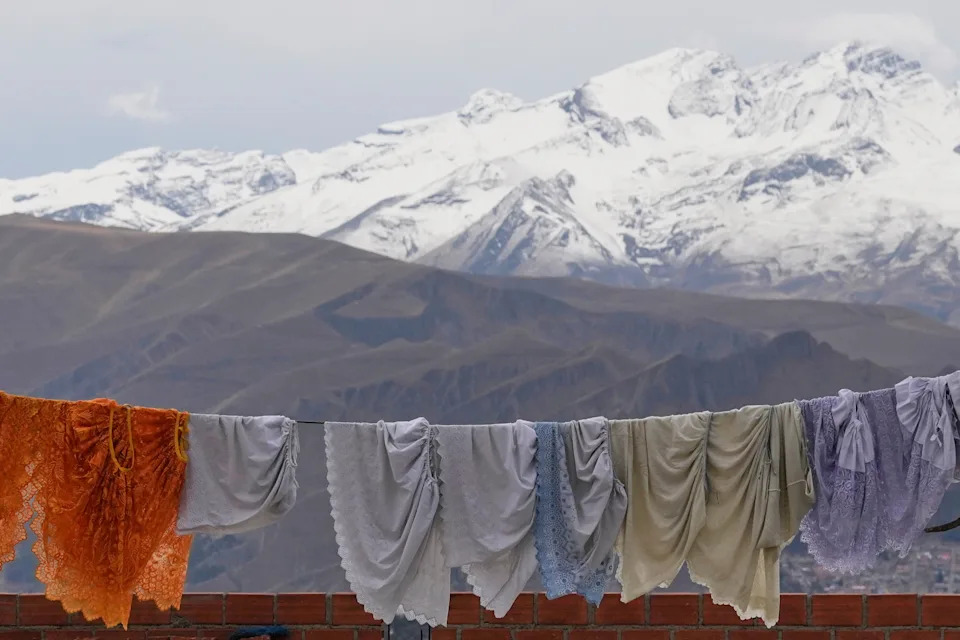
Skirts hang drying in El Alto, Bolivia, Monday, Oct. 13, 2025. (AP Photo/Juan Karita)(ASSOCIATED PRESS)
Politics, Symbols and Uncertainty
The recent change in Bolivia’s national government has left many cholitas anxious about the future of the visibility and rights they achieved in the past two decades. Center-right President Rodrigo Paz took office amid economic turmoil, ending an era defined by the leadership of Evo Morales (2006–2019), Bolivia’s first Indigenous president. Morales’ administration adopted a new constitution, renamed the country the Plurinational State of Bolivia and elevated Indigenous symbols — including formal recognition of the wiphala — into national life.
Support for Morales’ Movement Toward Socialism eroded in subsequent years, and political turmoil intensified with the recent arrest of ex-President Luis Arce on allegations that he misused funds designated for Indigenous programs. Some cholitas worry the new administration will not prioritize Indigenous representation: they point to symbolic changes such as the military’s recent removal of Indigenous elements from its logo and the decision to stop flying the wiphala from the presidential palace.
“I feel like the government won’t take us into account,” Alejandro said. “We needed a change. The economy must get better. But it’s sad to see there are no powerful people wearing polleras. I see it as discrimination.”
Still, many women expressed determination rather than resignation. “We already have the strength and everything that comes with it,” González Maguiña said. “We’re certainly going to knock on the doors of this new government.” Their message is clear: the pollera today is both a practical garment and a political statement — a visible reminder that Indigenous women will continue to claim space in Bolivia’s social, cultural and political life.
Follow AP’s coverage of Latin America and the Caribbean at https://apnews.com/hub/latin-america


