
Two days after reported US airstrikes and the detention of President Nicolás Maduro, Caracas streets were unusually quiet but residents still shopped for essentials amid rising prices and long queues. Vendors closed stalls at some markets and police patrolled to keep order while shoppers stocked non-perishables such as corn flour, rice and canned goods. Shoppers reported sharp price increases — powdered milk around $16/kg and eggs about $10 per carton — as the government declared a state of emergency following the strikes that reportedly killed at least 80 people.
Price Hikes, Long Queues and Fear: Caracas Shoppers Uneasy After US Airstrikes and Maduro’s Abduction

Many stores in Caracas were shuttered in the aftermath of the US attack, for fear of further military action and looting [Julio Blanca/Al Jazeera]
Caracas was unusually quiet two days after reported US airstrikes and the detention of President Nicolás Maduro, but many residents still ventured out to buy food and essentials — often facing higher prices and long queues.
Situation In The Capital
The normally noisy streets of Caracas fell into an uneasy hush on Monday. Despite official calls to maintain regular economic activity, some shops remained closed and households stocked up on staples amid fears of further unrest or supply interruptions.
Markets and Shops
At the central Quinta Crespo market, several vendors shuttered their stalls citing concerns about looting and instability. Where shops stayed open, lines of 10 or more people were common under the midday sun, and officers from the Bolivarian National Police patrolled outside to keep order.
What Shoppers Say
Many shoppers told reporters they were prioritising non-perishable basics such as corn flour, rice and canned goods in case the security situation deteriorates. "I’m looking for basic necessities, given the situation the country is going through," said Carlos Godoy, 45, from the western Caricuao district. "We are waiting to see what happens. We are all in suspense, in uncertainty."
"Prices are high. A carton of eggs is selling for $10, which is beyond normal," said Alexandra Arismendi, who works at a mobile phone shop in the Sambil mall.
Shoppers reported steep price increases on some items: one person cited powdered milk at around $16 per kilogram, while others pointed to rising costs for hygiene and household goods.
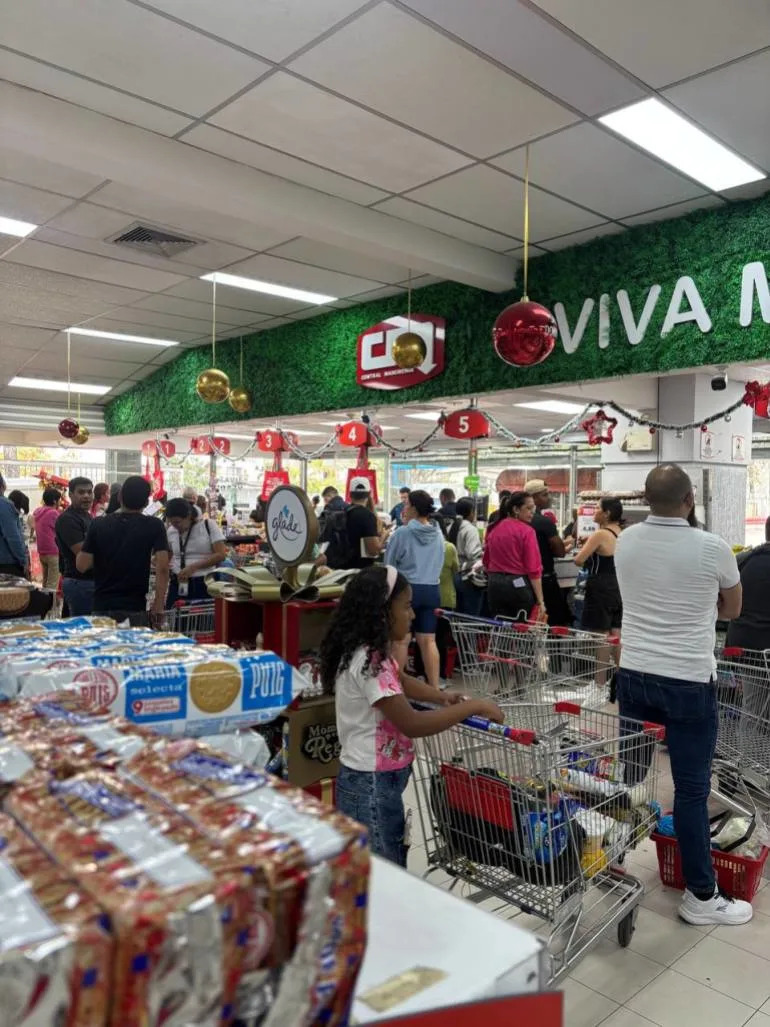
Some shoppers in Caracas stocked up on essential supplies, in case of continued unrest [Julio Blanca/Al Jazeera]
Daily Life and Mobility
The usually busy Sambil mall was notably quiet. Some employees avoided public transport and travelled by taxi. Foot traffic and sales slowed as people remained cautious about leaving home amid the uncertain security outlook.
Economic Context
Venezuela has endured years of volatile price spikes and persistent shortages. Experts typically blame a mix of government mismanagement, corruption, international sanctions and the collapse of global oil prices for the country’s economic distress. By 2018 inflation exceeded 130,000 percent according to the central bank, and the COVID-19 pandemic compounded shortages of food and medical supplies. The government has not published updated official inflation figures since the disputed 2024 presidential election.
Military Action and Political Response
Early on Saturday, the administration of US President Donald Trump reportedly conducted strikes against military targets in Caracas, Aragua, Miranda and La Guaira. An anonymous Venezuelan official quoted by The New York Times said at least 80 people died in the attacks. The US operation concluded within hours, and President Trump warned a "second wave" of strikes could follow if demands were not met.
Venezuelan authorities declared a state of emergency and launched a national search for those they say supported or promoted the attack. The government has insisted that Maduro remains the country's leader despite his detention.
Outlook
It remains unclear how quickly normal life will resume in Venezuela. For now, residents are cautious: lines form at open stores, some markets remain closed, and many are buying non-perishables while bracing for possible shortages or further escalation.


