The California Current and the adjacent Salish Sea have acidified faster than most of the global ocean, according to a Nature Communications study. Modeling and chemical analyses of historical and modern corals show coastal CO2 increases outpacing the atmosphere by roughly 50% in the California Current and about 40% in the Salish Sea. Under a high-emissions scenario, impacts on shell-forming species and regional fisheries could arrive decades earlier than expected, highlighting the need for stronger emissions cuts and expanded coastal monitoring.
California Coast Is Acidifying Faster Than Most Oceans — Marine Life Could Be Impacted Decades Sooner

New research published in Nature Communications finds that coastal waters along the California Current — the band of ocean flowing south from British Columbia to Baja California — and the adjacent Salish Sea are acidifying more rapidly than most of the global ocean. Under a high-emissions scenario, these coastal regions could become far less hospitable to shell-forming organisms and fisheries much earlier than previously expected.
Key findings
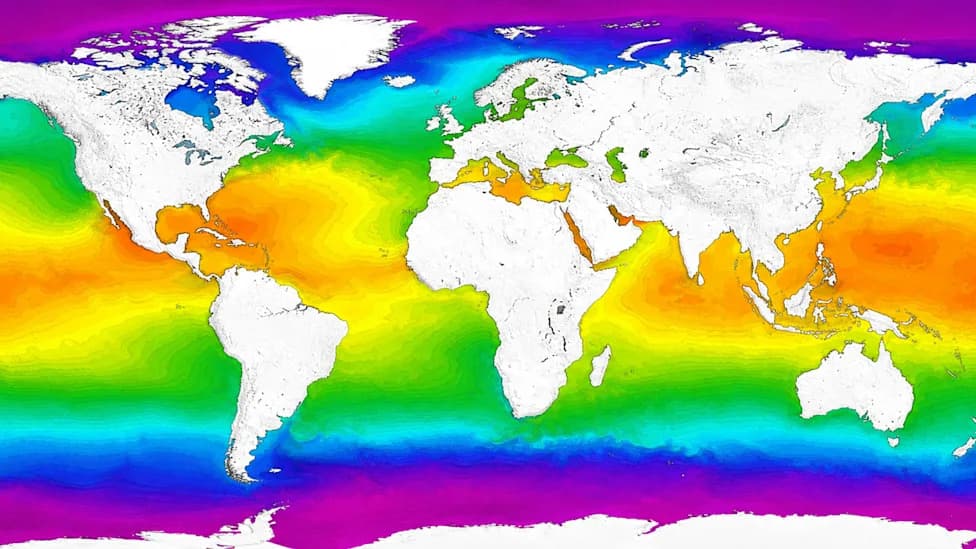
Climate-model simulations and chemical analyses show that carbon dioxide (CO2) accumulation in the California Current system has outpaced atmospheric CO2 increases by roughly 50% on average over the past century; in the Salish Sea the excess is about 40%. These rates are amplified compared with open-ocean regions, which have generally taken up CO2 at about the same pace as the atmosphere.
How the researchers reached these conclusions
The team combined climate-model projections run under a worst-case greenhouse-gas pathway with a historical chemical record. Scientists analyzed coral samples collected by the research vessel Albatross between 1888 and 1894 and compared them with modern corals from the same Salish Sea sites collected in 2020. They measured boron isotopes and other proxies that record seawater acidity when corals formed, enabling a direct comparison of past and present ocean chemistry.
Why this region is especially vulnerable
Upwelling — a natural process that brings deep, nutrient- and CO2-rich water to the surface — fuels high productivity along the California Current but also makes these coastal waters intrinsically more acidic than the open ocean. Because the baseline acidity is higher, the system appears more sensitive to additional atmospheric CO2, which helps explain the amplified acidification observed in the study.
Impacts and timeline
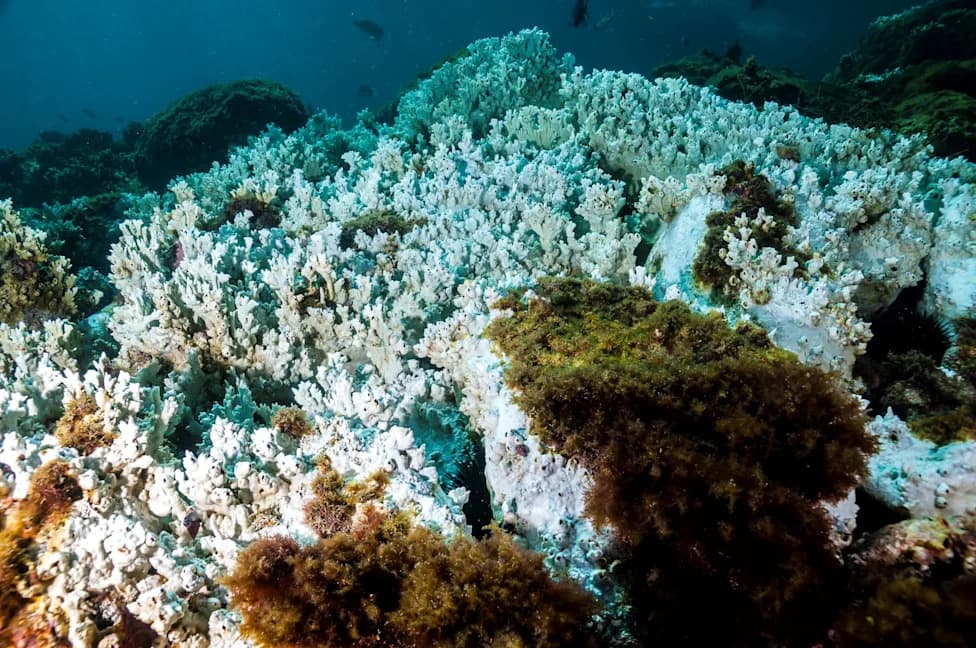
Acidification reduces the availability of carbonate ions needed by calcifying species such as oysters, Dungeness crabs and corals to form shells and skeletons. The authors warn that, if high emissions continue, harmful effects on marine species and fisheries could appear decades earlier than expected — potentially in the 2050s–2070s for some impacts.
“This region is sitting at the leading edge of ocean acidification impacts,” said Mary Margaret Stoll, a co-author and recent Ph.D. in oceanography at the University of Washington. “It provides a window into future conditions predicted in the coming decades for the rest of the ocean.”
Caveats and future research
The projections use an extreme emissions pathway that assumes large increases in coal use; mitigation efforts since the study’s scenario was developed make that specific pathway less likely. Nonetheless, experts say the exercise is valuable for mapping possible upper bounds of change. Future work should examine outcomes under more moderate emissions scenarios and expand coastal monitoring to improve forecasts and inform management responses.
What this means for communities and ecosystems
Researchers and outside experts emphasize the need for sustained observation, reductions in CO2 emissions, and local actions to reduce pollution and other stressors on coastal ecosystems. Even incremental steps to cut emissions and protect coastal habitats can help reduce cumulative impacts on vulnerable marine life and regional fisheries.
Sources: Study published in Nature Communications; coral analyses from samples collected by the research vessel Albatross; expert commentary from study authors and independent oceanographers.
Help us improve.