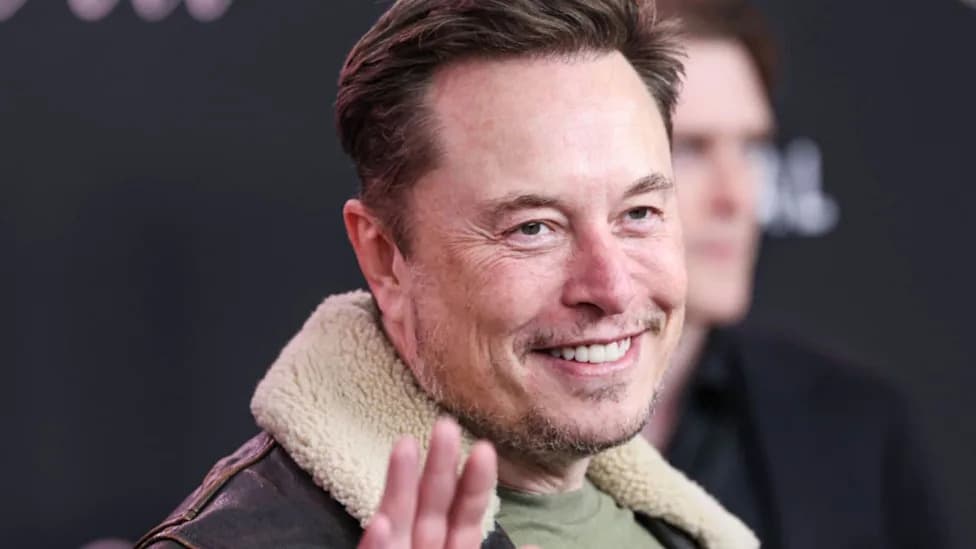
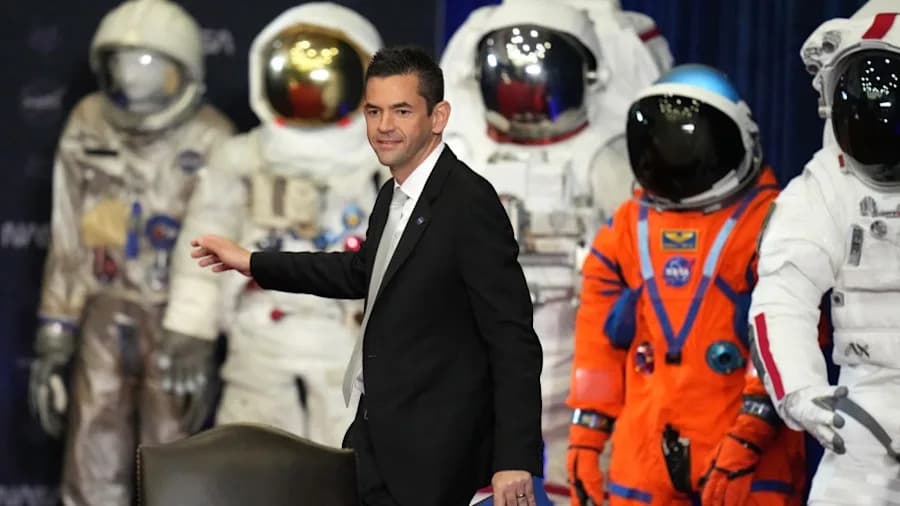
Elon Musk treats Mars as an insurance policy against existential threats and pushes for an ambitious, phased timeline that could support roughly 1 million settlers by 2044. Jeff Bezos rejects the idea of abandoning Earth, arguing "there is no plan B" and advocating moving heavy industry off-planet and building lunar infrastructure as a springboard. Their split highlights two strategic choices for private spaceflight: prioritize a self-sustaining off-world colony, or preserve Earth while industrializing space.
Musk vs Bezos: Mars as Humanity’s Lifeboat — or Save Earth First?

Two of the private space sector's most prominent figures share an interest in expanding humanity beyond Earth — but they disagree sharply on purpose, priority and strategy. Elon Musk sees Mars as an existential insurance policy; Jeff Bezos wants to protect and restore Earth while using space to relieve pressure on the planet's environment and industry.
Elon Musk: Make life multiplanetary
Elon Musk, founder and CEO of SpaceX, argues that establishing a self-sustaining human presence off Earth is essential for the long-term survival of civilization. He has framed Mars as more than an exploration objective — it is an insurance policy against catastrophic risks ranging from nuclear war and runaway artificial intelligence to far-future astrophysical threats. Musk has been explicit: as he wrote on X, "become multiplanetary or die. That is the choice we face."
Musk has pushed increasingly specific timelines and logistics. At SXSW in 2018 he warned that a seed of human civilization off Earth would help recover humanity after a global catastrophe. In July 2024 he told SpaceX employees he expects on the order of 1 million people living on Mars by 2044, supported by more than 1,000 Starship launches. Musk has described a phased approach: send robotic systems (including Optimus robots), follow with uncrewed cargo missions, validate safety and life-support systems, and then transport people.
Jeff Bezos: Protect this planet, industrialize space
Jeff Bezos, founder of Blue Origin, supports space development but rejects the premise that Earth must be abandoned. Speaking at the New York Times DealBook Summit, Bezos pushed back on the notion of an "escape hatch from Earth":
"No. First of all, there is no plan B. We have to save Earth."
Bezos proposes a complementary strategy: move heavy, polluting, and resource-intensive industry off-planet so Earth can recover and remain livable. His plan emphasizes building infrastructure on the Moon — where lower gravity and accessible water ice could support fuel production and logistics — and using lunar facilities as a staging hub for deeper solar-system missions. A Blue Origin colleague has likened the Moon to an airport hub: a layover en route to farther destinations.
Where they converge — and where they clash
Both entrepreneurs drive investment in rockets, habitats and robotics, but their priorities differ. Musk prioritizes rapid establishment of an independent, self-sustaining colony on Mars as a hedge against extinction. Bezos prioritizes preserving Earth while shifting the dirtier side of industry into space and using lunar infrastructure to enable broader exploration.
The disagreement is philosophical and practical: Musk warns that waiting too long risks a collapse of the technological base required for interplanetary travel, potentially ending the chance for a multiplanetary civilization. Bezos counters that Earth is uniquely suited for life and culture and must be protected — "this is the good one," as he put it.
Why the debate matters
Their competing visions will shape where private capital, engineering talent and political influence flow: toward building a self-sustaining colony on Mars, or toward developing orbital and lunar infrastructure that relieves Earth’s environmental burden. The outcome will affect timelines for crewed missions, the kinds of technologies prioritized (closed-loop life support versus large-scale off-world manufacturing), and broader societal choices about conservation versus expansion.
Ultimately, the debate between salvaging a single home and building a distributed civilization is not purely technical — it reflects differing beliefs about human nature, risk tolerance, and stewardship of our planet. Both approaches aim to extend humanity's reach; they simply disagree on the route and the near-term trade-offs.
Help us improve.