The North Dakota Geological Survey announced the discovery of a partial Tyrannosaurus rex in Bowman County, first found in September 2024 and publicly revealed in November 2025. Researchers have recovered nine to ten bones, including vertebrae, part of the tail, a tooth and an ankle, and say it is only the third partial T. rex found in the state. The agency also reported two mammoth finds: one beneath a garage with vertebral grooves indicating severe illness, and a 7-foot tusk found at a coal mine in 2023 likely from a Columbian mammoth. All specimens will be prepared for research and eventual public display.
Rare T. rex Unearthed in North Dakota; Two Mammoth Finds Offer New Scientific Clues

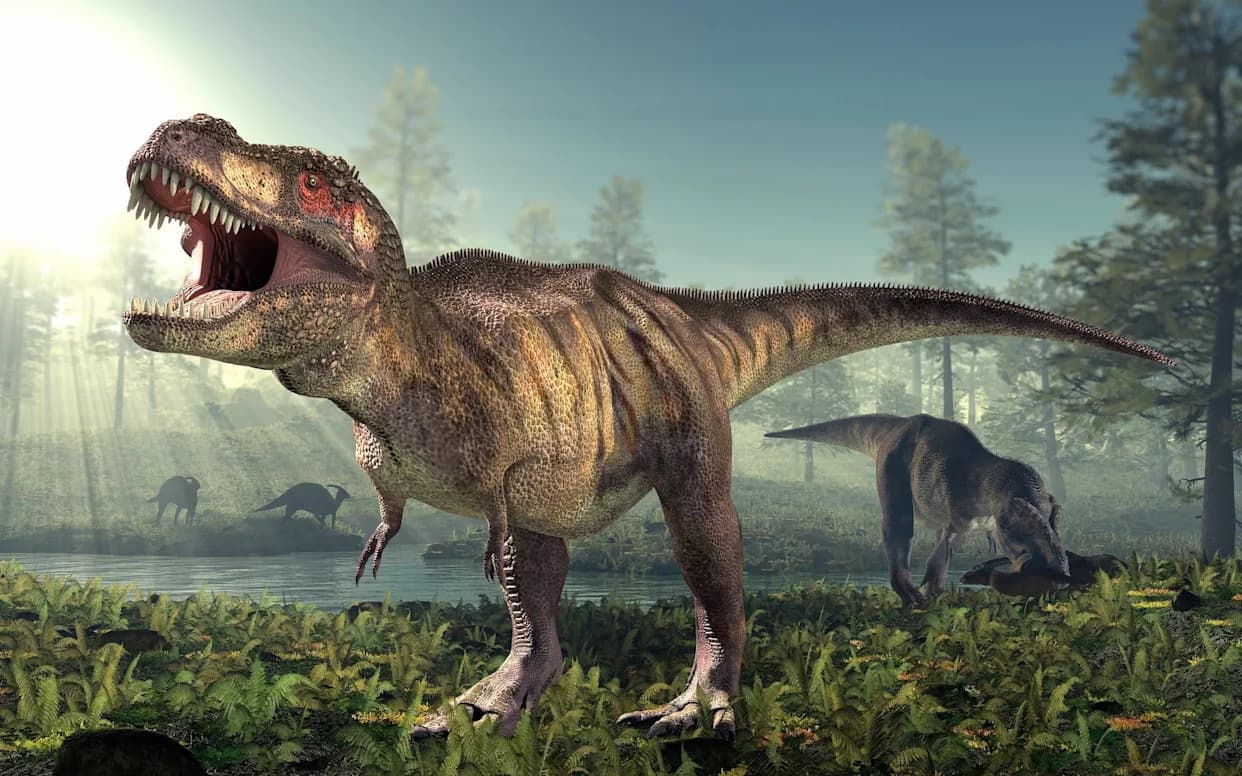
The North Dakota Geological Survey has announced a rare and significant fossil discovery: a partial Tyrannosaurus rex skeleton uncovered at a dig site in southwest North Dakota. State Paleontologist Clint Boyd revealed the find during a North Dakota Industrial Commission meeting in late November 2025.
T. rex discovery
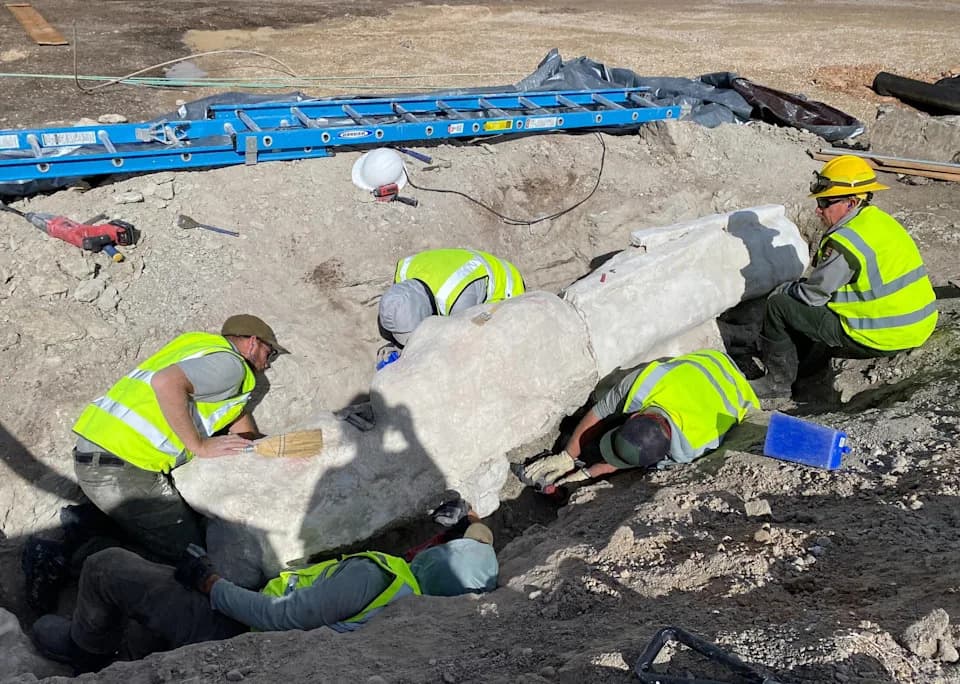
Researchers first encountered the T. rex bones in September 2024 while searching for crocodile fossils in Bowman County. Because the field season was ending, full-scale excavation resumed the following year. So far, the team has recovered nine to ten bones, including vertebrae, part of the tail, a tooth and an ankle bone. Boyd believes this is only the third partial T. rex skeleton documented in North Dakota.
"Any T. rex specimen that you find that's got more than five or six bones is a significant discovery because the animal's so rare," Boyd said.
Two mammoth sites
The Geological Survey also provided updates on two separate mammoth excavations. One specimen was discovered beneath a residential garage in northwest North Dakota; the other was exposed by coal miners near Beulah on Memorial Day weekend 2023.
Garage specimen
The garage mammoth shows deep grooves on its vertebrae that are consistent with severe malnutrition or a chronic bone disease. Such deformities are uncommon in North American mammoths and have been reported mainly in Asian and European finds. In addition to the mammoth bones, researchers have recovered small-mammal remains from the same site, raising the possibility of reconstructing a broader local ecology.
Coal-mine specimen
Coal miners uncovered a roughly 7-foot tusk in 2023. That tusk has recently completed nearly a year of cleaning and preservation. Investigators have also identified a hip bone, a shoulder blade and several ribs at the coal-mine site. Based on the tusk's shape, Boyd says the animal was likely a Columbian mammoth rather than a woolly mammoth.
Significance and next steps
Both the T. rex and the mammoth discoveries are expected to yield valuable scientific information about pathology, paleoecology and regional faunal diversity. The specimens will be prepared for study and, eventually, for public display in the state's fossil collection.
Source: Clint Boyd, State Paleontologist (findings presented to the North Dakota Industrial Commission).
Help us improve.