Underwater archaeology continues to deliver remarkable discoveries, from Pavlopetri’s 5,000-year-old submerged settlement to medieval spearheads in Poland and dugout canoes in Wisconsin that date back millennia. Recent notable finds include a million-year-old mastodon tusk off Florida, recovered Saturn V rocket hardware from the Atlantic, and a cone-shaped underwater mountain near Guatemala. Together, these discoveries show how lakes and oceans uniquely preserve ancient life and human history.
15 Astonishing Discoveries Hidden in Lakes and Oceans Around the World

From ancient submerged cities to millennia-old canoes and shipwrecks packed with treasure, lakes and oceans continue to yield extraordinary finds. Many of these discoveries were recovered from deep, hostile environments using specialized diving teams, submersibles, and careful archaeological methods.
- Pavlopetri, Greece — The submerged settlement off Greece’s southern coast discovered in 1967 is widely regarded as the oldest known underwater city, with urban structures that date back more than 5,000 years.
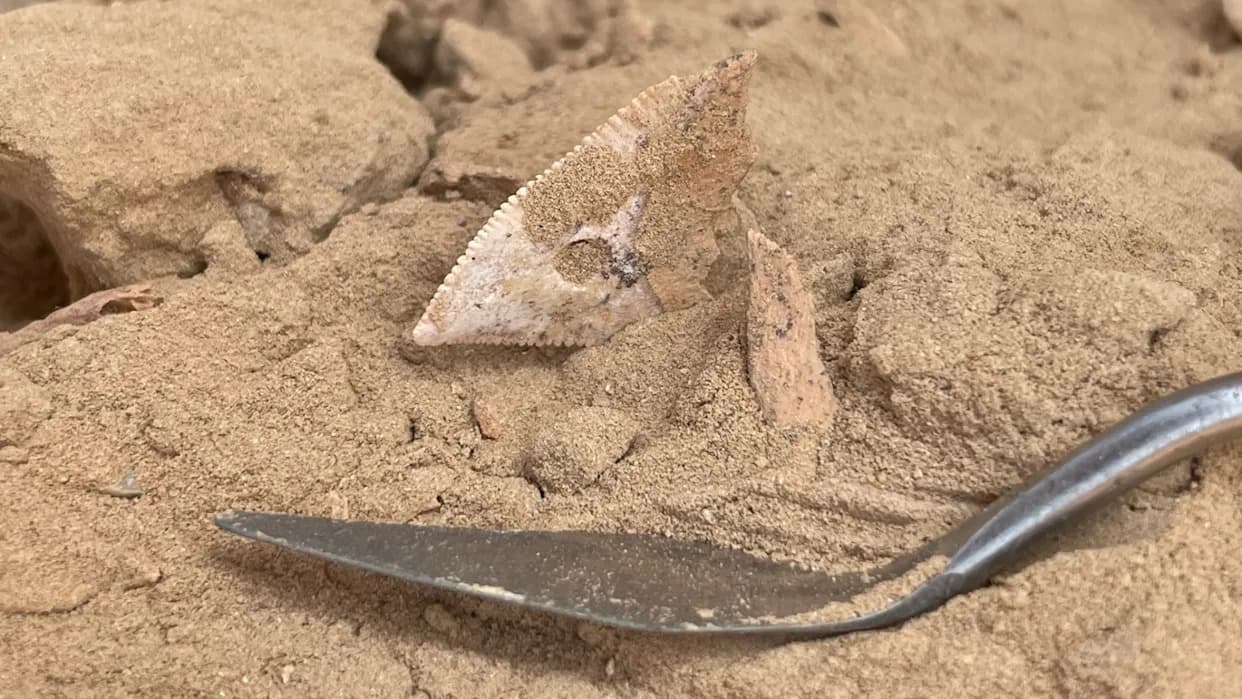
- Medieval spearheads, Lake Lednica (Poland) — Underwater archaeologists recovered four medieval spearheads, one gilded and elaborately decorated, suggesting it may once have belonged to a noble or princely owner.
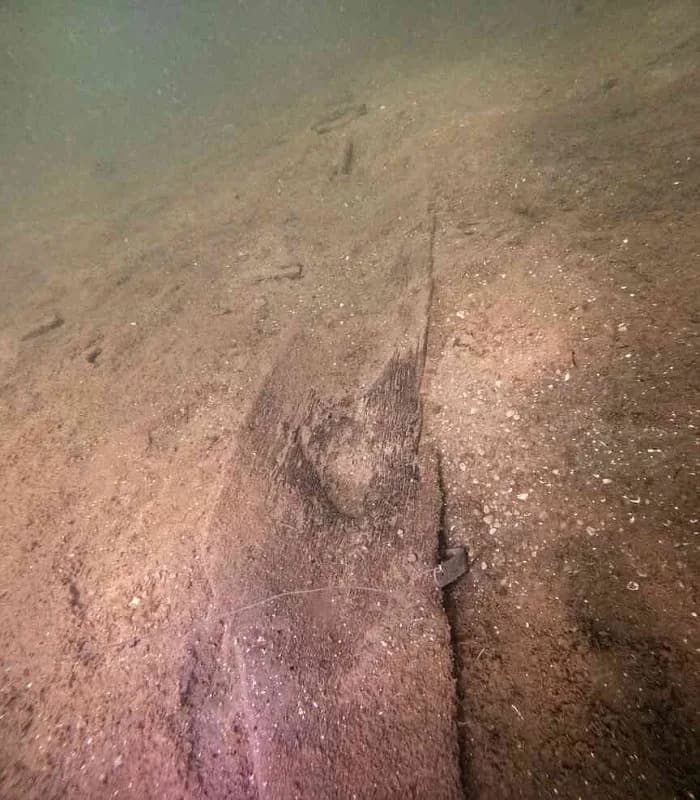
- Dugout canoes, Lake Mendota (Wisconsin) — In 2021–2022 the Wisconsin Historical Society and Native Nations partners raised two ancient dugout canoes dated to about 1,200 and 3,000 years old. Survey teams subsequently identified additional canoes in the lakebed; the collection will be displayed at the Wisconsin History Center when it opens.
- Yucatán sinkhole human remains (Mexico) — A collapsed sinkhole discovered in 2014 preserved elongated skulls and other human remains. Some researchers interpret these as evidence of ritual activity in the ancient Maya world; the site is also the subject of local lore.
- Mastodon tusk off Venice, Florida — In April 2024, diver Alex Lundberg found a roughly 4-foot, 60-pound mastodon tusk about a half-mile offshore. The fossil is estimated at around one million years old.
- Apollo-era rocket hardware recovered — A 2013 expedition funded by a private backer recovered large rocket components from the Saturn V used in the Apollo 11 mission, which had rested on the Atlantic seabed for decades.
- Underwater mountain near Guatemala — Seafloor mapping in November 2023 revealed a cone-shaped, 5,250-foot-tall submarine mountain covering roughly 5.4 square miles, the remains of an ancient underwater volcano.
- Mysterious golden orb, Gulf of Alaska — In September 2023 NOAA researchers dredged a golden orb from 10,825 feet depth. Initial analysis indicated a biological origin, but the specimen disintegrated when raised, leaving scientists puzzled.
- Battle of the Egadi Islands artifacts (off Sicily) — Archaeologists working off Sicily recovered battering rams, helmets, armor fragments and weapons tied to the 241 BC naval clash between Rome and Carthage, one of the earliest recorded naval battles.
- Stone-age finds in the Baltic Sea — Swedish divers discovered flint tools, animal horns, ropes and a bone harpoon carving dated to more than 11,000 years ago, shedding light on post-glacial coastal life.
- Sunken Egyptian port city — An underwater archaeologist relocating historical wrecks discovered the remains of an ancient Egyptian port city, yielding colossal statues, a sphinx, dozens of ships, anchors and sarcophagi, along with coins dating back many centuries.
- Our Lady of Atocha (Florida Keys) — Mel Fisher’s find — Treasure hunter Mel Fisher’s 1985 discovery of the Spanish galleon Nuestra Señora de Atocha recovered about 40 tons of silver, gold and emeralds, an assemblage valued at roughly $400 million and among the richest maritime haul on record.
- Lake Mungo remains (Australia) — In 1974 Jim Bowler uncovered two sets of human remains known as Mungo Man and Mungo Woman, dated to about 40,000 years ago. These finds extended knowledge of Indigenous occupation of Australia and included the earliest-known cremation in the archaeological record.
- Lake Vidöstern sword (Sweden) — Eight-year-old Saga Vanecek found a sword while playing at Lake Vidöstern; analysis dated the blade to roughly 1,500 years ago, predating the Viking era.
- Preserved mammoth calves, Siberia — In 2007 explorers recovered two exceptionally preserved mammoth calves, nicknamed Lyuba and Khroma, dated to about 40,000 years ago and regarded as some of the best-preserved specimens of their kind.
Why it matters: Waterlogged environments often preserve organic materials and artifacts that decay quickly on land. These underwater finds—from prehistoric megafauna and ancient human remains to shipwrecks and submerged settlements—expand our understanding of past environments, trade, ritual life and human migration.
Help us improve.