Researchers in South East Queensland recorded 48 humpback whale entanglements in a few months up to October — more than in the whole previous year. Reduced Antarctic sea ice and resulting prey declines are pushing whales into coastal waters where fishing gear and shark-control nets pose growing risks. Entanglements cause deep wounds, impair swimming and feeding, introduce microplastics and threaten biodiversity. Experts call for a central entanglement database, stronger prevention and cleanup programs, and policies that reduce gear in the ocean.
Surge in Whale Entanglements: 48 Humpbacks Tangled in Months — "The outlook is grim for many"
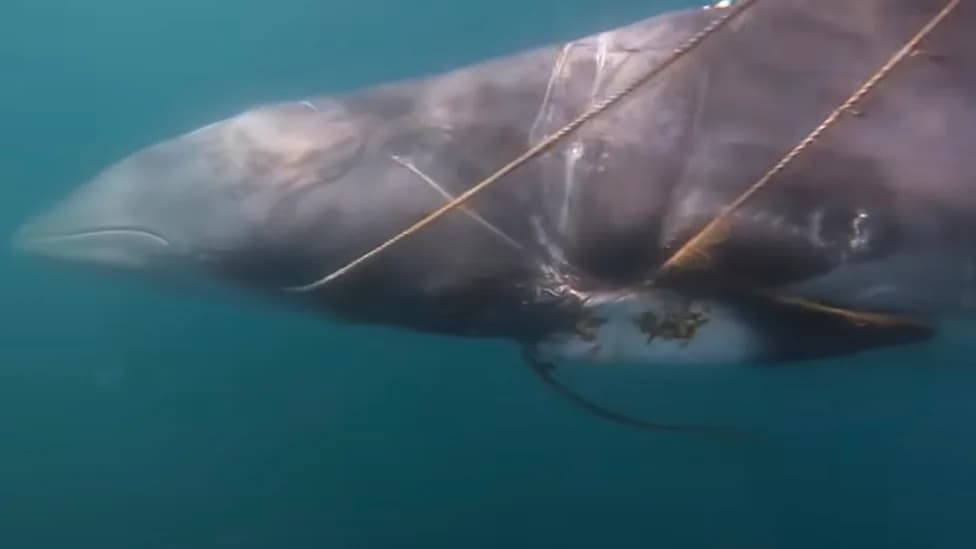
Researchers in South East Queensland have documented a worrying spike in whale entanglements: Olaf Meynecke of Griffith University and his team recorded 48 humpback whale entanglements in just a few months up to October — more than in the entire previous year.
These incidents underline a growing threat to marine life. Both active and abandoned fishing gear — lines, ropes and nets used by recreational and commercial fishers — can wrap around animals, causing deep wounds, infections and restricted movement. Shark-control nets placed near busy beaches can also entangle whales and other species.
Why entanglements are increasing
Meynecke and colleagues link the rise in entanglements to ecological shifts that push whales closer to shore. Reduced prey availability, associated with Antarctic sea-ice loss, is forcing whales to feed in riskier coastal waters where commercial fishing operations are more common. As whales search desperately for food, encounters with fishing gear and nets become more likely.
How entanglement harms animals and ecosystems
When whales and other marine animals become entangled, ropes and lines can cut into flesh and create serious, infected wounds. Entangling gear often impedes swimming and diving, reducing foraging success and leading to weight loss, starvation and, in severe cases, death. Smaller marine mammals such as seals and sea lions may drown quickly if they cannot swim; larger animals can tow gear for long distances but still succumb to injuries over time.
Abandoned gear also contributes to pollution. As nets and ropes break down, they shed microplastics that enter the food web and add to broader threats to biodiversity.
"The outlook is grim for many," said Olaf Meynecke, underscoring the urgency of better data, prevention and mitigation measures.
Data gaps and responses
Meynecke's team compiled the 48 recent reports from social media posts, newspaper accounts and enquiries to authorities — a patchwork method that highlights the absence of a central database tracking entanglements. Establishing such a database would improve understanding of hotspots, seasonality and trends and support targeted policy responses.
Practical responses already underway include community clean-ups of "ghost" gear, recycling programs, and trialling alternative shark-detection methods. For example, volunteers in St. Petersburg, Florida removed more than 4,000 pounds of abandoned crab traps, and the Ocean Legacy Foundation in Canada recycles recovered gear into plastic pellets for new products.
Policy changes can amplify these efforts. In Queensland, a study found drone surveillance can be more than twice as effective at detecting sharks near populated shores than some traditional measures, and expanding drone programs could reduce reliance on shark nets — potentially lowering entanglement risk.
Broader solutions
Long-term solutions include reducing the amount of gear entering the ocean (through better fisheries practices, gear marking and retrieval programs), scaling up ghost-gear recovery and recycling, and advancing renewable-energy transitions to address climate-driven changes in prey distribution. Combined, these measures can reduce entanglement risk and protect marine biodiversity.
Creating standardized reporting systems, supporting targeted clean-up and remediation programs, and promoting alternative safety technologies for beaches are immediate steps that could make a measurable difference for whales and other marine life.
Help us improve.