Underwater archaeologists recovered four exceptionally well-preserved spears from Lake Lednica dated to c.1016–1030 C.E. The group includes a seven-foot ash-shaft spear with an antler ring, a willow-leaf form, a long mixed-steel weapon, and a richly plated, wing-decorated spear likely tied to elite status. The variety of forms confirms both short and long spears were used by Piast-era warriors. Researchers will conduct metallurgical analysis to try to pinpoint the weapons’ places of origin and what that reveals about early medieval trade and politics.
Four Remarkably Preserved Medieval Spears Recovered from Lake Lednica — One Plated in Gold and Silver

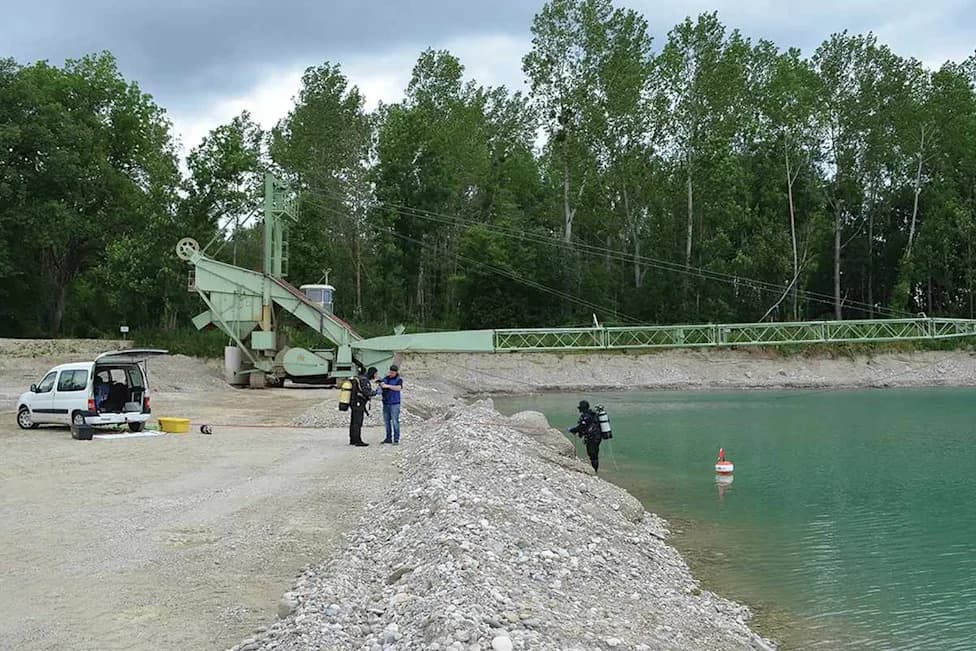
Underwater archaeologists from Nicolaus Copernicus University have recovered four exceptionally well-preserved medieval spears from Lake Lednica in western Poland, a site already famous for its trove of early medieval weaponry. Dated to roughly 1016–1030 C.E., the new finds range from practical battlefield implements to a highly ornamented piece likely associated with elite status or ritual use.
The recovered spears were excavated from waters around Ostrow Lednicki and each displays distinct construction and decoration, offering fresh insight into weapon design and social signaling in the early Piast period.
What was found
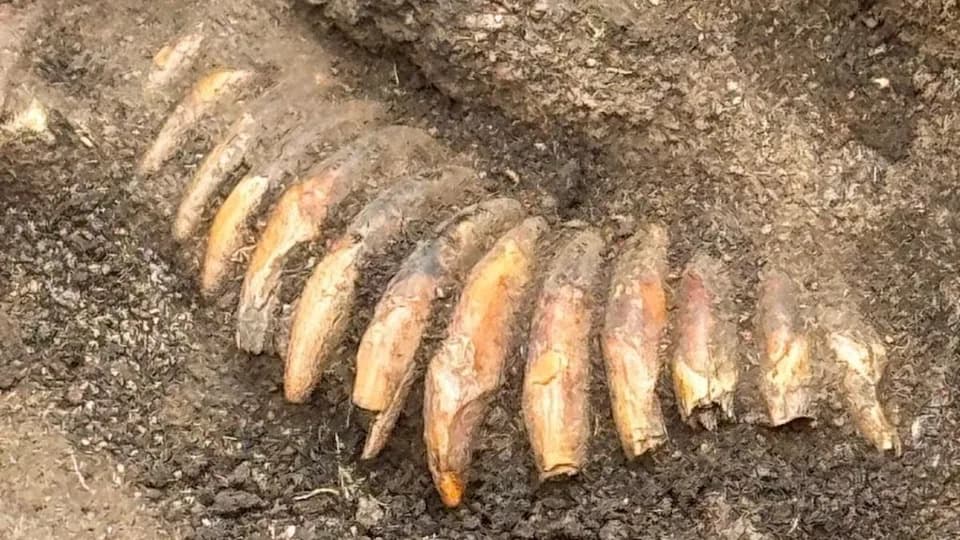
Short ash-shaft spear (approx. 7 feet): This spear stands out for its unusual rhomboidal shaft made from ash and an antler ring at the tip. According to Andrzej Pydyn, director of the university’s Centre of Underwater Archaeology, the well-preserved shaft is rare and the antler ring makes the piece particularly distinctive.
Slender willow-leaf spear: A delicate, willow-leaf–shaped head typical of early medieval Europe. Its form suggests a design optimized for agility and penetration on the battlefield.
Long mixed-steel spear: The longest of the four, this spearhead has a triangular cross-section forged from differing steels. Combining softer and harder steels would have produced a resilient edge—evidence of advanced metallurgical techniques available to Piast warriors.
Ornamental ‘duke’s spear’: The most eye-catching find is a richly decorated spear with wing motifs. Its steel head sits in a highly decorated socket plated with gold, silver, bronze, zinc and lead, and finished with spiral ornamentation. Such high-quality plating and iconography strongly suggest association with an elite individual or ceremonial functions.
“There is no doubt that the weapon should be associated with the elite warrior culture of the turn of the 10th and 11th centuries,” Matusz Popek of the Centre of Underwater Archaeology said. “The decorations could have helped identify the owner during ceremonies or battles and signaled prestige and high social status.”
Significance and next steps
Beyond individual stories, the variety in length, shape and metallurgy among these spears provides rare, well-preserved evidence confirming that both short and long spears were used by Piast-era warriors. The finds also reinforce Ostrow Lednicki’s importance as a political and symbolic center in the early medieval period.
Lake Lednica has previously yielded an early medieval arsenal including dozens of axes, spearheads and swords; these four complete spears, dated to about 1016–1030 C.E., add to that exceptional collection. Researchers are considering two leading explanations for the concentration of weapons in the lake: accidental loss during warfare—possibly in the turbulent 1030s when the Piast state faced internal crises and fights occurred on bridges and boats—or deliberate deposition as ritual offerings. As Andrzej Pydyn noted, it remains difficult to choose definitively between these hypotheses.
The team plans metallurgical and isotopic analyses to better understand manufacturing techniques and to try to identify where the spears were produced. Determining their origins could shed light on trade routes, craft networks and political connections during the rise of the early Piast dynasty.
These well-preserved artifacts not only illuminate the technology and warfare of the era, but also hint at the social hierarchies and ritual practices that shaped early medieval Central Europe.
Help us improve.