The U.S. told EU trade ministers to reconsider parts of their digital and green regulations as leverage for reducing high U.S. tariffs on European steel and aluminium. U.S. officials argued that regulatory adjustments could attract up to $1 trillion in investment and boost EU GDP by about 1.5 percentage points. The EU defended its sovereign right to legislate and said rules are applied equally to all companies. Talks also covered access to chips and rare earths and joint responses to global steel overcapacity.
US Links Lower Steel Tariffs to EU Rewrites of Digital and Green Rules

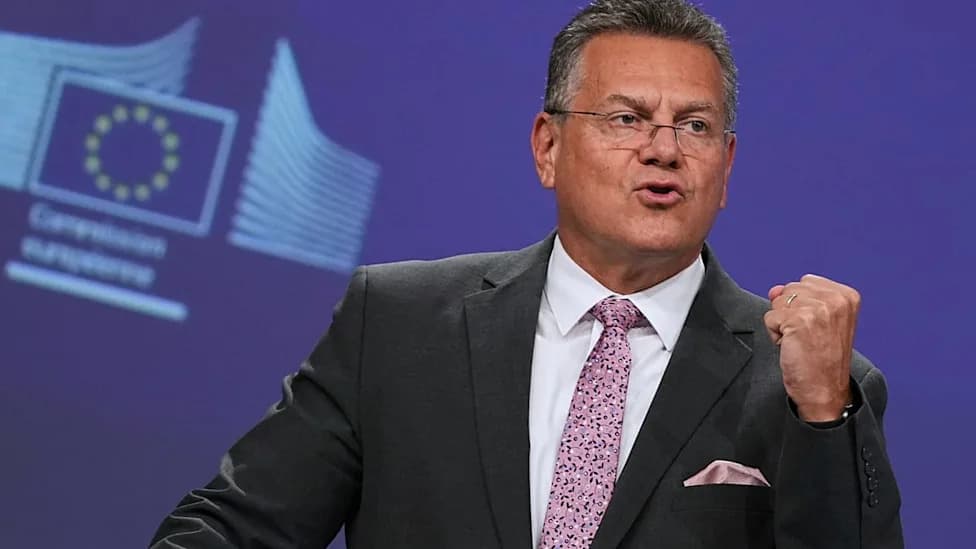
The United States on Monday urged the European Union to reassess parts of its digital and environmental regulations as part of negotiations to reduce steep U.S. tariffs on EU steel and aluminium. U.S. Commerce Secretary Howard Lutnick and Trade Representative Jamieson Greer met EU trade ministers in Brussels — the first high-level talks since the two sides reached a tariff understanding in July.
The July arrangement set a 15% U.S. levy for most EU exports to avert a wider trade war, but both sides continue to haggle over additional concessions. The EU seeks cuts to Washington's 50% duties on certain steel and aluminium products, while the U.S. is pushing for rollbacks of rules it says disadvantage American firms, particularly in digital and green sectors.
Linking Tech Rules to Tariff Relief
After the meeting, Lutnick explicitly connected the issues, urging EU ministers to "deeply consider" revising digital rules to find a better balance. He suggested that such a recalibration could unlock substantial investment, saying it might bring "a trillion dollars of investment" to Europe and add roughly "a point and a half to European GDP." Trade Representative Jamieson Greer joined Lutnick in underscoring that regulatory barriers to U.S. companies remain a key negotiating point.
"Our suggestion is that the European Union and their trade ministers deeply consider trying to analyse their digital rules, try to come away with a balance," Lutnick said alongside Greer and EU trade chief Maros Šefčovič.
EU Response and Wider Strategic Concerns
EU officials defended their right to legislate, stressing rules apply equally to all companies within the bloc and are not targeted at U.S. firms. Maros Šefčovič declined to characterise the digital measures as a red line, saying Brussels would explore how to launch discussions on digital matters while preserving its regulatory objectives.
Officials also discussed shared strategic challenges beyond tariffs, including securing access to rare earths and semiconductors and coordinating responses to global steel overcapacity — notably from China. Danish Foreign Minister Lars Løkke Rasmussen, whose country holds the rotating EU presidency, said the talks covered both bilateral and broader economic issues where transatlantic cooperation is needed.
In October, the EU moved to raise tariffs on some foreign steel imports to protect its industry from cheap imports. Brussels has proposed closer coordination with Washington — including a potential "metals alliance" or joint measures to counteract Chinese overproduction. Industry figures show China accounted for more than half of global steel output last year; Europe’s steel sector employs roughly 300,000 people and has lost about 100,000 jobs over the past 15 years, according to industry data.
The talks signal that while both sides want to avoid a trade war, agreement will require compromises on sensitive regulatory and industrial-policy issues that touch on technology, climate goals and national sovereignty.
Help us improve.