French President Emmanuel Macron urged EU leaders to be prepared to deploy the bloc’s Anti‑Coercion Instrument (ACI), nicknamed the "trade bazooka," in response to possible new U.S. tariffs. The ACI — created in 2021 after China’s trade restrictions on Lithuania — would allow the EU to impose targeted sanctions that could restrict market access and investment for offending entities. Most member states remain cautious; activating the ACI would take at least six months. EU leaders will meet in Brussels amid rising tensions.
Macron Urges EU To Ready 'Trade Bazooka' Against Possible U.S. Tariffs

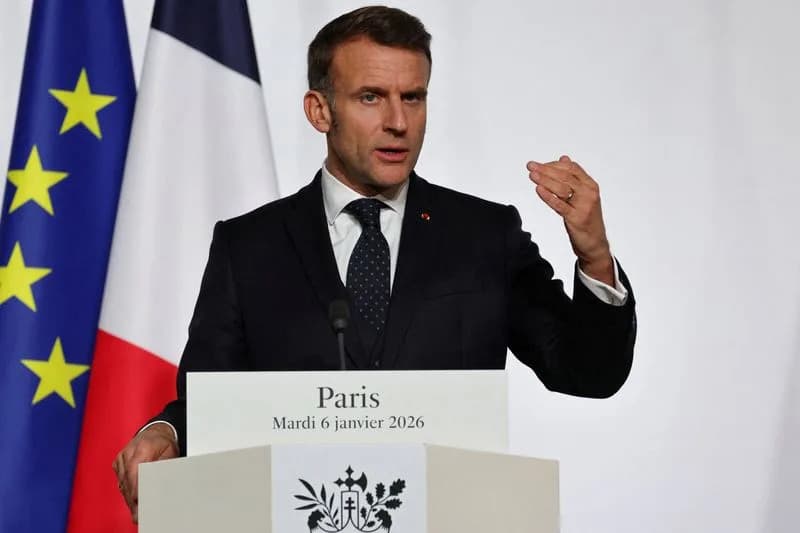
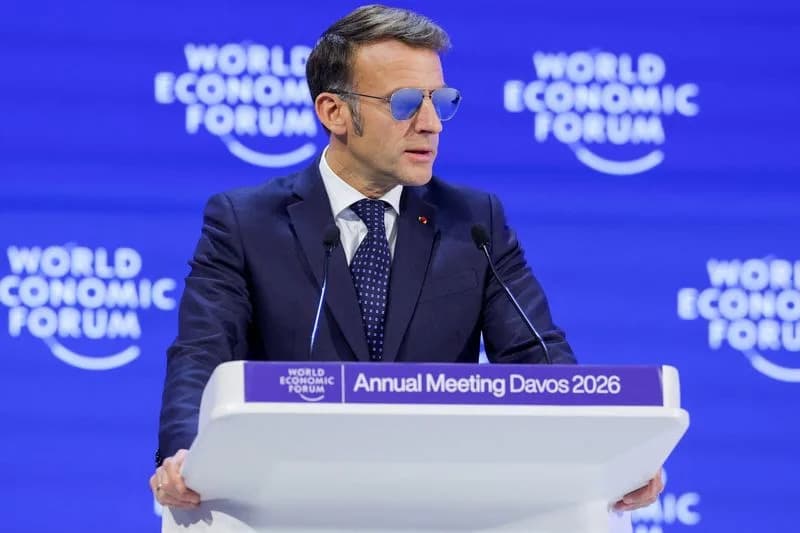
French President Emmanuel Macron speaks during the Annual Meeting of the World Economic Forum in Davos, Switzerland, Tuesday, Jan. 20, 2026. (AP Photo/Markus Schreiber)(ASSOCIATED PRESS)
Brussels — French President Emmanuel Macron has urged European Union leaders to be prepared to use the bloc’s so‑called "trade bazooka" — the Anti‑Coercion Instrument (ACI) — as a possible response to new U.S. tariffs or economic pressure.
What Is The ACI?
The ACI, adopted by the European Commission in 2021, is designed to deter and respond to coercive economic measures by third countries. It would allow the EU to adopt targeted sanctions against individuals, companies or institutions judged to be exerting undue pressure on the Union. The Commission has emphasized that the instrument’s primary goal is deterrence; it would be most successful if it never needed to be used.
Macron's Warning
"The crazy thing is that we could find ourselves in a situation where we use the anti‑coercion mechanism for the very first time against the United States," Macron said in Davos, urging allies to focus on securing peace in Ukraine rather than escalating trade tensions. "I regret it, but it is the consequence of unnecessary aggressiveness. Still, we must all remain calm."
Macron described the mechanism as "a powerful instrument" and said Paris would not hesitate to deploy it in today's strained international environment if necessary.
Potential Impact
Use of the ACI could impose multibillion‑euro costs on targeted firms by restricting access to EU markets, excluding them from public procurement procedures, limiting foreign direct investment and curtailing cross‑border trade in goods and services. The instrument would require at least six months to activate once invoked.
Context And Next Steps
The ACI was developed after Beijing imposed trade restrictions on Lithuania over its ties with Taiwan. Most EU member states have so far been cautious about deploying the tool; France is one of the more vocal supporters of using it if needed.
EU leaders will convene an emergency summit in Brussels to discuss rising tensions with the U.S. administration and possible responses. According to Eurostat, EU‑U.S. trade in goods and services totaled €1.7 trillion ($2 trillion) in 2024 — roughly €4.6 billion per day.
Europe’s top exports to the United States include pharmaceuticals, automobiles, aircraft, chemicals, medical devices and instruments, and wine and spirits.
Associated Press reporting; Sylvie Corbet contributed from Paris.
Help us improve.