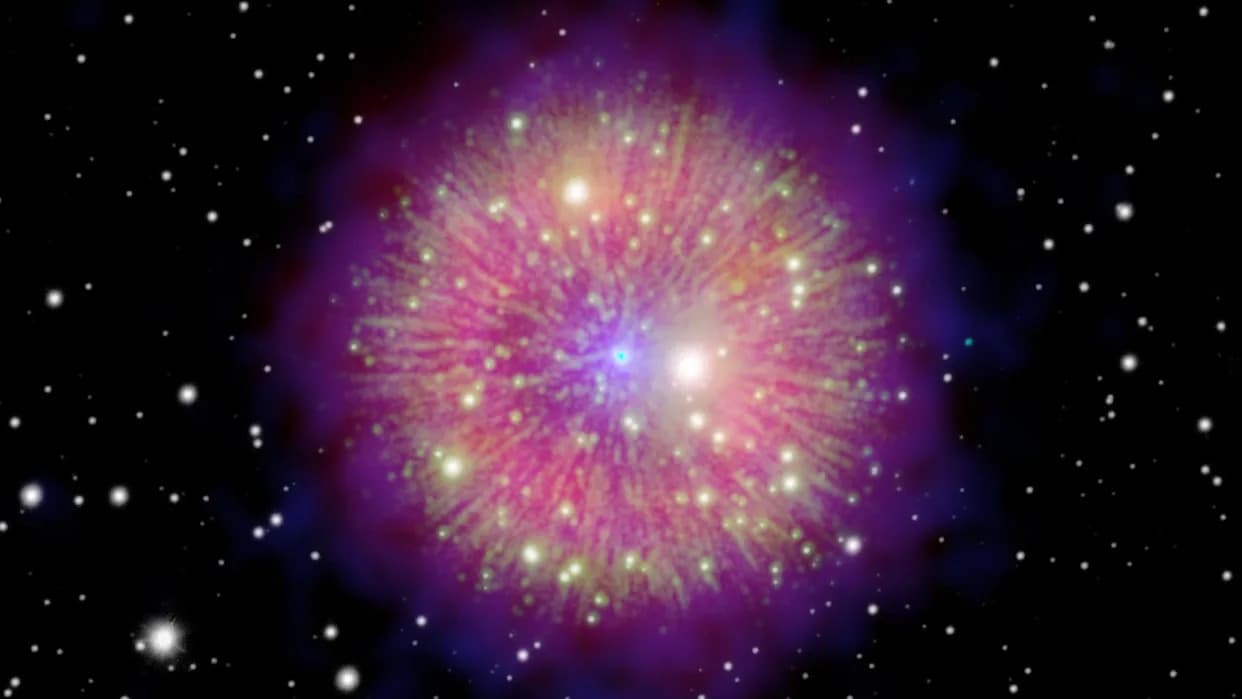
Researchers analyzed two medieval Arabic sources from Cairo to refine searches for historical supernovas. A Saladin-era poem (1181–1182 CE) places a “new star” in the classical Arabic phrase for Cassiopeia, narrowing where astronomers might look for the 1181 remnant. A separate chronicle describes the famous 1006 CE supernova, one of the brightest recorded and roughly 6,000 light years away.
Medieval Arabic Texts Help Pinpoint Centuries‑Old Supernovas

Supernovas are among the most powerful explosions in the universe, produced when massive stars exhaust their fuel and die. Modern telescopes record many such events each year, but most occur in distant galaxies. To locate explosions that happened closer to home, astronomers increasingly turn to historical records.
In a recent study published in Astronomische Nachrichten, Ralph Neuhäuser of the University of Jena and colleagues examined two medieval Arabic sources from Cairo that describe bright transient stars visible to the naked eye. One is a poem by Ibn Sanā’ al-Mulk written in praise of the Muslim leader Saladin around 1181–1182 CE. The other is a chronicle by the Egyptian scholar Aḥmad ibn ‘Alī al‑Maqrīzī (1364–1442 CE).
East Asian records and the Arabic poem independently reference a bright object in 1181 CE, but surviving reports give imprecise positions, leaving several candidate remnants. Jens Georg Fischer, a co-author and graduate student in Arabic and Islamic studies at the University of Münster, asked Neuhäuser to assess the Saladin-era verse. Neuhäuser concluded the poem does record the 1181 event and offers additional constraints on its approximate position, duration, and brightness.
According to the poem, the “new star” appeared in the “henna-stained hand” — a classical Arabic phrase for the constellation Cassiopeia.
That positional detail narrows where astronomers should search but does not conclusively identify a single remnant. The 1181 sighting could, in principle, represent a different kind of cosmic explosion, so the new textual clue is useful but not decisive.
Al‑Maqrīzī’s account describes a separate, well-known event: the supernova of 1006 CE. That explosion is already recognized as one of the brightest in recorded history. Neuhäuser notes it was “the brightest in the last 2,000 years,” with an apparent brightness rivaling the Moon. It occurred inside our galaxy at an estimated distance of roughly 6,000 light years, making it the closest known historical supernova.
These findings show how medieval eyewitness reports—when carefully interpreted in their historical and linguistic context—can extend the reach of modern astronomy, helping researchers track the long-faded remnants of dramatic stellar deaths.
Help us improve.