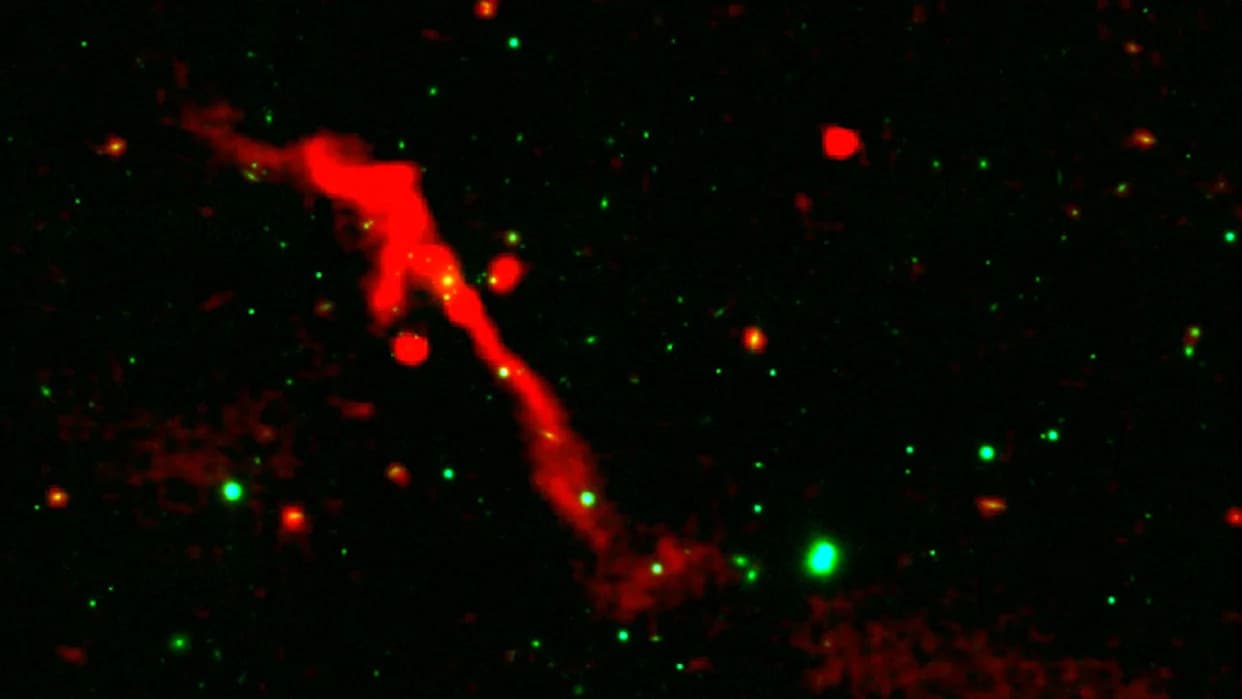
Researchers report a candidate 'superkilonova' linked to a gravitational-wave signal on Aug. 18, 2025 and the optical transient AT2025ulz. Early emission faded rapidly and was red — like the 2017 kilonova GW170817 — but days later the source re-brightened and displayed hydrogen lines typical of supernovae. Gravitational-wave data hint at an unusually low-mass neutron star, supporting scenarios where a fast-spinning star produces two small neutron stars that later merge. The evidence is compelling but not yet conclusive; further multi-messenger observations and surveys are needed.
Candidate First 'Superkilonova' Spotted — A Kilonova Hidden Inside a Supernova (AT2025ulz)

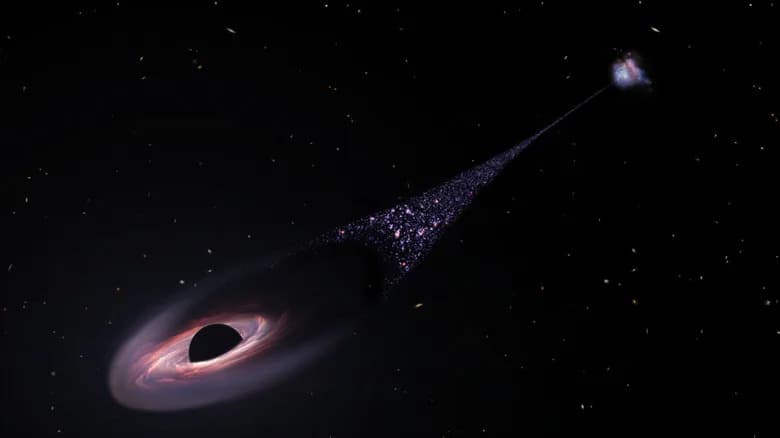
Credit: Caltech/K. Miller and R. Hurt (IPAC)
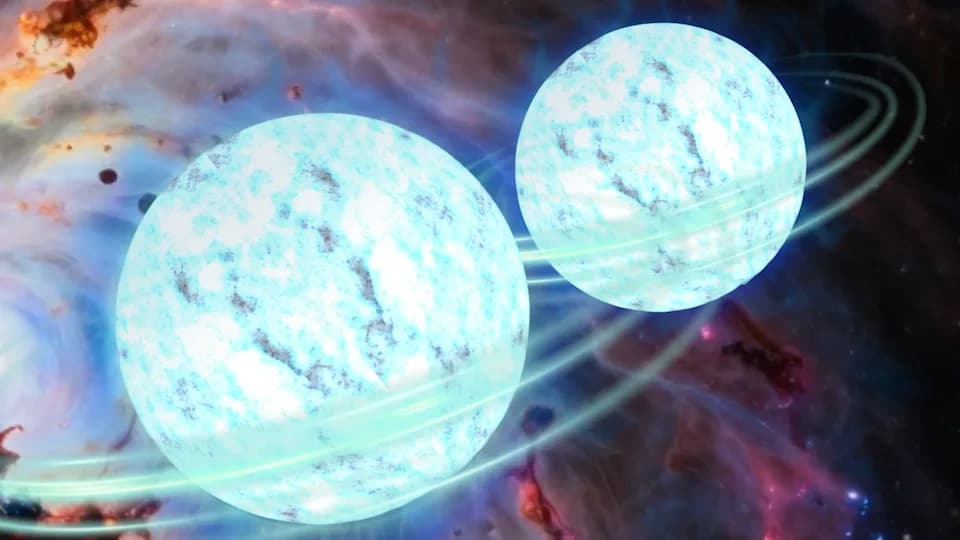
Astronomers may have observed the first example of a long-hypothesized 'superkilonova' after a gravitational-wave signal recorded on Aug. 18, 2025 was linked to a rapidly evolving optical transient labeled AT2025ulz. The event displays features of both a kilonova — the merger of two neutron stars — and a supernova that may have created those neutron-star progenitors.
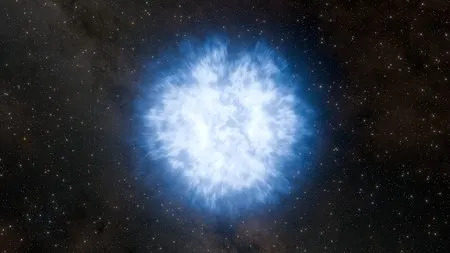
The first stage of a superkilonova, a massive star dies in a supernova explosion | Credit: Credit: Caltech/K. Miller and R. Hurt (IPAC)
What Was Seen
The Laser Interferometer Gravitational-Wave Observatory (LIGO) and its European partner Virgo detected a compact-binary signal on Aug. 18, 2025. The Zwicky Transient Facility (ZTF) at Palomar Observatory promptly reported a rapidly fading, red optical source roughly 1.3 billion light-years away that matched the gravitational-wave localization.
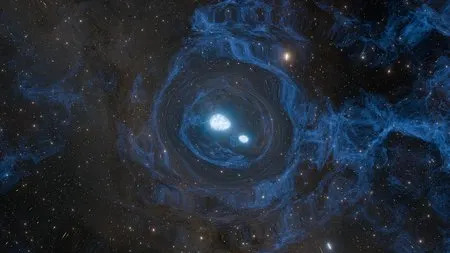
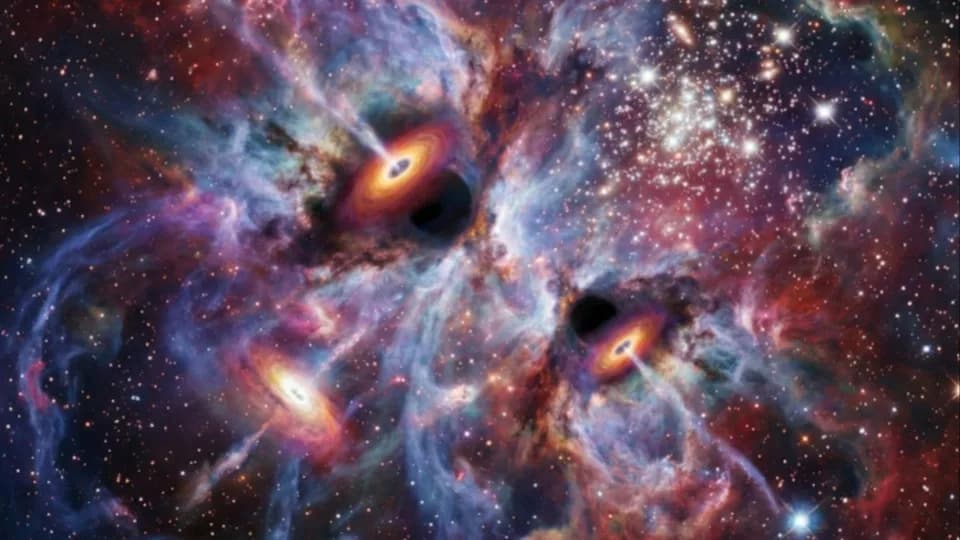
The second stage of a superkilonova, two neutron stars spiral together and merge | Credit: Caltech/K. Miller and R. Hurt (IPAC)
Why This Is Unusual
For the first three days AT2025ulz looked strikingly like GW170817 (the 2017 kilonova): a quick fade and a red glow consistent with heavy-element (lanthanide-rich) ejecta that blocks blue light. But days later the source re-brightened, shifted toward bluer wavelengths and showed hydrogen emission lines — signatures typical of a supernova, not a bare kilonova. That combination posed a puzzle: a normal supernova at 1.3 billion light-years would not normally produce gravitational waves detectable by LIGO, while a kilonova normally lacks strong hydrogen features.
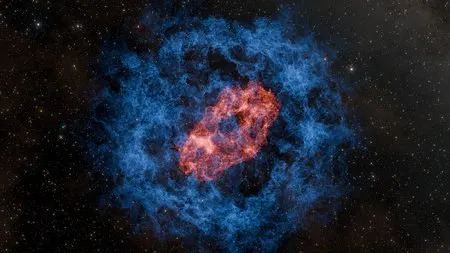
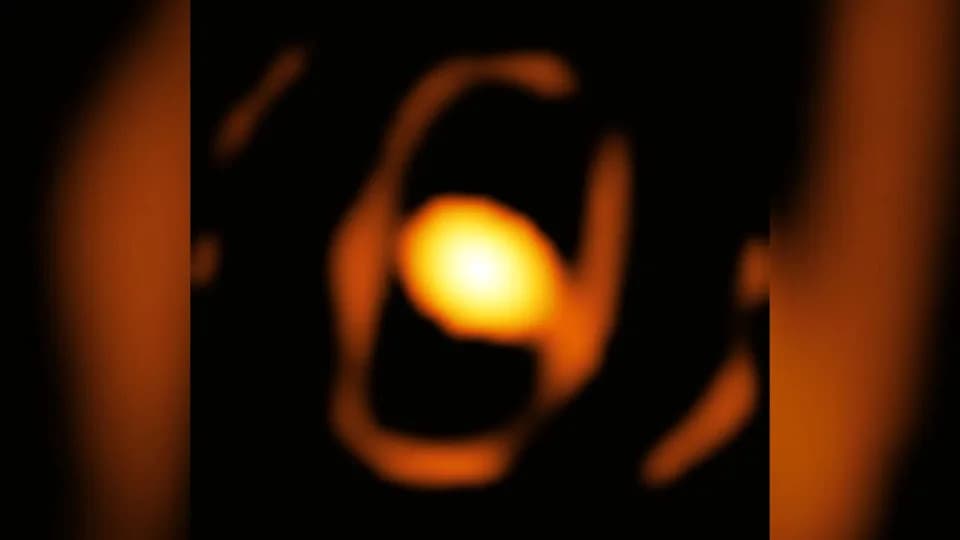
The third stage of a superkilonova, the generated heavy elements create the glow seen as a kilonova | Credit: Caltech/K. Miller and R. Hurt (IPAC)
A Superkilonova Hypothesis
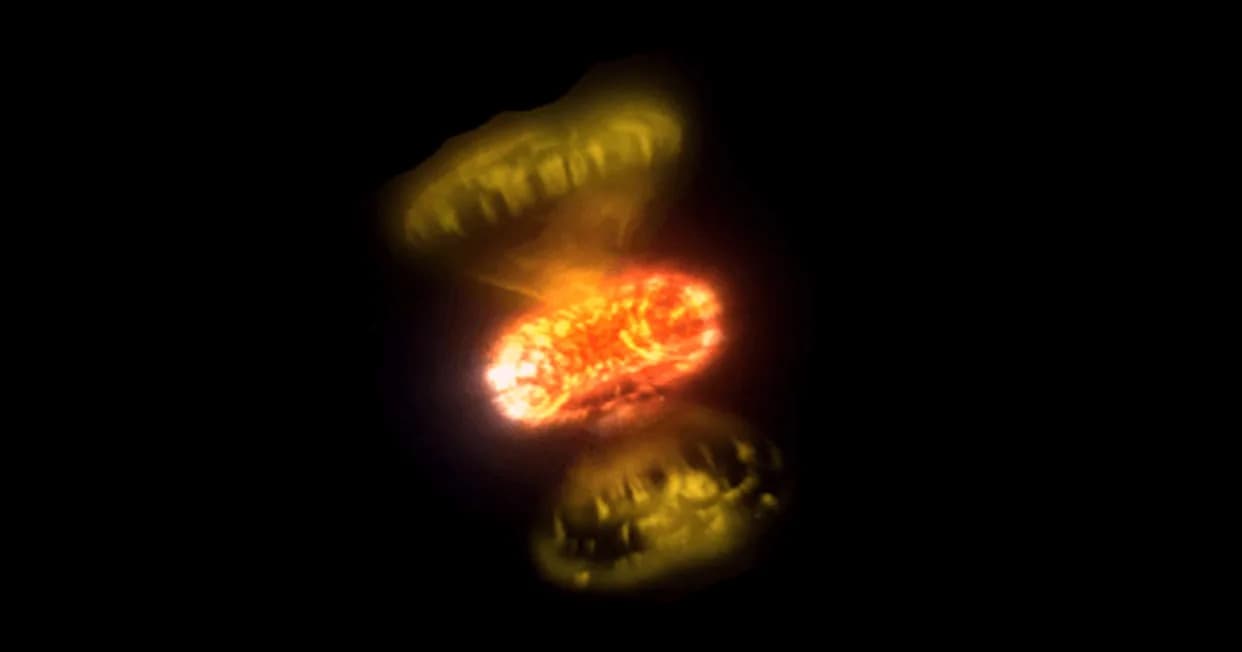
Lead author Mansi Kasliwal and colleagues propose that AT2025ulz is a superkilonova: a kilonova produced by two neutron stars that were themselves born in a recent supernova. In this picture, the initial kilonova emission (the red, heavy-element light) is partially obscured by the expanding shell of the parent supernova, which later dominates the spectrum and produces the observed hydrogen lines.
'At first, for about three days, the eruption looked just like the first kilonova in 2017. Everybody was intensely trying to observe and analyze it, but then it started to look more like a supernova, and some astronomers lost interest. Not us,' said Mansi Kasliwal (Caltech).
Clues From The Gravitational-Wave Signal
Crucially, the gravitational-wave data suggest one of the merging objects may have had a mass below one solar mass. Typical neutron stars weigh roughly 1.2–2 solar masses, so a sub-solar inferred mass points to an unusual, very recent formation history. The team describes two theoretical routes to create such 'undermassive' neutron stars during the collapse of rapidly spinning massive stars: core fission (splitting during collapse) or fragmentation of a dense post-collapse disk that accretes into a second neutron star.
Implications And Next Steps
If confirmed, AT2025ulz would be the first observed superkilonova — a new class of multi-messenger transient that combines gravitational waves and a complex electromagnetic evolution. However, the current data are suggestive rather than definitive. The authors call for targeted searches in archival and ongoing survey data (ZTF, Vera C. Rubin Observatory) and follow-up by upcoming facilities such as NASA's Nancy Grace Roman Space Telescope, proposed missions like UVEX, Caltech's Deep Synoptic Array-2000, and the Antarctic Cryoscope.
'The only way theorists have come up with to birth sub-solar neutron stars is during the collapse of a very rapidly spinning star,' said Brian Metzger (Columbia University). 'If these "forbidden" stars pair up and merge by emitting gravitational waves, it is possible that such an event would be accompanied by a supernova rather than be seen as a bare kilonova.'
The team's findings were published Dec. 15 in The Astrophysical Journal Letters. While AT2025ulz is an intriguing candidate, additional detections and more detailed multi-messenger observations will be required to confirm the existence of superkilonovae.
Help us improve.