Archaeologists have found scallop shells placed around the mouth of a ninth‑century woman buried in Bjugn, Trøndelag — a practice not previously recorded in pre‑Christian Norwegian graves. The well‑preserved skeleton and grave goods suggest she was a free, likely married woman of high local status. The site was in immediate danger from plowing, so excavators worked carefully to preserve the burial. Researchers will perform conservation, radiocarbon dating, DNA and isotopic analyses to learn more and to check for kinship with an earlier nearby burial.
Unprecedented Scallop‑Shell Ritual Found in Ninth‑Century Viking Woman’s Grave

Archaeologists excavating a ninth‑century grave in Bjugn on Norway’s Trøndelag coast have uncovered an unusual burial rite: scallop shells deliberately placed around the mouth of a Viking woman. The burial, first located by metal detectorist Roy Søreng, appears to date to the 800s and is unusually complete and well preserved.
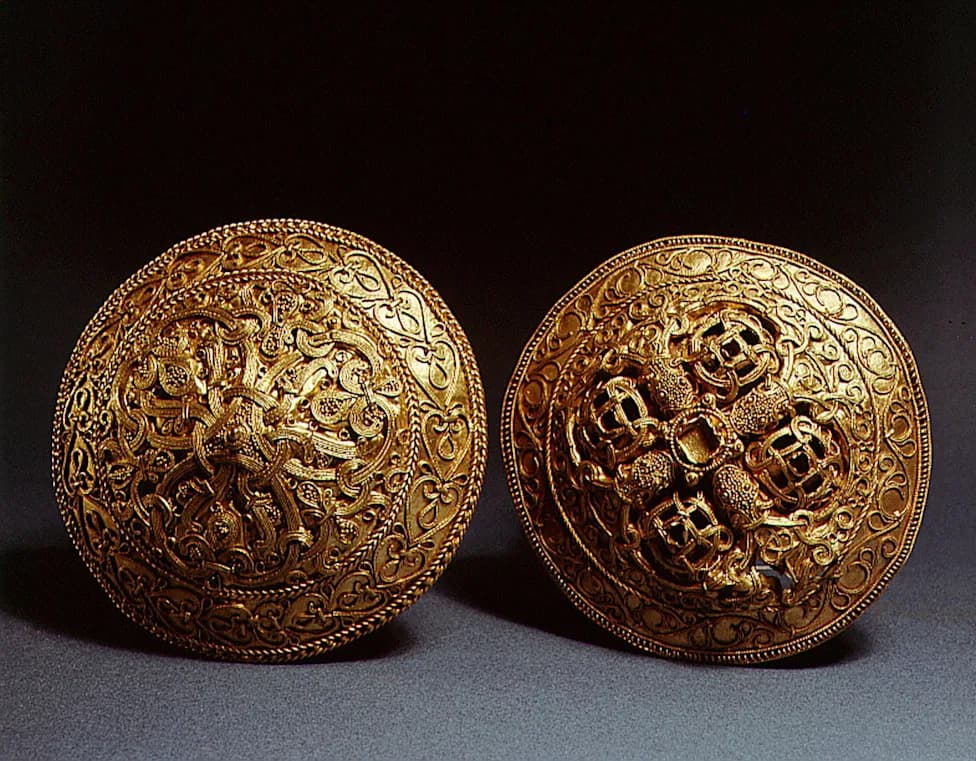
Raymond Sauvage of the NTNU Science Museum, who is involved in the investigation, says the woman’s clothing and jewelry indicate she was “a free and probably married woman, perhaps the lady of the farm.” The presence of personal ornaments and the intact nature of the burial suggest she held a prominent social position within her community.
The placement of scallop shells around the mouth is, according to the team, a previously undocumented feature in pre‑Christian Norwegian burials. “We do not yet know what the symbolism means,” Sauvage said, emphasizing that the arrangement is unprecedented for this region and period. Researchers are cautious about interpretation: while scallop shells later became associated with medieval pilgrimage in parts of Europe, there is no reason to assume that later meanings apply here.
Careful excavation and planned analyses
Early field inspections showed the grave was at immediate risk from agricultural activity, prompting archaeologists to excavate with extreme care to preserve fragile remains and artifacts. Riksantikvar Hanna Geiran of Norway’s Directorate for Cultural Heritage described the find as “incredibly exciting,” noting how rare such a well‑preserved skeleton is in early graves.
Conservation and scientific analyses are now under way. Teams plan to conserve the artifacts, conduct radiocarbon dating and DNA analysis, and carry out isotopic tests to learn about diet and geographic origin. Investigators also intend to compare the results with those from an earlier burial discovered at the same site to explore possible kinship or continuity in ritual practice.
Significance: This discovery expands our knowledge of Viking‑age funerary diversity and raises new questions about regional burial customs and symbolic practices in pre‑Christian Scandinavia.
Help us improve.