Stanford professor Mark Jacobson argues that converting the U.S. energy system to wind, water and solar would require about 0.85% of U.S. land, compared with roughly 2.4% currently used by fossil fuels and ethanol. He notes rooftop solar and offshore wind avoid new terrestrial land, and that land between turbines can still support grazing or farming. Agrivoltaics — pairing solar with agriculture — can further increase land productivity.
Stanford Professor: Switching to Wind, Water and Solar Would Use Far Less U.S. Land Than Fossil Fuels

Expanding renewable energy is often criticized for its perceived large land footprint. In a recent TikTok video, Mark Jacobson, a professor of civil and environmental engineering at Stanford University, challenged that claim and compared the land used by today's fossil fuel and ethanol industries with the land that would be needed to power the entire United States using wind, water and solar.
Key figures and what they include
Jacobson estimates that the combined land area occupied by the fossil fuel industry and ethanol production is roughly 2.4% of U.S. land. That estimate includes infrastructure such as millions of miles of pipelines, active and abandoned oil and gas wells, and the extensive corn acreage grown to produce ethanol for transport fuels.
By contrast, he estimates that a complete transition to clean electricity — covering residential and commercial power, electrified transportation, construction and other non-electric uses after electrification — would require about 0.85% of U.S. land.
Where new land would — and would not — be needed
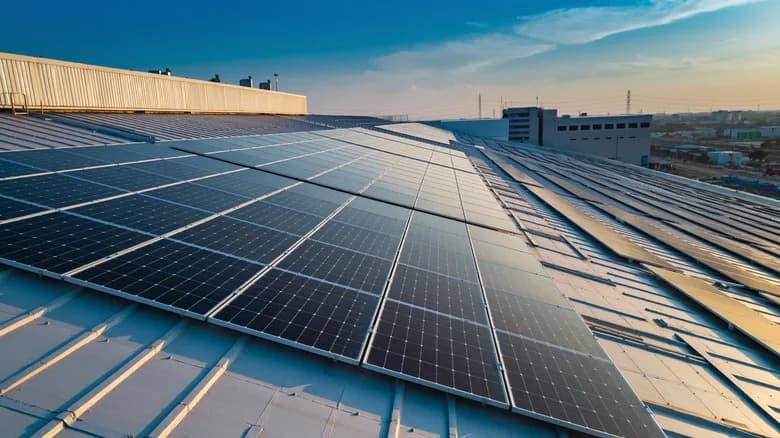
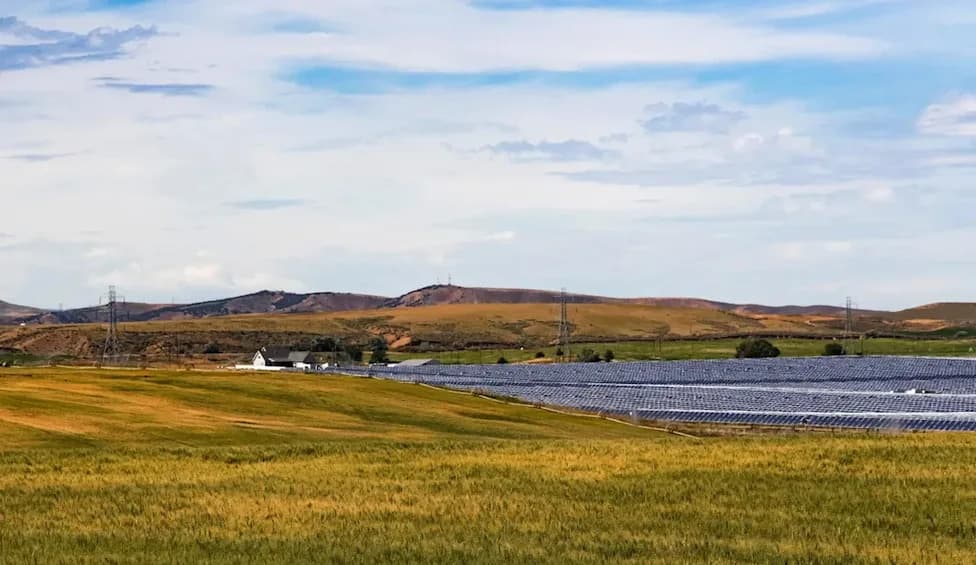
Jacobson stresses that rooftop solar and offshore wind avoid new terrestrial land use: rooftop arrays sit on existing buildings, and offshore wind is sited at sea. The primary new ground area would be for utility-scale solar farms and onshore wind installations. Much of the onshore wind footprint is actually the open space between turbines, which often remains usable for grazing, some crops, or other activities.
Jacobson: After electrifying all energy uses, powering the country with wind, water and solar would use less land than our current mix of fossil fuels and bioenergy.
Ways to boost land efficiency
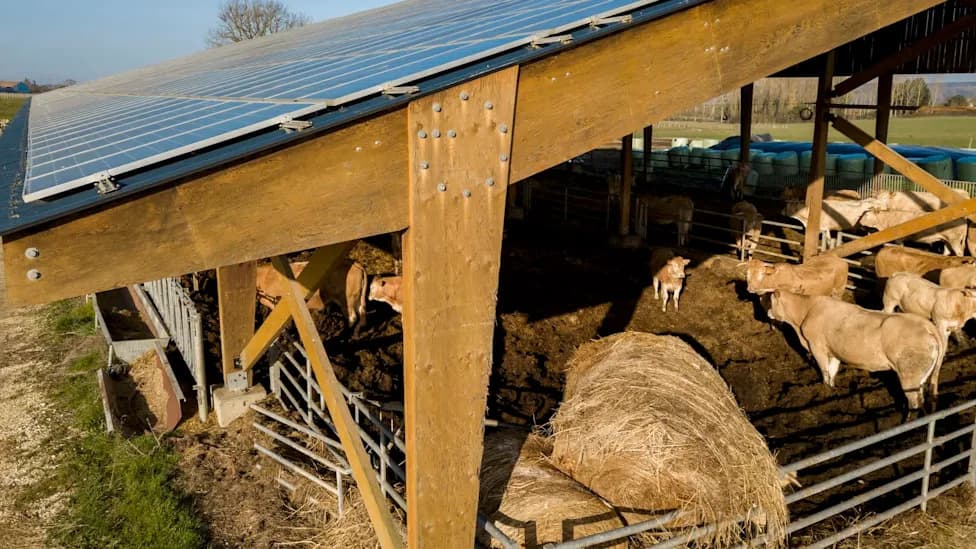
Technological advances and smart siting can further reduce renewables' land needs. One promising approach is agrivoltaics — combining solar panels with agricultural production on the same land. Farmers can earn steady supplemental income while crops or livestock continue to be produced beneath or between panels. That combination can increase the total productive output of a parcel while cutting pollution and conserving resources.
It's important to recognize that these numbers are estimates and depend on assumptions about technology, energy efficiency, demand, and siting choices. Still, Jacobson's comparison highlights that a renewables-led energy system could be far more land-efficient than many critics assume.
Source: Estimates and analysis presented by Mark Jacobson (Stanford University) in his public video commentary.
Help us improve.