UKAEA researchers at MAST-U used small magnetic coils to apply resonant magnetic perturbations and suppress edge-localized modes (ELMs) in a spherical tokamak. This is the first demonstration of sustained ELM control in a compact, apple-shaped device and shows control techniques for conventional tokamaks can be adapted to smaller machines. The breakthrough advances prospects for fusion as a low-emission energy source, though costs and technical challenges remain.
UKAEA Tames Plasma Bursts in Compact Tokamak — Major Step Toward Practical Fusion Power
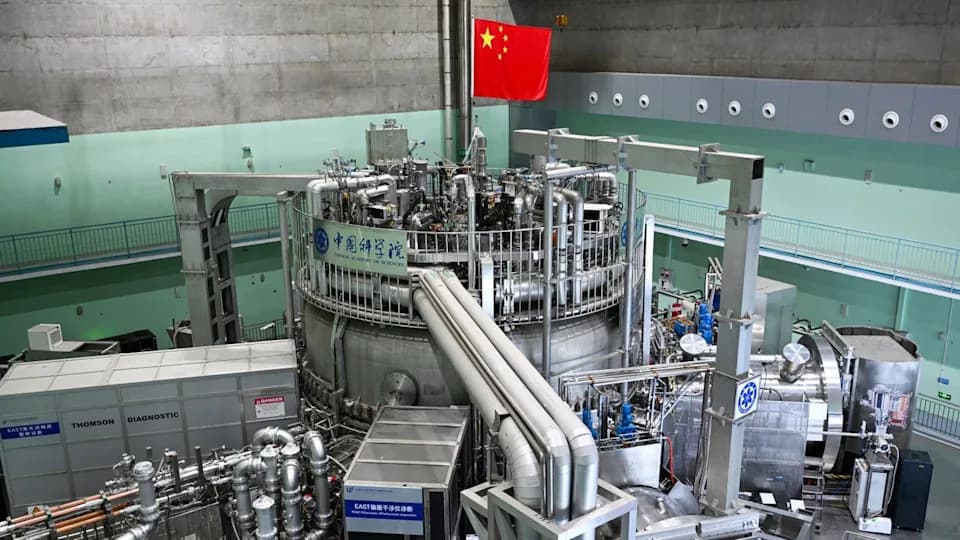
Scientists at the U.K. Atomic Energy Authority (UKAEA) have reported a significant advance toward practical fusion power after stabilizing the edge of superheated plasma inside the Mega Amp Spherical Tokamak Upgrade (MAST-U).
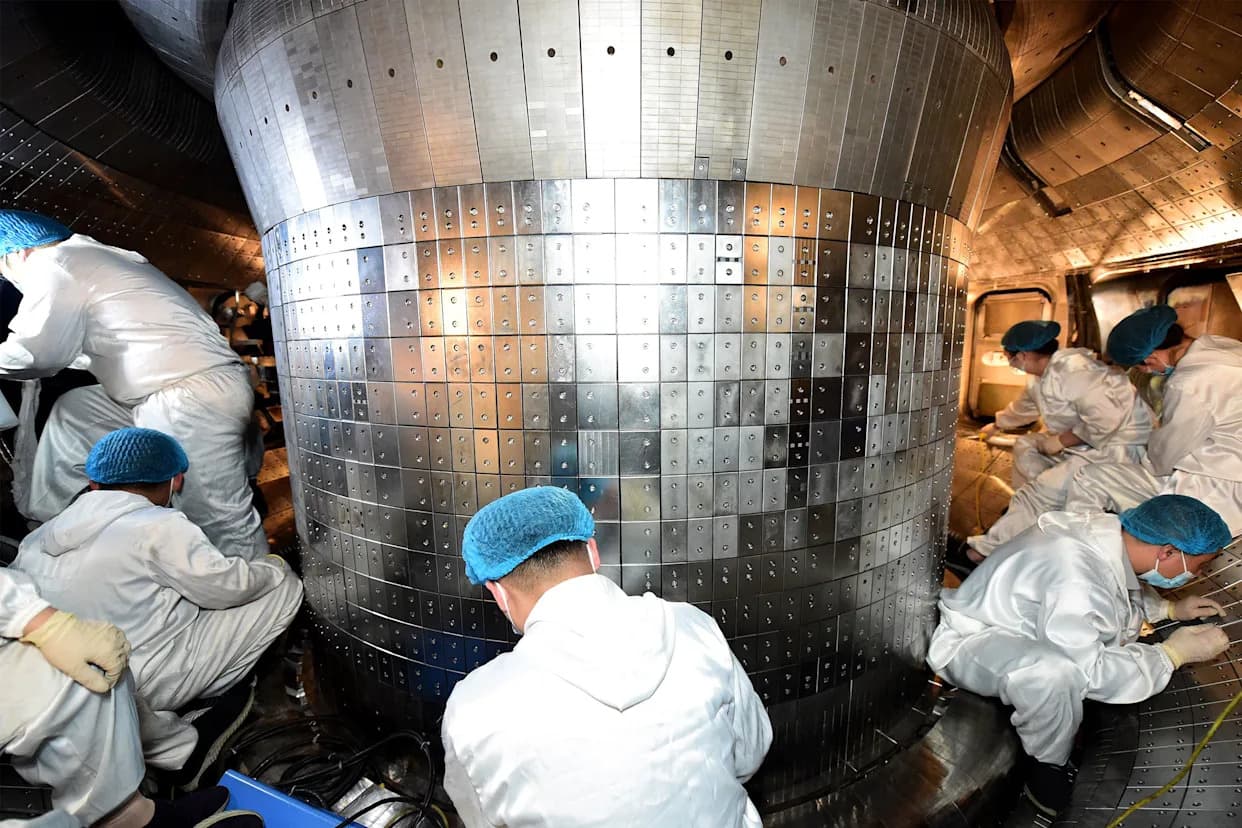
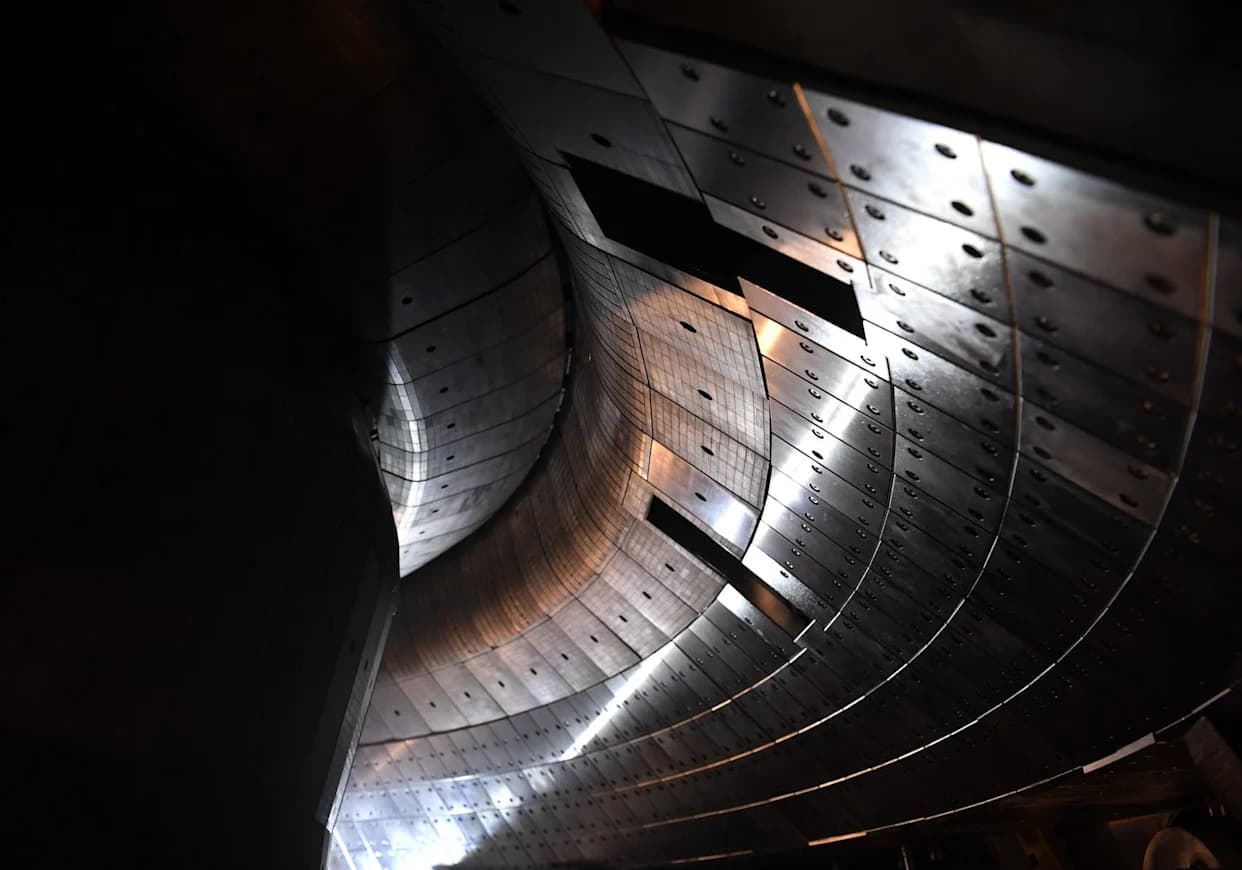
Using small magnetic coils to apply resonant magnetic perturbations, researchers successfully suppressed destructive plasma events known as edge-localized modes (ELMs) in a spherical tokamak — an apple-shaped, more compact alternative to conventional doughnut-shaped machines. ELMs expel bursts of heat and particles that can rapidly erode interior components, so controlling them is essential for long-lived reactor operation.
What the team achieved
This is the first demonstration of sustained ELM suppression in a spherical tokamak. The result shows that advanced control techniques developed for conventional tokamaks can be adapted to compact configurations, widening design options for future fusion systems.
"Suppressing ELMs in a spherical tokamak is a landmark achievement," said James Harrison, head of MAST Upgrade Science at UKAEA.
Why it matters
Fusion — the process that powers the sun — fuses light nuclei such as hydrogen into heavier elements like helium, releasing large amounts of energy. Compared with fission, fusion produces little long-lived radioactive waste and carries a very low risk of a catastrophic meltdown. If made practical at scale, fusion could provide large amounts of low-emission baseload power to complement wind, solar and other renewables.
Limits and next steps
Challenges remain. Initiating and maintaining fusion requires extreme temperatures and precise control; international agencies note the technology is hard to sustain and costly to build initially. ITER and other projects caution that upfront capital costs will be high, though proponents expect costs to fall as the technology matures and economies of scale develop.
Public interest in plasma experiments has been visible on social media: a recent clip from Tokamak Energy showing plasma pulses prompted questions about how long reactions can be sustained. For context, the current record for a continuous fusion pulse is 22 minutes at France’s WEST tokamak.
Overall, the UKAEA result advances confidence that compact tokamak designs can incorporate the control strategies needed for longer-lived, more robust fusion operation — an important milestone on the path toward practical fusion energy.
Help us improve.