Local Volunteers Try to Put New Map on Hold
When canvassers go door to door, many use detailed voter lists and turnout models. Jill Imbler is not one of them. The 69-year-old lifelong resident of Moberly, Missouri — a town of roughly 14,000 — says she knows her neighbors, their routines and where they live without GPS or data files.
A small-town canvass with a big goal
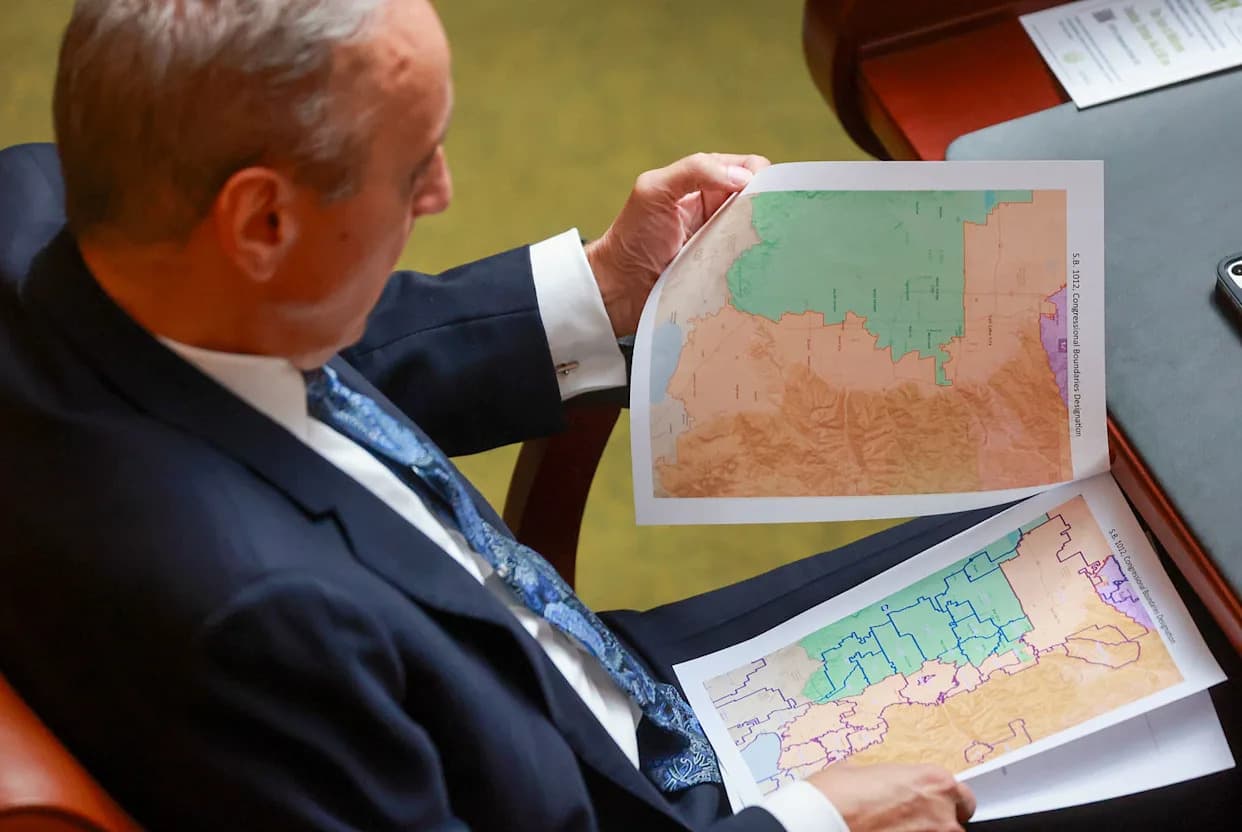
Imbler, president of the Randolph County Democratic Club, is spending weeks collecting signatures to suspend a newly enacted congressional map drawn by Missouri Republicans. At the request of former President Donald Trump, the legislature called a special session in mid-September and redrew districts that effectively eliminated the Kansas City seat held by longtime Democratic congressman Emanuel Cleaver, replacing it with one that leans Republican.
The citizens veto — a century-old check
Missouri has a nearly century-old constitutional provision that allows voters to pause recently enacted laws and force a public referendum. An amendment adopted in 1908 lets citizens gather signatures to prevent statutes from taking effect while the electorate decides. Organizers must submit more than 106,000 valid signatures from at least six of the state's eight congressional districts by December 11 to put the new map on hold until a 2026 referendum.
Volunteer momentum and national attention
Imbler, her husband Lynn and canvassers around the state say they have already collected more than 200,000 signatures and expect to turn in additional tens of thousands. Richard Von Glahn, executive director of People Not Politicians, which is coordinating the drive, summarized the tactic simply: 'We turn in signatures, the map goes on hold.'
The effort has drawn national scrutiny because mid‑decade redistricting can meaningfully shift the balance of power in the U.S. House. Republicans, who hold a slim three-seat majority, have pursued mid‑decade map changes in several states; Democrats are preparing counter-efforts in others. Outside groups on both sides have poured money into the fight — committees backing both positions have raised roughly $7 million combined, including funds from national Republicans who oppose the repeal attempt.
Door-knocking in deep red country
Randolph County is strongly Republican: Donald Trump carried it by more than 50 points in recent elections. Still, Imbler says many neighbors are willing to sign because they see the issue as about fairness rather than party. 'It pissed me off — I realized this is not right,' she told a reporter, recalling her motivation after lawmakers moved to weaken voter-approved ballot measures last year.
Her outreach has been granular: a table at a motorcycle shop between a Trump 2024 sign and a rebel flag, visits to retirement apartments, and conversations with people she taught or grew up with. Often she said she barely had to explain before residents agreed to sign. 'People know me,' she said. 'When they see that I'm willing to ask for signatures, they understand I'm not a radical either way.'
Legal fights and efforts to derail the petition
Anticipating the petition could suspend the map, Republicans have mounted multiple countermeasures. Missouri Secretary of State Denny Hoskins is seeking to invalidate more than 90,000 signatures. A group funded by the Republican National Committee has sent text messages encouraging signers to withdraw their names. The state attorney general has filed a lawsuit advancing an unusual constitutional argument: that the legislature alone has the exclusive authority to draw congressional districts and that the citizens veto cannot overturn those maps. Reporters have also identified an obscure group that reportedly offered canvassers $5,000 to stop collecting signatures.
Von Glahn defended the citizens veto as a serious, constitutionally sanctioned remedy reserved for major infractions of the legislature. If petitioners meet the threshold of valid signatures, the newly enacted congressional map will be held in abeyance until Missouri voters decide its fate at the ballot box in 2026.
What to watch next: Will the petitioners submit enough valid signatures by the December 11 deadline, and will legal challenges or signature invalidations alter the outcome? The result will shape not only Missouri politics but contribute to the broader national contest over mid‑decade redistricting.