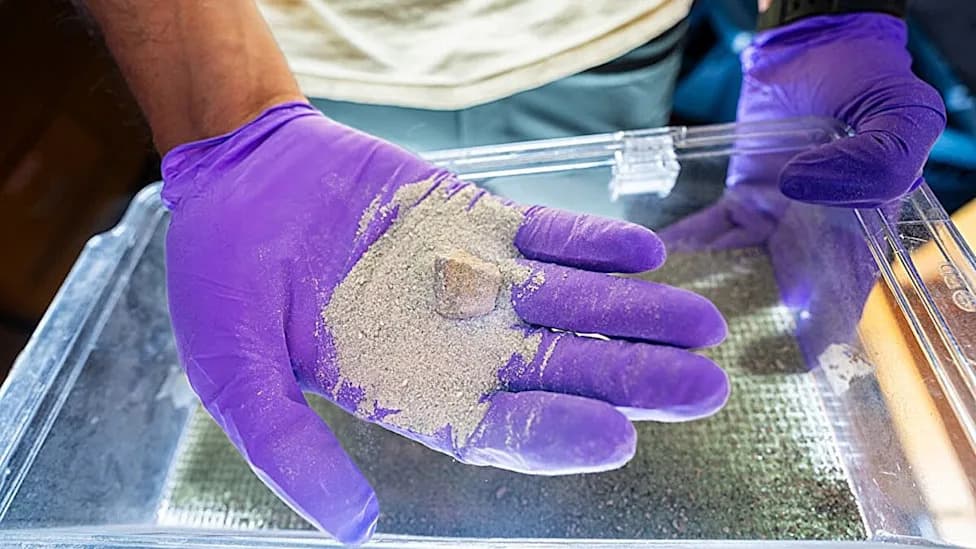
Northwestern researchers have developed paperback-sized microbial fuel cells that harvest electricity from soil microbes to power low-energy devices. In tests the units ran soil sensors in wet and dry conditions and outlasted comparable systems by about 120%. The team says the cells aren’t meant to power cities but could provide long-lived, low-impact energy for distributed IoT and agricultural sensors.
Soil-Based Fuel Cells Could Power Low-Energy Devices 'Indefinitely'

Researchers led by a team from Northwestern University have developed a soil-based microbial fuel cell that harvests electricity from microorganisms in dirt to run low-power electronics. The units tested are roughly the size of a paperback book and are intended to power distributed sensors and Internet of Things (IoT) devices rather than large-scale grids.
How it works
Microbial fuel cells extract electrical energy from the natural metabolic processes of microbes — bacteria and fungi — as they break down organic carbon in soil. The idea dates back to 1911, when British botanist Michael Cressé Potter first demonstrated that microbes could generate electricity, effectively showing that living organisms can drive battery-like systems.
New advances and testing
The Northwestern team, led by alumnus Bill Yen, optimized these cells to perform in both wet and dry conditions and tested them by powering sensors that measure soil moisture and detect the touch of passing animals. The devices operated across varied conditions and, according to the research team, outlasted comparable systems by about 120%.
"As long as there is organic carbon in the soil for the microbes to break down, the fuel cell can potentially last forever," said Bill Yen, who led the study.
"We're not going to power entire cities with this energy," said George Wells, associate professor of civil and environmental engineering at Northwestern. "But we can capture minute amounts of energy to fuel practical, low-power applications."
Potential benefits and limitations
These soil-powered fuel cells offer a low-impact alternative for small, distributed devices. Unlike lithium-based batteries, which require intensive mining, can contain heavy metals and generate landfill waste, microbial fuel cells use naturally occurring organisms and organic matter in soil. That said, the power output is low by design, so the technology is suited for sensors and other devices with very modest energy needs—not for phones, electric vehicles, or grid-scale power.
Practical challenges remain: improving long-term reliability, scaling production, and integrating the cells into real-world deployments. The researchers emphasize that substantial engineering and field validation are still needed before the technology becomes widely available.
Outlook
As the number of IoT devices grows, alternative low-energy sources like soil-based fuel cells could reduce reliance on traditional batteries for site-specific applications such as precision agriculture, environmental monitoring, and remote sensing. The approach complements other recent efforts to make batteries and battery materials more sustainable rather than replacing them altogether.
Help us improve.