The ISS Expedition 73 crew photographed Comets Lemmon (C/2025 A6) and SWAN (C/2025 R2) passing above vivid auroras and airglow in October. NASA released the images after the government shutdown, and JAXA astronaut Kimiya Yui shared similar photos and poetic commentary. Lemmon appeared above Fargo, North Dakota at about 57.2 million miles (92.1 million km) from Earth, while SWAN was imaged near Newfoundland and Labrador at roughly 27.2 million miles (43.8 million km). Both comets peaked in brightness around Oct. 20–21, a rare near-simultaneous appearance.
ISS Crew Captures Two Comets Hovering Above a Dazzling Aurora Display

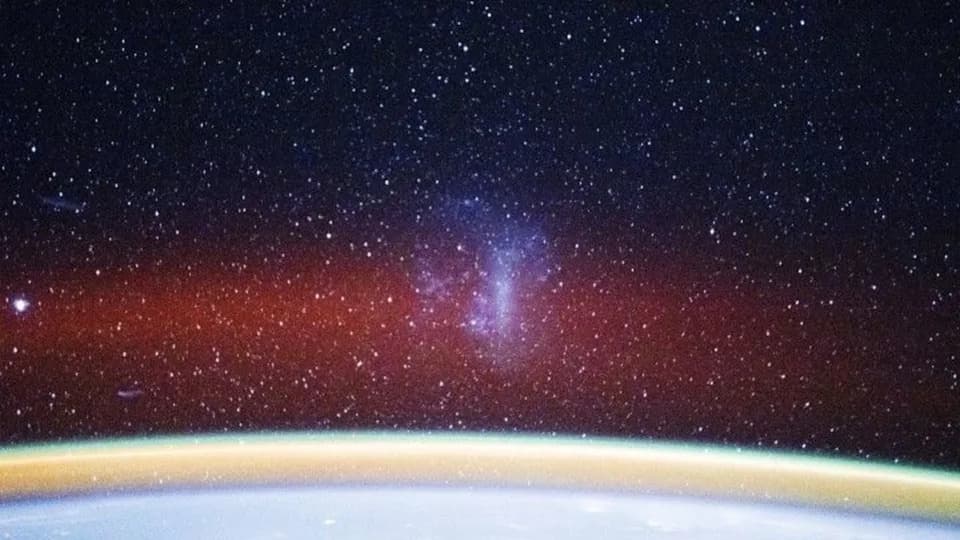
Astronauts aboard Expedition 73 of the International Space Station recently captured striking images of two comets—Comet Lemmon (C/2025 A6) and Comet SWAN (C/2025 R2)—passing above vivid auroras and bands of airglow. NASA posted the photos to its website and social channels after the government shutdown ended; many of the images closely resemble those shared on social media by JAXA astronaut Kimiya Yui.
The shots were taken in October as the station passed over different parts of Earth. In one sequence, Comet Lemmon appears to melt into a green-and-yellow auroral display while the ISS was above Fargo, North Dakota; at that moment Lemmon was about 57.2 million miles (92.1 million kilometers) from Earth. Another image shows Comet SWAN roughly 27.2 million miles (43.8 million kilometers) away, floating above bands of airglow over the waters off Newfoundland and Labrador.
What the images show
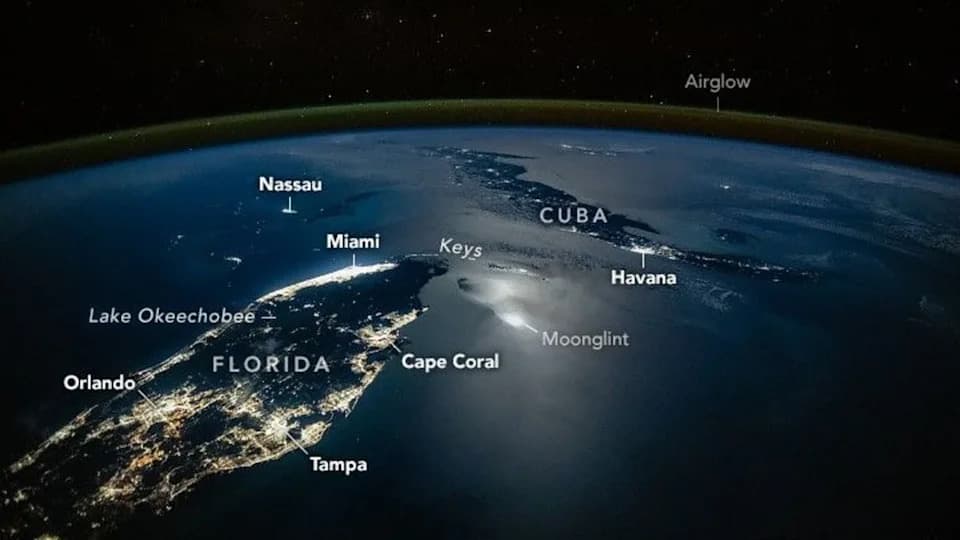
The photographs highlight both comets' glowing comae and tails and the atmospheric phenomena below. Comet tails come in two basic types: ion tails, formed by charged particles pushed directly away from the Sun, and dust tails, created when sunlight and solar wind drive dust particles away from the comet's nucleus. Auroras occur when charged solar particles interact with Earth's magnetic field and atmosphere; airglow is a faint, persistent luminescence produced by high-altitude chemical reactions.
Yui described one scene as "It was just like a mermaid swimming through a sea of auroras," and said the view felt so grand he referred to the comet more formally as "Lemmon-san."
When and why this is notable
It is uncommon to have two bright comets visible at nearly the same time, and rarer still for them to peak in brightness within days of each other. Both Lemmon and SWAN reached peak brightness around Oct. 20–21, giving observers—including the ISS crew—a brief, spectacular opportunity to photograph them together against Earth's luminous atmospheric background.
Discoveries and credits
Comet Lemmon was discovered in January by University of Arizona astronomer David Carson Fuls using images from the Mount Lemmon Survey telescope. Comet SWAN was identified in September by Ukrainian amateur astronomer Vladimir Bezugly from data collected by the SWAN instrument on the European Space Agency’s SOHO observatory. The images were shared publicly by NASA and by JAXA astronaut Kimiya Yui, who provided personal notes and translations on his social feed.
These photographs are striking reminders of how dynamic both our local space environment and the wider solar system can be—visible from low Earth orbit as delicate comets cross in front of Earth's luminous skies.
Help us improve.