A Public First poll of 2,098 U.S. adults (Nov. 14–17) finds broad support among both Democratic-leaning and Republican-leaning voters for redrawing congressional maps to help their own party (54% and 53%, respectively). Public opinion is divided on reform: 38% favor an independent, neutral redistricting process while 34% prefer legislative maps subject to voter approval. Recent state initiatives and court rulings have produced mixed short-term gains, leaving the long-term fate of anti-gerrymandering reforms uncertain.
Poll: Voters in Both Parties Support Partisan Redistricting to Gain an Edge
A recent poll conducted by Public First from Nov. 14–17 of 2,098 U.S. adults finds that voters on both sides of the aisle broadly support redrawing congressional maps to favor their party ahead of next year’s midterms. Among respondents who said they would back Democratic candidates, 54% said they support map changes to help Democrats; among those leaning Republican, 53% said they back map changes to help the GOP.
The results reflect an escalating, nationwide redistricting contest. Party operatives and state leaders have increasingly treated map drawing as an offensive tool rather than a narrowly defensive tactic. The push intensified after President Trump urged Texas Republicans this summer to redraw maps that would benefit the GOP; state and national reactions have followed.
"We've seen an extraordinary public outcry in favor of fighting back against Donald Trump's overreaches in basically every forum," said John Bisognano, president of the National Democratic Redistricting Committee, describing the energy behind recent Democratic efforts.
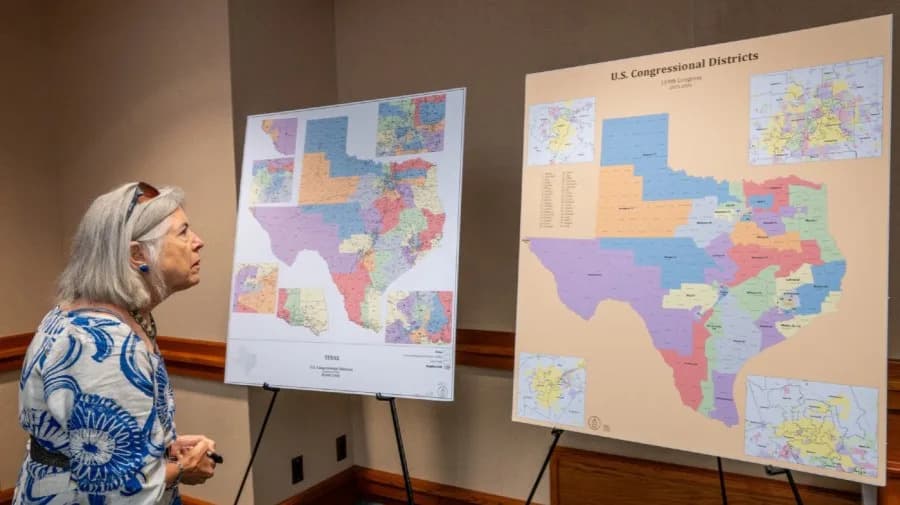
One high-profile response came in California, where voters approved Proposition 50 to redraw several congressional districts in a way that advantaged Democrats. About seven million Californians supported the measure. At the same time, a federal panel this week struck down a recently redrawn Texas map, leaving its fate uncertain as the GOP considers an appeal to the Supreme Court. In Indiana, Republican lawmakers deferred changes to January rather than immediately follow outside pressure.
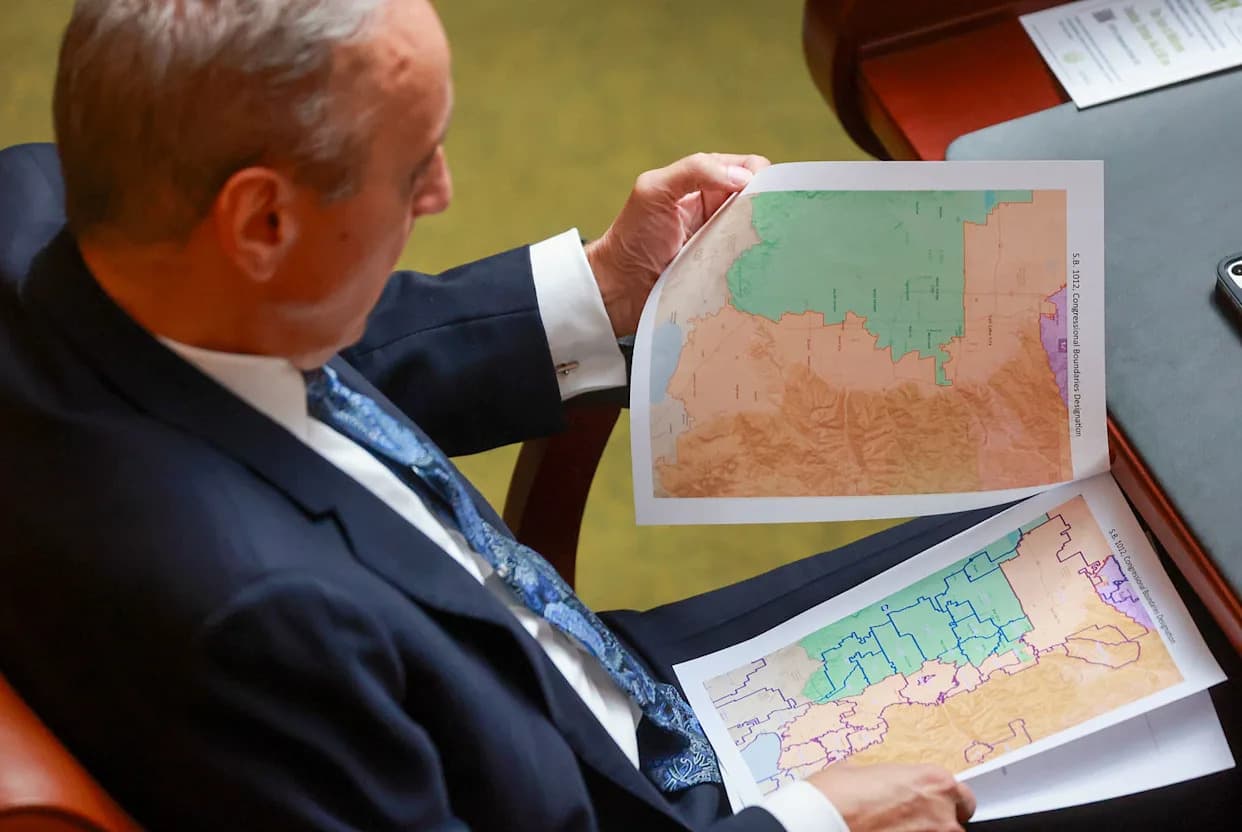
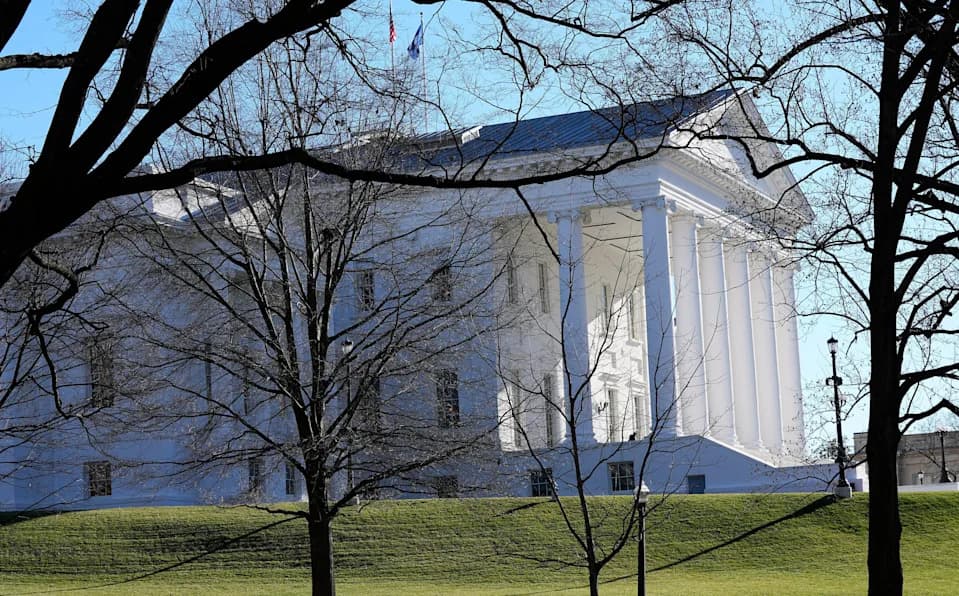
The immediate balance of power in the redistricting fight is mixed. Democratic-friendly moves like California’s Proposition 50 and a recent seat pickup in Utah have given Democrats short-term gains. Virginia’s planned redraw could yield additional Democratic seats if voters approve. Meanwhile, Missouri and North Carolina enacted maps that each create an additional Republican-leaning seat, and Ohio adopted a map that makes two Democratic districts more competitive for Republicans (a redraft required by state law).
Public opinion is divided on how maps should be drawn. When asked about the preferred method, 38% of respondents favored an independent, politically neutral redistricting process. Another 34% said maps should be drawn by state legislatures but approved by voters, 7% supported legislative-only mapmaking without voter approval, and 21% were unsure.
"Redistricting and its excesses are at the top of the agenda of most of the public," said Kareem Crayton, vice president of the Brennan Center for Justice's Washington office. He added that awareness of the issue has grown and that many people now grasp why maps matter politically.
The poll also examined how the public thinks each party should respond when the other side redraws maps. When asked how Democrats should react to Republican gerrymandering, 21% said Democrats should only challenge maps in court, 29% said Democrats should redraw maps to neutralize GOP advantages, and 19% said Democrats should gerrymander to gain an advantage. Responses were similar for how Republicans should respond to Democratic gerrymanders: 20% favored legal challenges, 30% favored neutralizing redraws, and 16% supported gerrymandering for advantage.
Advocates for nonpartisan reform remain hopeful that public support can translate into policy changes. Dan Vicuña of Common Cause said voters generally back reforms like mandating independent processes or banning partisan gerrymandering nationwide. Nevertheless, the short-term incentives for both parties to use mapmaking as a political tool — plus ongoing court actions and state-level battles — make the long-term outlook for anti-gerrymandering reforms uncertain.
In sum, the poll suggests that many voters are comfortable with partisan map-drawing when it benefits their side, even as a sizable plurality still prefers independent redistricting. Whether the current dynamics represent a temporary reaction to recent political events or a lasting shift remains to be seen.
Help us improve.