Supreme Court warns Delhi’s air is so hazardous it could cause “permanent damage” and urged lawyers to use virtual hearings. CAQM reported an AQI of 425, keeping the city in the “severe” category for a third day after a Tuesday reading of 428. The court has ordered Punjab and Haryana to report on stubble burning after satellites detected thousands of crop fires, and phase three GRAP restrictions are now in effect. A public protest at India Gate underscored growing alarm.
Supreme Court Warns Delhi Air Is 'Permanently' Dangerous — Urges Remote Hearings as AQI Soars

Supreme Court raises alarm over Delhi's hazardous air
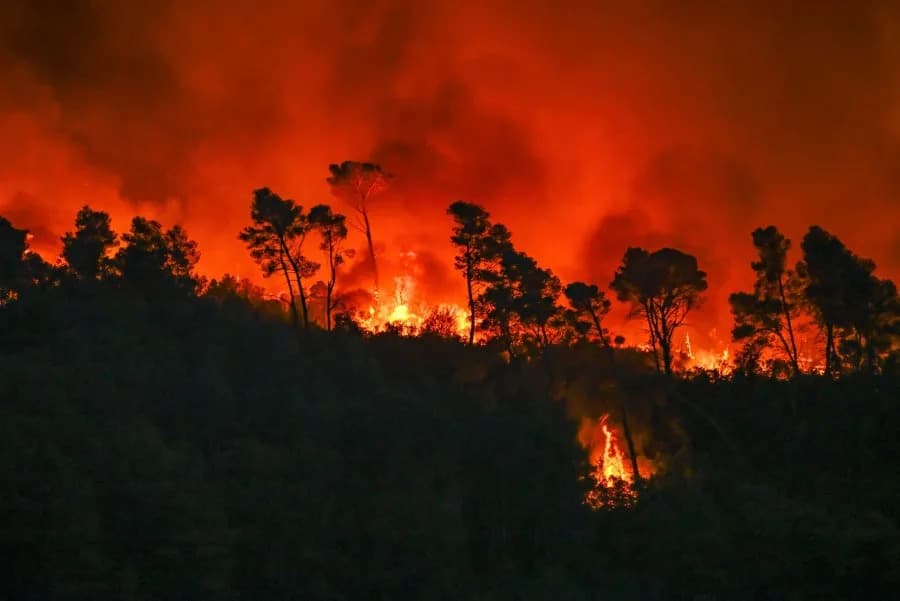
New Delhi — India’s Supreme Court warned that Delhi’s polluted air risks causing “permanent damage” to people’s health and urged lawyers to use the court’s virtual hearing facility rather than appear in person.
“Why are you all appearing here? We have the virtual hearing facility. Please avail it. This pollution ... this will cause permanent damage,” Justice P.S. Narasimha said during the hearing.
When senior advocate and Member of Parliament Kapil Sibal, present in court, replied, “We are using the mask,” Justice Narasimha warned, “Even masks are not enough. It will not suffice.”
Court actions and investigations
The bench directed the governments of Punjab and Haryana to file status reports detailing steps taken to curb stubble burning, which satellite data show has produced thousands of crop-fire incidents in the past week. A separate bench led by Chief Justice Bhushan R. Gavai is monitoring wider pollution-control efforts across the region.
Current situation and response
According to the Commission for Air Quality Management (CAQM), Delhi’s air quality index (AQI) was 425 on Thursday morning, keeping the city in the “severe” category for a third straight day. The city first crossed the 400 mark this season on Tuesday, when the AQI reached 428 — the worst level since December last year.
The spike prompted phase three of restrictions under the city’s Graded Response Action Plan (GRAP), including bans on construction work, tighter curbs on older vehicles, and a move to online classes for younger students.
Public reaction and health impact
Hundreds of people, including parents and environmental activists, staged a rare protest at India Gate last weekend, wearing masks and holding placards — one read: “I miss breathing.” Delhi’s winter smog is driven by vehicle exhaust, industrial emissions, smoke from crop burning and stagnant weather that traps pollutants near the surface.
Fine particulate matter (PM2.5) in Delhi frequently measures more than 20 times the World Health Organization’s recommended limits, leaving the city among the world’s most polluted capitals. A study published in The Lancet linked long-term exposure to air pollution with millions of deaths across India over the past decade.
Next step: The Supreme Court said it will review the situation again on Monday.
Help us improve.