Scientists found layered ice above a buried fossil forest on a remote Canadian Arctic island that may preserve glacier ice far older than expected, possibly more than 1 million years. Radiocarbon tests dated organic material to >60,000 years, and a magnetic reversal signal aligns with a ~770,000‑year geomagnetic flip. Published in Geology, the study suggests these ice‑cored landscapes can record early Pleistocene climates, but the authors warn that modern warming and accelerating thermokarst could threaten those archives.
Ancient Ice Reveals 777,000‑Year Signal — Possible Million‑Year‑Old Glacier Found on Remote Canadian Arctic Island

Ice on a remote Canadian island may preserve a window into the early Pleistocene
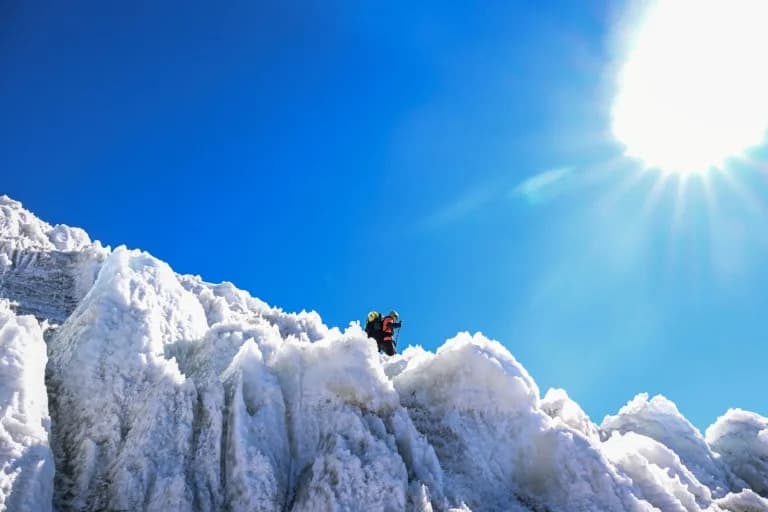
Researchers have uncovered layered ice bodies above a fossilized forest on a remote Canadian Arctic island that may preserve glacier ice far older than expected — possibly exceeding 1 million years. The team first investigated the site in 2009 while studying landslides caused by thawing permafrost and followed up with careful sampling and laboratory analyses.
Radiocarbon dating of organic material recovered from the ice showed ages beyond 60,000 years, indicating long-term preservation. In complementary analyses, a reversal in the alignment of magnetic minerals in the sediments matches a geomagnetic flip that occurred roughly 770,000 years ago, strengthening the interpretation that the deposit records very ancient conditions.
"I was not expecting that at all," said geomorphologist Daniel Fortier, describing the surprise of finding deeply preserved organic material beneath layered ice.
The study, published in the journal Geology, highlights how ice‑rich permafrost and glacier remnants serve as paleoenvironmental archives. Such deposits can lock in fossils, plant remains and even ancient DNA, allowing scientists to reconstruct past climates and ecosystems and to judge how ground‑ice systems responded to earlier warm intervals.
Contextualizing the find, NASA notes that Earth has experienced several major glacial–interglacial cycles during the past ~800,000 years. But recent warming is largely driven by human activities, especially the burning of fossil fuels, and is accelerating changes in glaciers, permafrost and sea level.
Warming and increased thermokarst — the thawing and collapse of ice‑rich ground — threaten to destabilize these fragile archives and could release stored carbon or destroy unique records of Earth’s past. The authors write that the discovery indicates some resilience in ice‑cored terrain to past warmer climates but caution that accelerated modern warming could put these long‑lived archives at risk.
Why it matters: Preserved ancient ice offers a rare opportunity to study early Pleistocene environments directly, improving our understanding of long‑term climate dynamics and biological responses. Protecting and studying these sites quickly is critical before thaw and erosion erase their records.
Sources: field research led by Daniel Fortier, Science News coverage, and the Geology paper; broader context from NASA on glacial cycles and human‑driven climate change.
Help us improve.