Scientists exploring Sulfur Cave on the Greece–Albania border discovered a silken sheet exceeding 100 m² that shelters more than 100,000 spiders from two species. Analyses show these cave populations are genetically and microbially distinct from surface relatives and feed on cave-born animals within a sulfur-driven chemoautotrophic food web. Barn funnel weavers constructed thousands of overlapping funnel webs that sheetweb spiders then occupied — the first recorded colonial web formation for both species. The find showcases how surface spiders can adapt social behaviour and thrive in an isolated subterranean ecosystem.
Spider 'Megacity' Discovered in Sulfur Cave — Web Over 100 m² Hosts 100,000+ Spiders

Spider 'Megacity' Found in Sulfur Cave on Greece–Albania Border
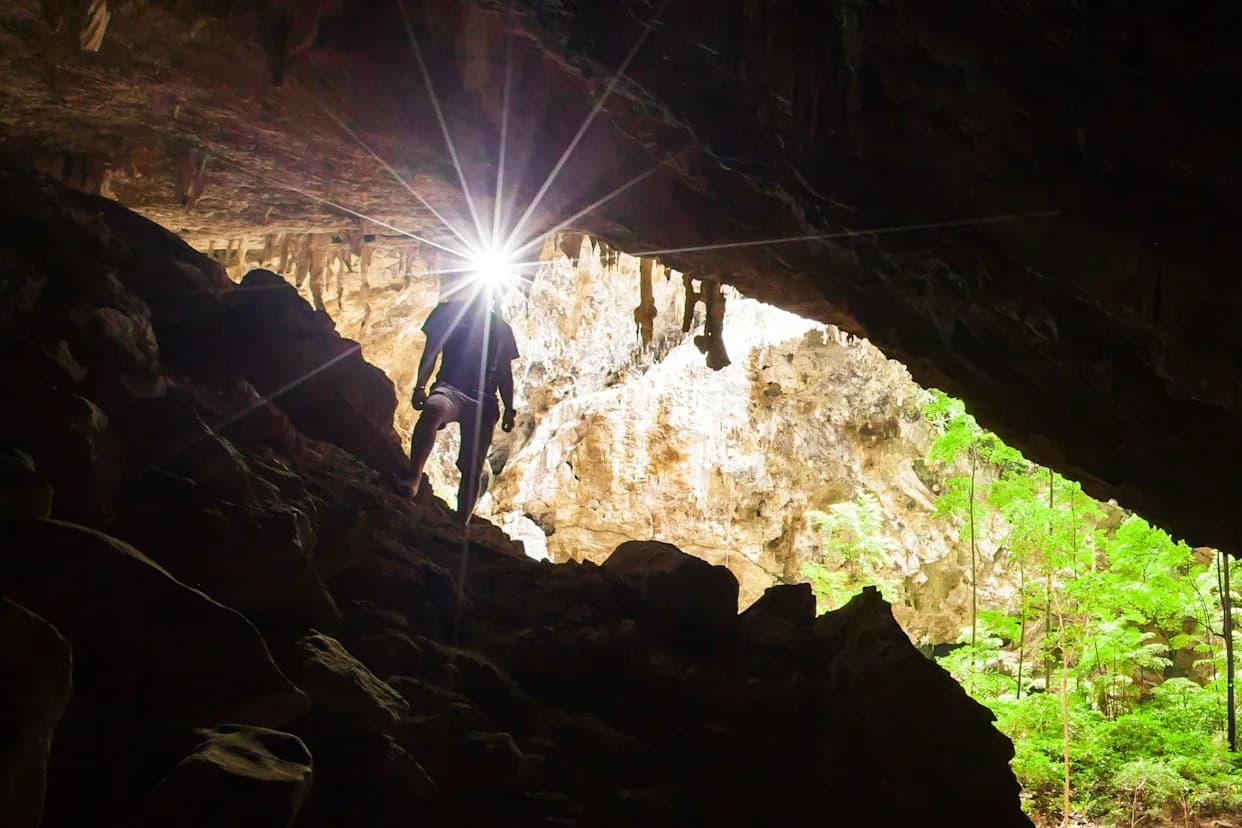
Deep inside Sulfur Cave — a limestone network whose entrance lies in Greece and whose passages extend into Albania — researchers have found what may be the largest known spider web: a glistening silken sheet covering more than 100 square meters (about 1,077 sq ft).
The pearly expanse shelters an estimated >100,000 spiders from two species: roughly 69,000 barn funnel weavers (Tegenaria domestica) and about 42,000 sheetweb spiders (Prinerigone vagans).
Recreational cavers first reported the extraordinary silken carpet in 2022. A team led by arachnologist István Urák of Sapientia Hungarian University of Transylvania returned for multiple studies and reports this as the first documented case of true colonial web formation for either species.
"Our findings unveil a unique case of facultative coloniality in this cosmopolitan spider, likely driven by resource abundance in a chemoautotrophic cave, and provide new insights into the adaptation and trophic integration of surface species in sulfidic subterranean habitats," the researchers write.
Structural analyses indicate the barn funnel weavers built the underlying network of thousands of individual funnel-shaped webs that overlap and interconnect, forming a continuous sheet. The sheetweb spiders then moved in and occupied space among those funnels, resulting in peaceful cohabitation on an unprecedented scale.
Genetic, microbiome and stable isotope analyses show the cave populations are genetically and microbiologically distinct from surface relatives, with no sign of recent gene flow. Generations of isolation appear to have reshaped both their genomes and gut microbes, effectively making this colony cut off from the surface world.
Isotope results reveal that the colony feeds on animals born inside the cave rather than on insects drifting in from outside. Sulfur Cave supports a chemoautotrophic ecosystem: sulfur-oxidizing microbes form mats that sustain grazers such as isopods and springtails; those grazers support predators including midges, centipedes and beetles; and spiders prey heavily on the abundant midge population. The most densely webbed sections of wall correspond to areas with the highest midge densities.
Although spiders may not appeal to everyone, this system is a remarkable example of surface-dwelling species entering and adapting to a sulfidic, lightless food web — even altering social behaviour to exploit rich, localized resources.
Publication: The discovery and analyses are reported in the journal Subterranean Biology.
Help us improve.