The Supreme Court reconvenes ahead of the 2026 midterms with a docket full of high-stakes cases, including a major climate liability suit that could involve billions, several Trump-related appeals, and key questions on guns, voting, religion and immigration. Many cases — from AR-15 bans to the rapid deportation of migrants and the funding of religious schools — could have significant legal and political consequences. Experts and polls disagree on whether the court is guided primarily by law or politics, and unpredictable decisions are likely.
Supreme Court Opens High-Stakes Term Ahead Of 2026 Midterms — Trump Appeals, Climate Case And Major Social Questions Loom

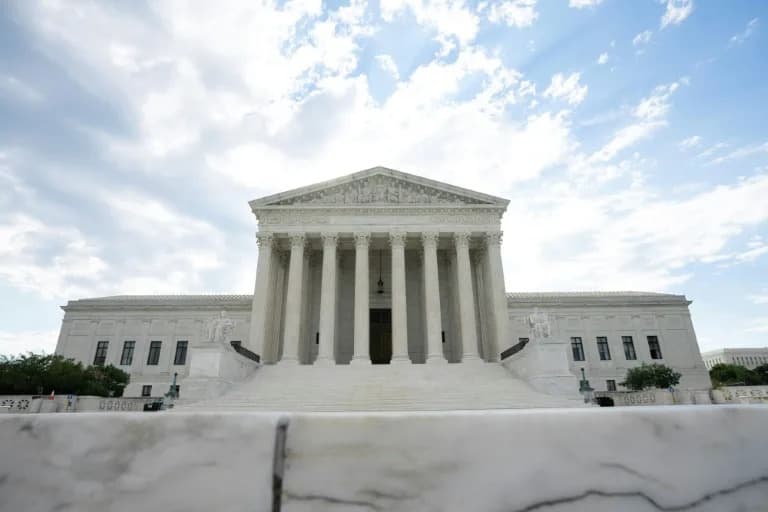
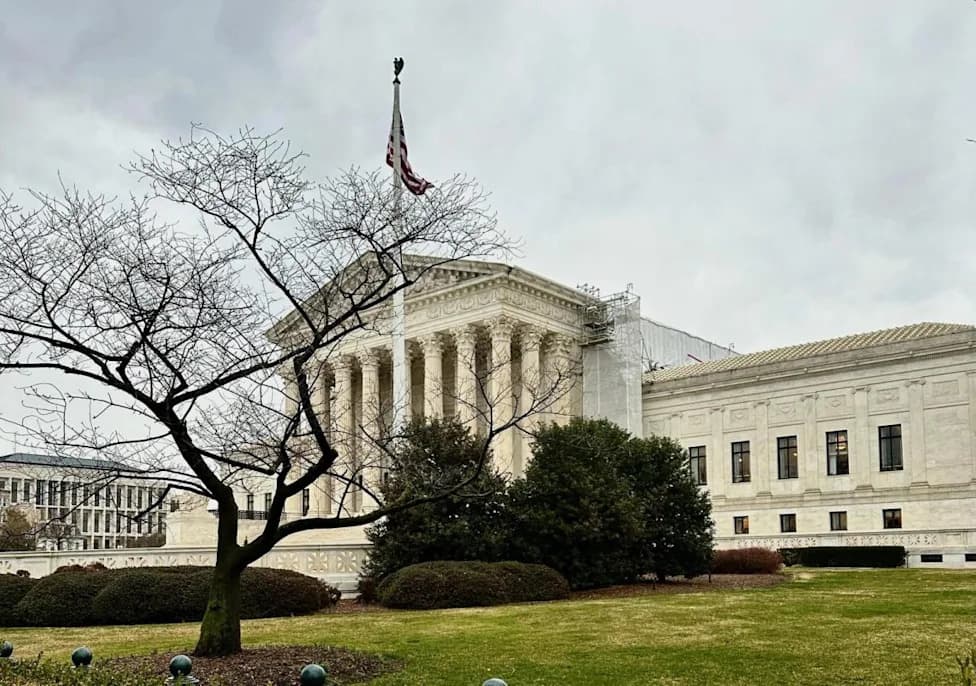
Elizabeth Frantz/Reuters, FILE - PHOTO: A general view of the Supreme Court., June 18, 2026.
The U.S. Supreme Court returns to work on the eve of the 2026 midterm elections for a term that will resolve a string of high-profile disputes tied to President Donald Trump, climate liability claims and several consequential questions about guns, voting, religion and immigration.
First Cases And Big Stakes
The term’s opening oral argument centers on a novel climate lawsuit in which a coalition of local governments is seeking billions of dollars in damages from energy companies for harms allegedly caused by fossil fuels. If the justices allow the case to proceed, the financial stakes could be enormous.
Other Major Issues On The Docket
The court is also scheduled to consider whether states may:
- Ban semi-automatic weapons such as the AR-15;
- Refuse to provide federal ballots to voters who do not supply proof of citizenship on state registration forms;
- Exclude religious schools from taxpayer-funded programs when those schools discriminate against LGBTQ+ families.
Additional matters under consideration include challenges to the Trump administration’s authority to rapidly deport migrants to third countries without first allowing them to present persecution fears, the indefinite detention of immigrants without bond, state mandates to display the Ten Commandments in public classrooms, legal protections for providers who mail abortion pills across state lines, and the regulation of prediction markets such as Kalshi and Polymarket. Most of these cases are not expected to be decided before the November midterms.
Personal Appeals From President Trump
President Trump has multiple personal appeals before the court, including requests to:
- Invalidate an $83 million civil judgment against him in the E. Jean Carroll defamation case;
- Revive a conspiracy claim tied to Hillary Clinton and the Democratic National Committee stemming from the 2016 campaign;
- Allow defamation claims against CNN related to the 2020 election to proceed.
“Is the court a Republican court? Is it resolving disputes in the name of justice or some broader set of principles? I think it's a very live question,” said Genevieve Lakier, a constitutional scholar at the University of Chicago Law School. “This term, like the last, is going to provide fuel to the fire of that question.”
Public Trust And The Court’s Record
A Marquette University poll last month found that a majority of Americans believe the justices are primarily motivated by politics and that the current 6-justice conservative supermajority often rules in ways that benefit Trump. Many scholars and some justices disagree with that perception.
Last term the court ruled against the president on several major policy initiatives that reached it — including challenges to broad global tariffs, an executive order on birthright citizenship, deployment of National Guard troops to cities, the removal of a Federal Reserve governor, and certain Postal Service ballot rules. At the same time, the conservative majority has been more deferential to the administration on numerous emergency filings; one analysis found the president prevailed in roughly nine out of ten emergency matters that came before the court.
“I don't see this as a court that is just like, 'We're just going to rubber stamp what the current administration does.' You know, quite the opposite,” Justice Elena Kagan said at a judicial conference. “I think that that is a bad rap.”
Former Solicitor General Donald Verrilli and veteran observers say the court is carefully asserting institutional independence even as it faces politically charged litigation. Irv Gornstein of the Georgetown Supreme Court Institute noted that outcomes are often unpredictable, asking whether the court will continue to hold the line against executive overreach or consistently side with conservative positions.
The term promises consequential rulings that could shape policy and the political landscape well beyond November.
Help us improve.