The US Supreme Court opens a consequential term with major cases on immigration, gun bans, climate litigation and voting rules. Key issues include the legality of "third‑country" deportations and automatic detention of undocumented migrants, whether local climate suits against oil companies may proceed, and challenges to voter‑registration and firearm restrictions. The term also raises questions about religion and non‑discrimination in schools amid waning public approval of the Court.
Supreme Court Opens High‑Stakes Term: Immigration, Guns, Climate and Voting On The Docket
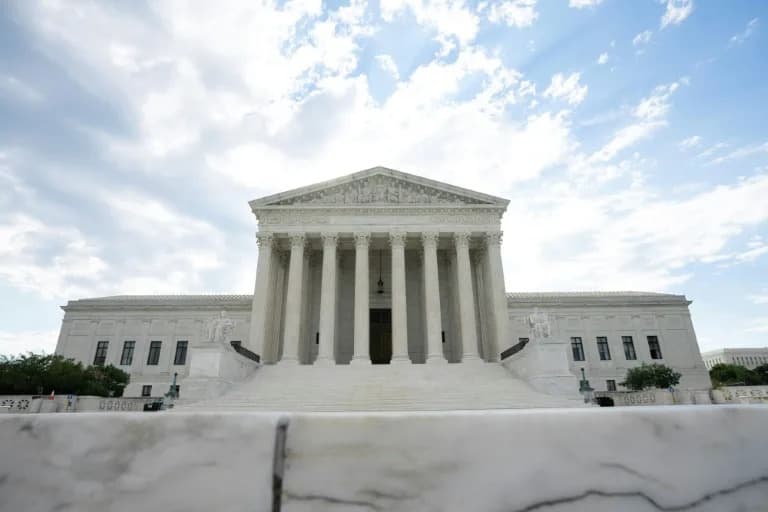
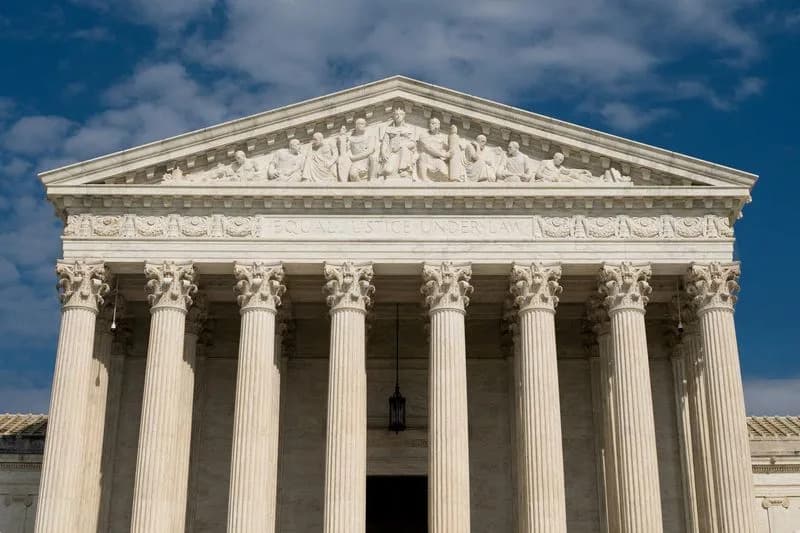
Immigration, gun rights and climate change are on the Supreme Court docket (Stefani Reynolds)
The US Supreme Court begins a new term with a series of high‑profile cases that will shape immigration policy, gun rights, climate litigation and voting rules. The decisions the justices hand down over the coming months could have profound effects on federal power, state authority and individual rights.
Timing And Context
The term opens about a month before pivotal midterm elections that could change control of Congress. If Republicans lose the House or Senate, the White House may rely more heavily on the conservative-dominated court to secure policy wins. Yet the court has not been uniformly aligned with President Donald Trump; earlier this year he faced defeats on tariffs and a bid to restrict birthright citizenship, prompting public criticism of the justices he appointed.
Conservative Majority And Emergency Decisions
The court’s 6–3 conservative majority has nonetheless enabled expansive executive actions and produced several emergency‑docket rulings — fast-tracked decisions issued without full oral argument. Late in September the court temporarily allowed the administration to continue so‑called "third‑country" deportations, a move issued over dissent from the three liberal justices.
Third‑Country Deportations
Oral arguments in the immigration case are scheduled for the fall term. A ruling for the administration could broaden the use of deportations to countries other than a migrant’s homeland. Since Trump resumed the presidency, the administration says more than 25,000 people have been transferred to third countries under confidential agreements with roughly 35 nations, many in Latin America and Africa.
Mandatory Detention
In a separate immigration dispute, the court will consider a policy that treats certain undocumented migrants as subject to automatic detention — including people who have lived in the United States for years — instead of releasing them while their cases proceed. Cecillia Wang, national legal director of the ACLU, argues the administration is interpreting the mandatory detention statute in a way no prior administration has in three decades and that the policy is intended to pressure migrants to "self‑deport."
Climate Litigation
The term's opening case could determine whether local governments may pursue climate‑related lawsuits against oil companies for their role in causing global warming, or whether those suits are preempted by federal law. The decision could affect a wave of similar claims brought by cities and counties seeking damages and adaptation costs from fossil‑fuel producers.
Voting Rules And Election Law
The justices will hear a challenge to an Arizona law requiring proof of citizenship to register to vote. Republican officials, including President Trump, have long alleged without firm evidence that non‑citizens vote in meaningful numbers; research indicates such incidents are extremely rare.
Gun Rights
Gun‑rights advocates return to the court in a case challenging state and local bans on certain semi‑automatic rifles, including AR‑15‑style weapons. The ruling could clarify the extent to which courts may limit access to commonly owned firearms under the Second Amendment.
Religion, Schools And Non‑Discrimination
The justices will also confront the role of religion in public education in a Colorado case involving a Catholic preschool that denies admission to children of LGBTQ+ parents. The central question is whether a religious school that receives public funds may claim an exemption from general non‑discrimination rules that apply to other recipients of taxpayer money.
Institutional Concerns
On the eve of the term, Justice Samuel Alito said he was "concerned about the future of the court," warning of what he described as efforts to intimidate justices. Public confidence in the court is low: a recent Gallup poll found only 34 percent of US adults approve of the job the Supreme Court is doing, roughly unchanged from record‑low levels earlier in the year.
“I gave them the position of a lifetime, and they vote against me often,” President Trump told Time magazine about the justices he appointed.
“There has been a concerted effort to intimidate the court and justices on the court to try to influence us to decide cases,” Justice Samuel Alito said in a television interview.
The new term will test the balance between executive authority, state and local powers, private rights and public interests — and could produce rulings with lasting national impact.
Help us improve.