Researchers are exploring "cancer interception" to detect and treat precancerous pancreatic lesions before they become invasive. The RAS‑targeting drug daraxonrasib (Rasonque) recently earned FDA approval for certain metastatic cases after a trial showed median survival of 13.2 vs. 6.7 months with standard chemotherapy. Large studies such as PRECEDE, experimental blood tests, AI imaging and early KRAS vaccine trials are expanding early‑detection and prevention research. Interception is promising but remains investigational because of drug toxicity and the need to prove preventive benefit in people.
Intercepting Pancreatic Cancer: New Drug, Vaccines and Early‑Detection Efforts Offer Hope
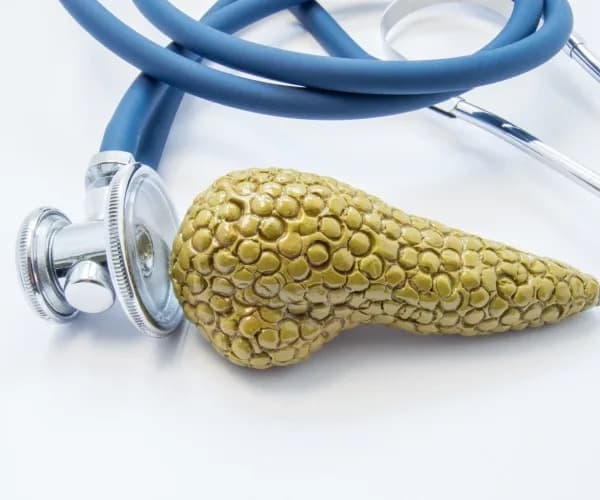
(Adobe Stock)
What if clinicians could stop pancreatic cancer before a tumor ever becomes lethal? Scientists are pursuing that possibility through a strategy called "cancer interception," which aims to identify abnormal cells or precancerous lesions in people at high risk and treat them before invasive disease develops.
Why Interception Matters
The approach remains experimental, but several recent advances — an FDA drug approval, progress in early detection, and encouraging vaccine and laboratory research — have given pancreatic cancer researchers renewed optimism, according to reporting in Nature. Pancreatic cancer often produces few or vague symptoms until it is advanced: more than half of cases are diagnosed after the disease has spread. Five‑year survival is roughly 13% overall, about 3% for metastatic disease, and about 44% when the tumor is confined to the pancreas. Shifting more patients into that early window could meaningfully improve outcomes.
"A combination of early detection and interception is going to be the breakthrough strategy that really changes survival," said Dr. Diane Simeone, director of the Moores Cancer Center at UC San Diego Health.
New Drug: Daraxonrasib (Rasonque)
A major development is daraxonrasib, marketed as Rasonque, an oral once‑daily drug that targets RAS proteins that drive many pancreatic cancers. In August the U.S. Food and Drug Administration approved the drug for certain adults with metastatic pancreatic adenocarcinoma who have already received at least one systemic treatment or who are not candidates for multi‑drug systemic therapy. In a randomized clinical trial of about 500 patients, those receiving daraxonrasib had a median overall survival of 13.2 months versus 6.7 months for those receiving standard chemotherapy.
Researchers are now asking whether drugs that block the same cancer‑driving pathway could be used earlier — even at the precancerous stage. In genetically engineered mice predisposed to pancreatic cancer, treatment with a KRAS inhibitor after small precancerous lesions appeared extended survival, a promising result that still requires years of study before translation to people.
Finding Cancer Before It Spreads
Interception depends on identifying people at elevated risk. PRECEDE, an international research effort, is enrolling people with a family history of pancreatic cancer, known inherited genetic variants, or other risk factors. More than 12,000 participants have joined toward a target of 20,000; over 50 enrollees have been diagnosed with pancreatic cancer, many at very early stages. Investigators are collecting blood samples and imaging data to develop better early‑detection methods and plan to evaluate experimental blood tests and artificial intelligence to spot subtle abnormalities on scans.
Intensive surveillance is not intended for the general population. The American Cancer Society recommends MRI and/or endoscopic ultrasound surveillance for people with a strong family history or certain genetic predispositions, while routine screening is not advised for average‑risk adults without symptoms.
Vaccines And Other Preventive Ideas
One promising prevention approach is a vaccine that primes the immune system to recognize cells carrying mutated KRAS proteins. In an early‑stage trial reported this year, an experimental KRAS vaccine produced targeted immune responses in 90% of 20 high‑risk participants. While immune activation is encouraging, researchers do not yet know whether the vaccine will prevent cancer.
Other teams are exploring ways to prevent vulnerable pancreatic cells from changing identity and progressing toward malignancy — analogous to treating high cholesterol to prevent heart attacks, as Dr. Sahar Nissim of Dana‑Farber describes the concept.
Balancing Benefits And Risks
Treating otherwise healthy individuals with potent cancer drugs raises important safety concerns. Rasonque can cause significant side effects — rash, diarrhea, mouth inflammation, nausea, fatigue and vomiting — and the FDA label lists warnings for several potentially serious complications. Before interception could become routine, researchers may need lower doses, shorter courses, or newer agents with more favorable toxicity profiles.
Where We Are Now
Pancreatic cancer interception remains a research strategy rather than standard clinical practice. Still, after decades of slow progress, researchers now have multiple tools — targeted drugs, vaccines, improved imaging, molecular tests and AI — to explore whether pancreatic cancer can be detected and treated earlier, or even prevented.
Reporting based on Nature and expert comments from investigators at NYU Langone, UC San Diego, the University of Pennsylvania and Dana‑Farber Cancer Institute.
Help us improve.