Europe’s summer of 2026 delivered more than record heat: a web of linked extremes including unusually warm seas, widespread drought, low river flows and active wildfires amplified impacts across the continent. Western Europe saw its warmest summer on record at 21.7°C, averaging 17 days above 30°C and a record 41 days of strong heat stress. About half of Europe experienced drought by late August, 12 major rivers had a combined deficit of ~69 km³, and wildfires nearly doubled the recent average—contributing to an estimated €180 billion hit to EU GDP.
Europe’s Summer 2026: Heatwaves, Drought and Wildfires — A Compound Climate Crisis
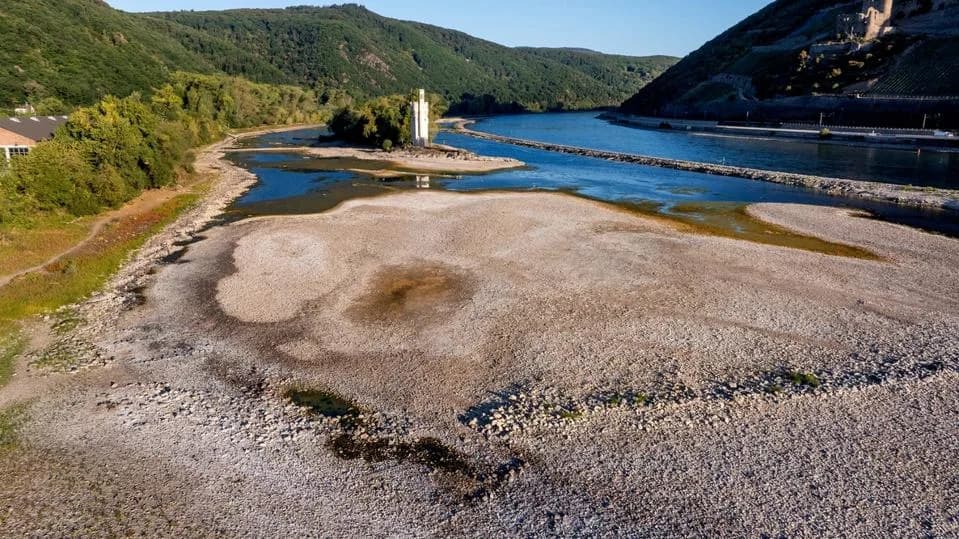
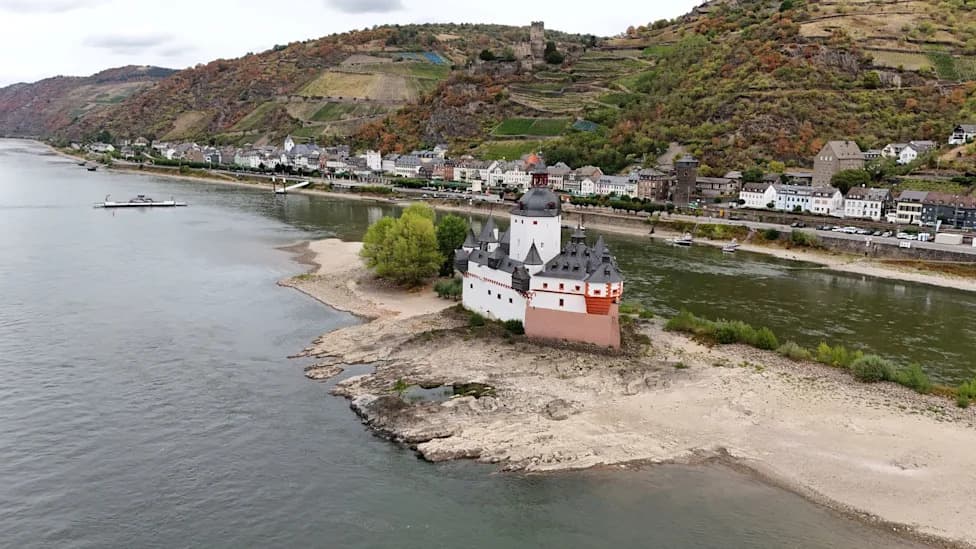
Picture taken on August 14, 2026 with a drone shows the "Binger Mäuseturm" (Bingen Mouse Tower) on a small island in the dried-up river Rhine near Bingen, western Germany. As a heat wave dries Germany's rivers, government ministers are at odds over what to do about it — re-engineer the waterways or restore them to their natural state. The debate has flared as precariously falling water levels have revealed vast sandbanks on the Rhine, Danube, Elbe and other rivers, severely impacting cargo shipping crucial for many industries. With climate change driving new heat records and longer dry spells in Europe and beyond, scientists warn that the problem will intensify in coming years. (Photo by Torsten Silz / AFP via Getty Images)afp/AFP via Getty Images
Drone image taken on 14 August 2026 shows the Binger Mäuseturm standing on a small island in the dried riverbed of the Rhine near Bingen, western Germany — a stark symbol of how low river levels exposed sandbanks and disrupted cargo shipping.
As temperatures soared across Europe in the summer of 2026, a cluster of interconnected extremes—record heat, unusually warm seas, severe drought and intense wildfires—combined to produce widespread environmental, economic and public-health impacts, according to new analysis from the Copernicus Climate Change Service (C3S).
Western Europe recorded its warmest summer on record, with an average temperature of 21.7°C, surpassing the previous 2003 benchmark. It was not just the intensity of the heat but its persistence and geographic reach that made this season exceptional: Western Europe averaged 17 days above 30°C (versus 11 in 2003 and seven in 2025), and the region experienced a record 41 days of strong heat stress by season’s end.
Dr. Samantha Burgess, Strategic Climate Lead at the European Centre for Medium-Range Weather Forecasts, said the most exceptional temperatures occurred in late spring and early summer and that the geographic extent of the warmth was remarkable.
Sea-surface temperatures also reached record highs in several regions, notably the Bay of Biscay, the Western Mediterranean, the Irish Sea and parts of the North Sea. In places in the Western Mediterranean, daily sea-surface temperatures approached 30°C, amplifying marine heat impacts.
Crucially, a dry spring set the stage for the cascading impacts that followed. Rainfall deficits in Central Europe created exceptionally dry soils and low river flows that persisted into summer. According to the Standardized Precipitation Evapotranspiration Index (SPEI), drought affected nearly half of Europe by the end of August.
The 12 major European river systems together experienced an estimated water deficit of about 69 cubic kilometres—roughly equivalent to two years of European public water supply—which severely disrupted inland shipping on rivers such as the Rhine, Danube and Elbe and intensified political debate over whether to re-engineer waterways or restore them toward their natural state.
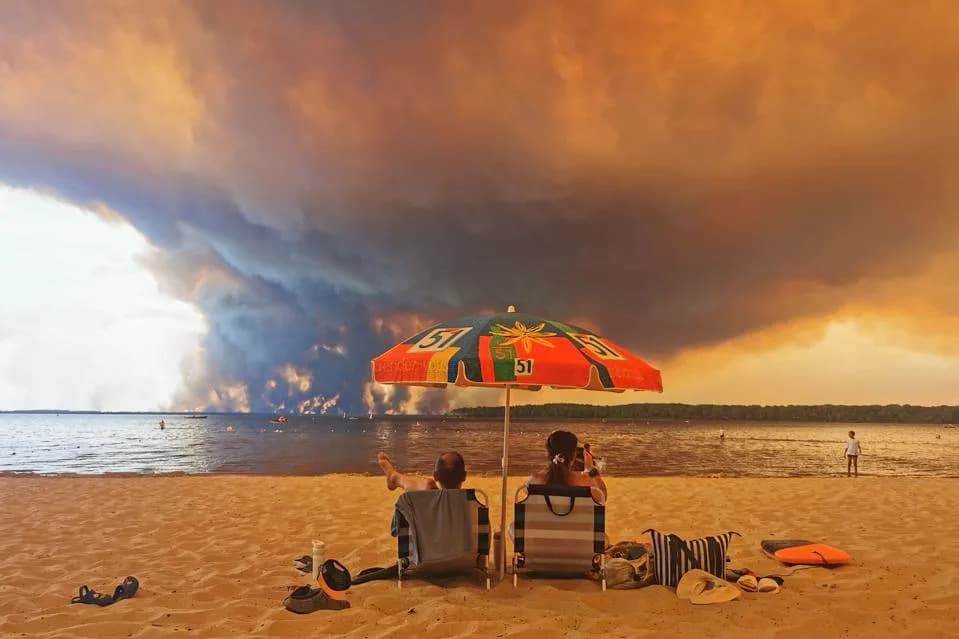
The persistent dry conditions and repeated heatwaves also fueled an exceptionally active wildfire season. Data from the European Forest Fire Information System (EFFIS) show that by 2 September the area burned across the EU was nearly twice the 2006–2025 average for that date. Copernicus Atmosphere Monitoring Service (CAMS) data placed wildfire emissions among the top 10 highest totals since 2003, exposing millions to hazardous air pollution levels.
"One of the defining characteristics of this summer was that it was not a single record; it was the way that multiple records appeared together across the climate system," Dr. Burgess said. "We have seen dry soils intensifying temperatures, meteorological drought spreading, rivers reaching record lows and wildfire risk increasing. What began as a meteorological story has become a water story, a health story and an ecosystem and economic story."
Economically, the fallout has been immediate: a recent assessment by Triodos Bank estimated that the extreme summer weather could reduce EU GDP by roughly €180 billion, effectively erasing the growth that had been forecast for the year.
This compound event underlines how heat, drought, marine warming and fires can interact to create cascading risks for infrastructure, health, agriculture, ecosystems and commerce—and it highlights the urgency of adapting water management, public-health planning and supply chains to a warmer, drier future.
Help us improve.