The Mie University team led by Ryotaro Hashizume used whole-genome sequencing and allele-specific CRISPR-Cas9 guides to selectively target and eliminate an extra chromosome 21 in cultured human cells. Using multiple cut sites increased chromosome-loss rates (13-site experiments averaged ~13.1%; optimized conditions reached up to 37.5%), and rescued cells showed gene-expression and proliferation changes toward a disomic state. The work is an in vitro proof of concept, not a clinical therapy, and major safety, delivery, and ethical hurdles remain before any patient application.
Japanese Team Uses Allele-Specific CRISPR To Remove Extra Chromosome 21 In Lab-Grown Human Cells — Not A Therapy

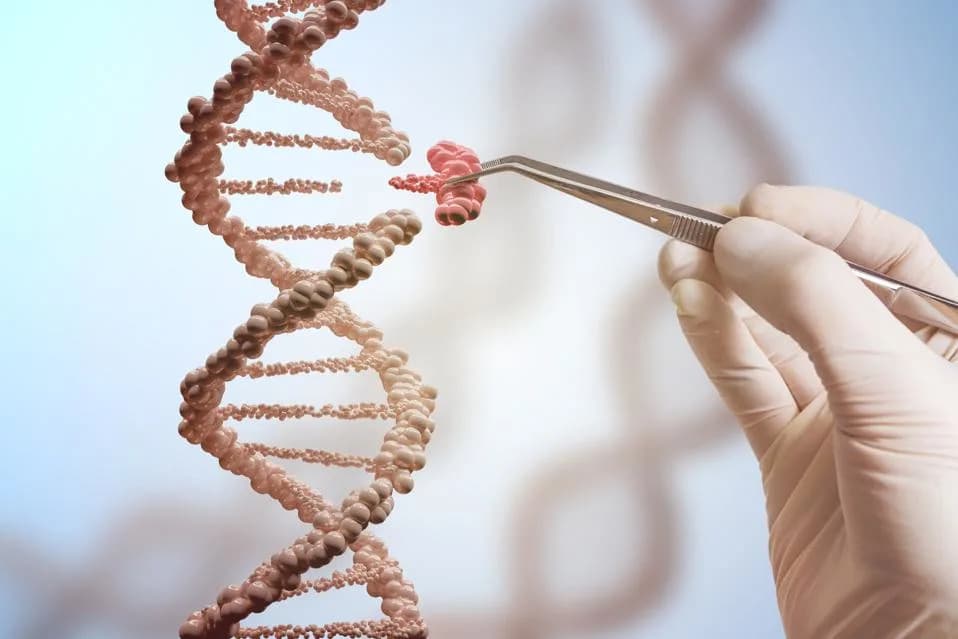
Krot Studio / Getty Images
A Japanese research team led by Ryotaro Hashizume at Mie University Graduate School of Medicine reported that allele-specific CRISPR-Cas9 can be used to remove an extra copy of chromosome 21 from cultured human cells. Published in PNAS Nexus on February 18, 2025, the study is a peer-reviewed in vitro proof of concept — an important laboratory advance that is not a clinical treatment.
What The Researchers Did
The team used whole-genome sequencing to distinguish the three copies of chromosome 21 in samples from people with Down syndrome and to identify DNA sequences unique to a single chromosome copy. Using that information, they designed allele-specific guide RNAs for CRISPR-Cas9 to cut only the targeted chromosome copy rather than all three.
Key Experimental Findings
- Multiple cuts increased chromosome loss: Introducing numerous allele-specific breaks along the target chromosome raised the likelihood that cells would lose that extra chromosome. Experiments with 13 allele-specific cut sites produced an average correction rate of ~13.1% in one setup.
- Optimized conditions improved efficiency: By temporarily suppressing DNA-damage-response pathways, the team reported removal rates up to 37.5% in some experiments.
- Cell types tested: The method worked in induced pluripotent stem cells (iPSCs) derived from people with Down syndrome and in skin fibroblasts, including some differentiated, non-dividing cells.
- Functional impact: Cells that lost the extra chromosome showed shifts in gene-expression profiles, proliferation, and other cellular characteristics toward a normal two-chromosome (disomic) state.
Important Caveats And Challenges
Laboratory, Not Clinical: All work was performed on cultured human cells. No patients received this treatment and the authors characterize the work as an in vitro proof of concept.
Major technical and safety hurdles remain before any clinical application could be considered:

Photo byNathan AndersononUnsplashPhoto by Nathan Anderson on Unsplash
- Off-target effects and genomic stability: CRISPR creates DNA breaks. The approach must be rigorously evaluated to ensure it does not introduce harmful mutations, chromosomal rearrangements, or other genomic instability.
- Allele specificity: Removing one of three chromosome copies requires precise identification of which copy to target, because the three homologs may not be biologically interchangeable.
- Delivery challenges: Any future therapy would need safe, efficient methods to deliver editing components to the correct cell types across tissues in a living person.
- Ethical and regulatory considerations: Chromosome-level editing raises complex ethical, safety, and regulatory questions that would need extensive public and expert engagement.
Why Context Matters
Social-media posts in September 2026 amplified this February 2025 laboratory finding and sometimes implied it was an available or imminent therapy. That is inaccurate. The study demonstrates a promising technical capability in cells grown in the lab; translating that capability into safe, effective, and ethical therapies would require many additional years of research, careful safety testing, and regulatory review.
Bottom line: The Mie University team showed that allele-specific CRISPR can remove an extra chromosome 21 from cultured human cells and shift cellular behavior toward a disomic state, but this remains an experimental in vitro result, not a clinical treatment.
Original peer-reviewed paper: "Trisomic rescue via allele-specific multiple chromosome cleavage using CRISPR-Cas9 in trisomy 21 cells," PNAS Nexus, Feb 18, 2025. Media mention: Men's Journal (original story published Oct 2, 2026).
Help us improve.