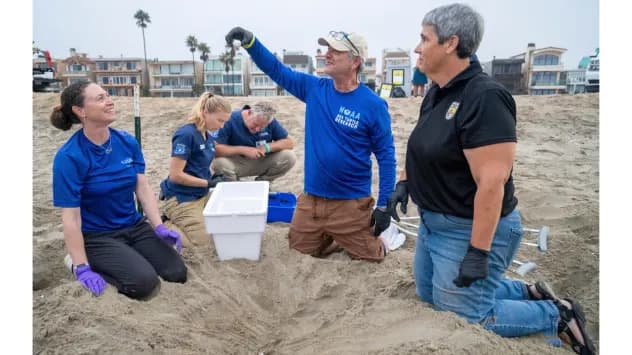
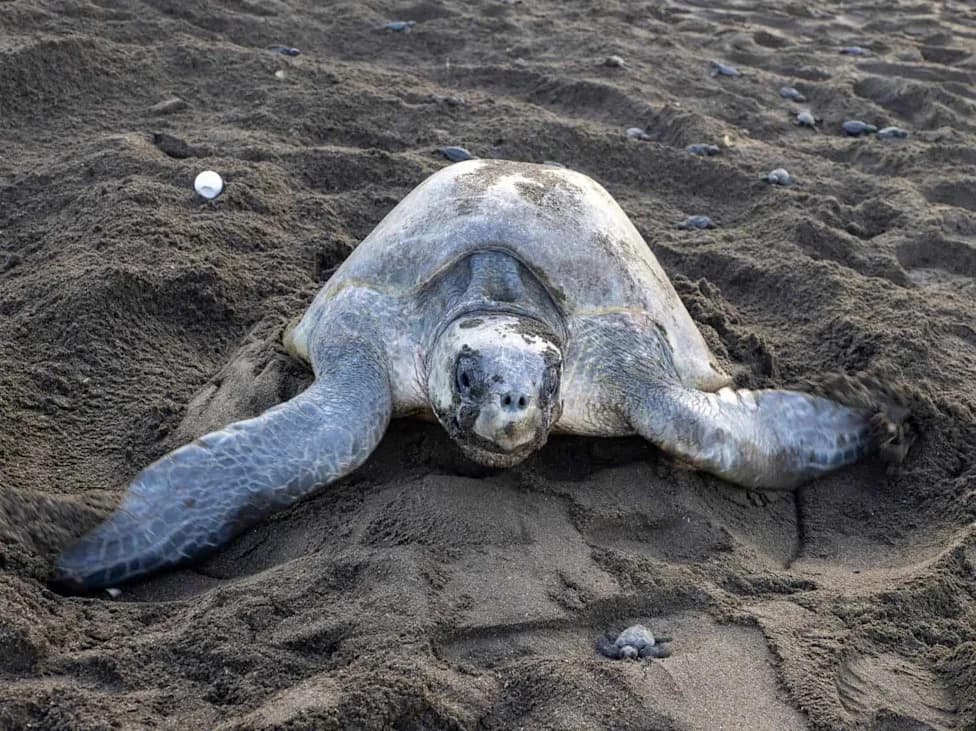
Two endangered olive ridley sea turtles nested on Southern California beaches in September 2026 — at Seal Beach National Wildlife Refuge on Sept. 16 and at Huntington Beach on Sept. 19. Photographs confirmed two separate turtles; officials have cordoned off both nest sites and are monitoring them. Eggs typically incubate 45–60 days, with sand temperature affecting hatch success and sex ratios. Scientists suspect the Super El Niño and recent storms helped drive these unusual nestings northward.
Historic First: Endangered Olive Ridley Turtles Nest on Southern California Beaches
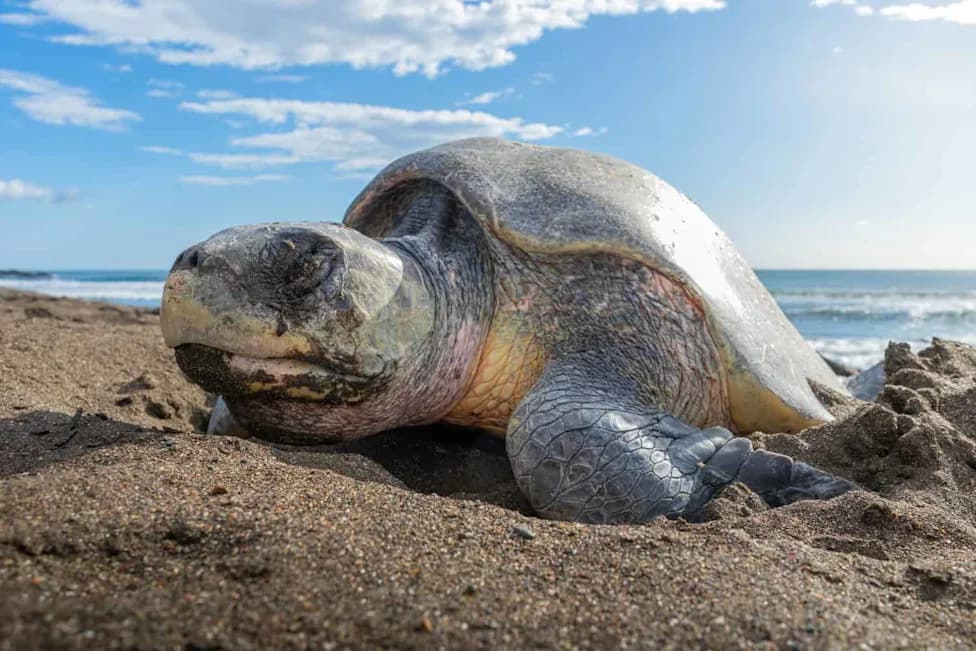
Olive Ridley Sea Turtle Costa Rica© Kevin Venegas Barrantes/Shutterstock.com
Southern California recorded an extraordinary marine event in September 2026: endangered olive ridley sea turtles (Lepidochelys olivacea) dug nests and laid eggs on West Coast sand for the first time on record. Sightings of unusual marine life along the coast this season — from whale sharks and mahi-mahi to yellow-bellied sea snakes and hammerheads — set the stage for this surprising arrival.
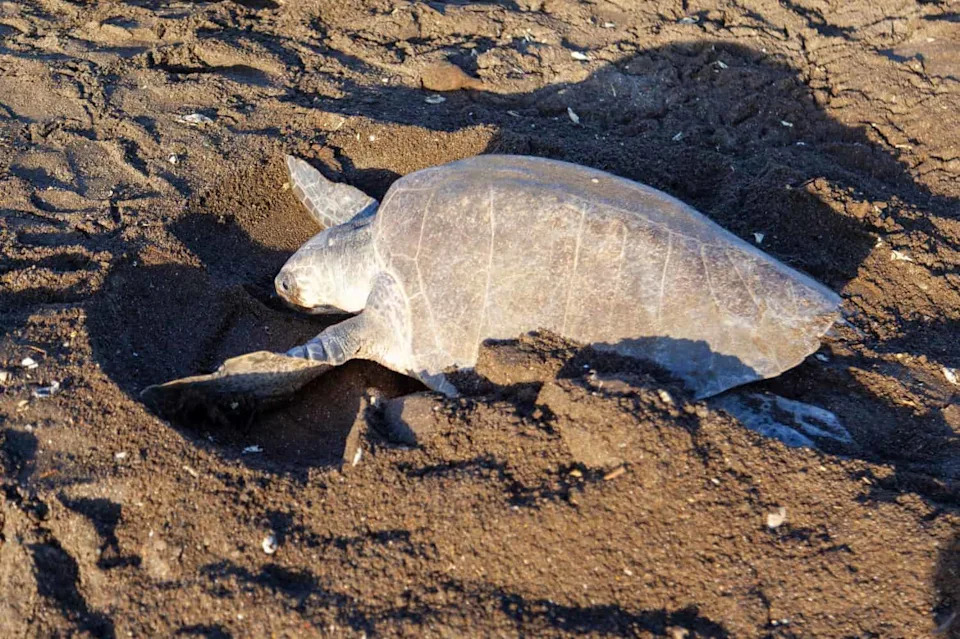
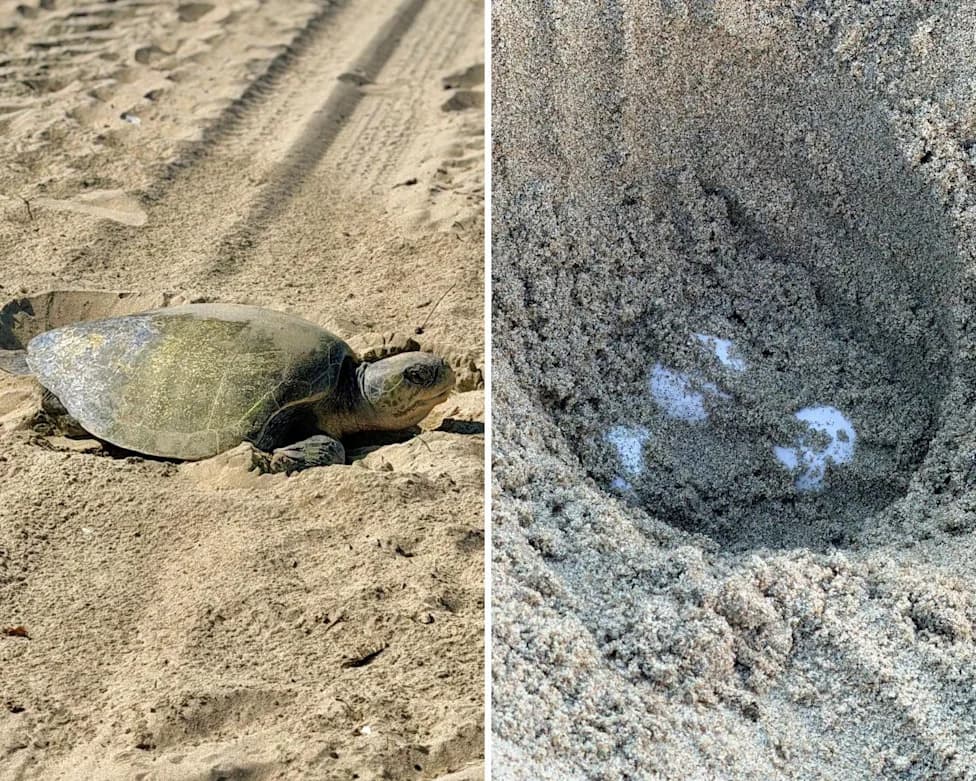
An olive ridley sea turtle was seen coming ashore and laying eggs on two Southern California beaches.©JHVEPhoto/Shutterstock.com
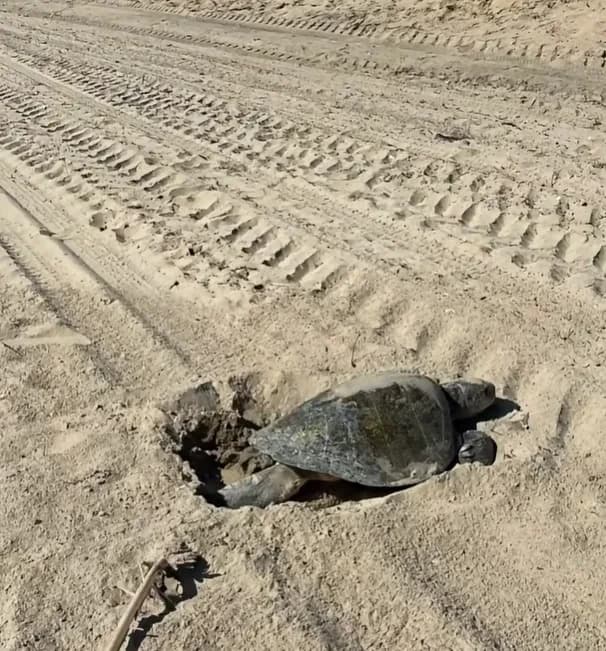
On September 16, 2026, observers at Seal Beach National Wildlife Refuge watched an olive ridley crawl ashore, excavate a nest, deposit eggs and return to the ocean. Three days later, on September 19, 2026, a second olive ridley came ashore several miles down the coast at Huntington Beach and repeated the behavior. Both nests were covered and the turtles returned to sea after nesting.
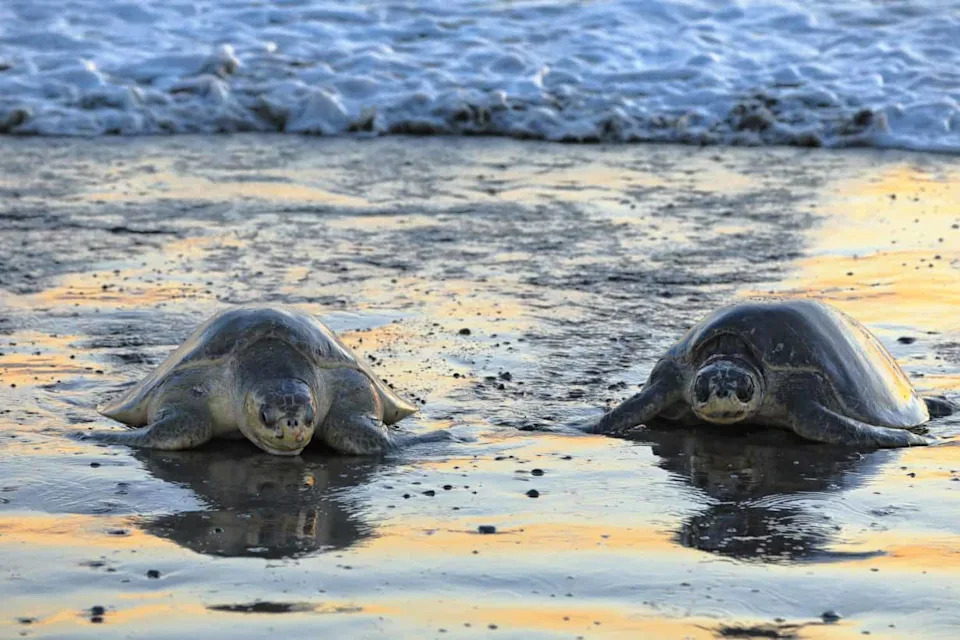
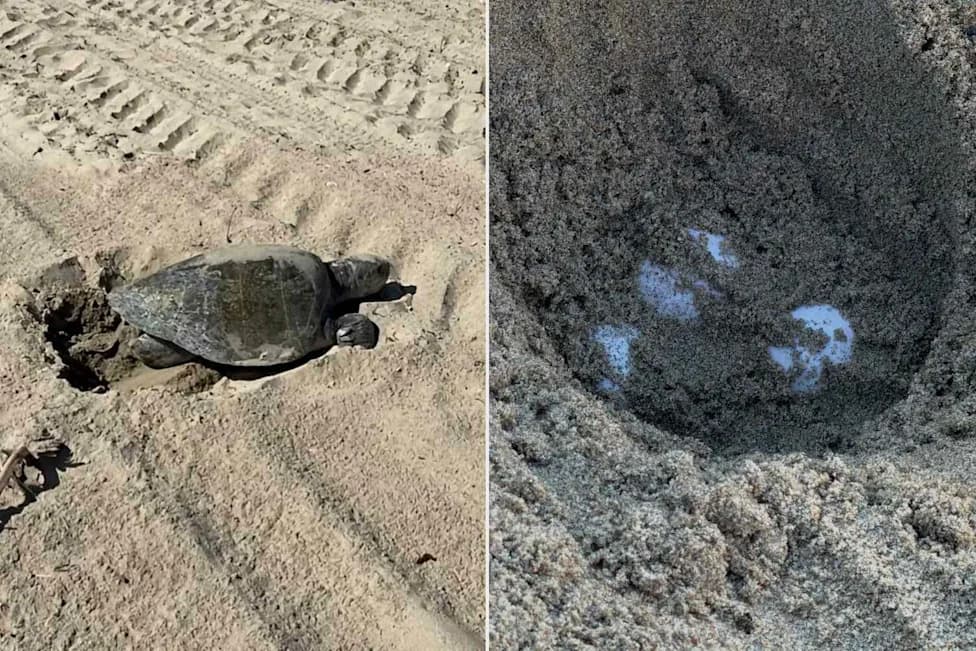
It turns out, it was not one, but two separate olive ridley sea turtles laying eggs on Southern California beaches.©Balakate/Shutterstock.com
Protection and Monitoring
Authorities immediately cordoned off the two egg sites and posted signage to keep beachgoers at a respectful distance. Local researchers and conservation groups have begun monitoring the sites to reduce disturbance and increase the chances of successful hatching.
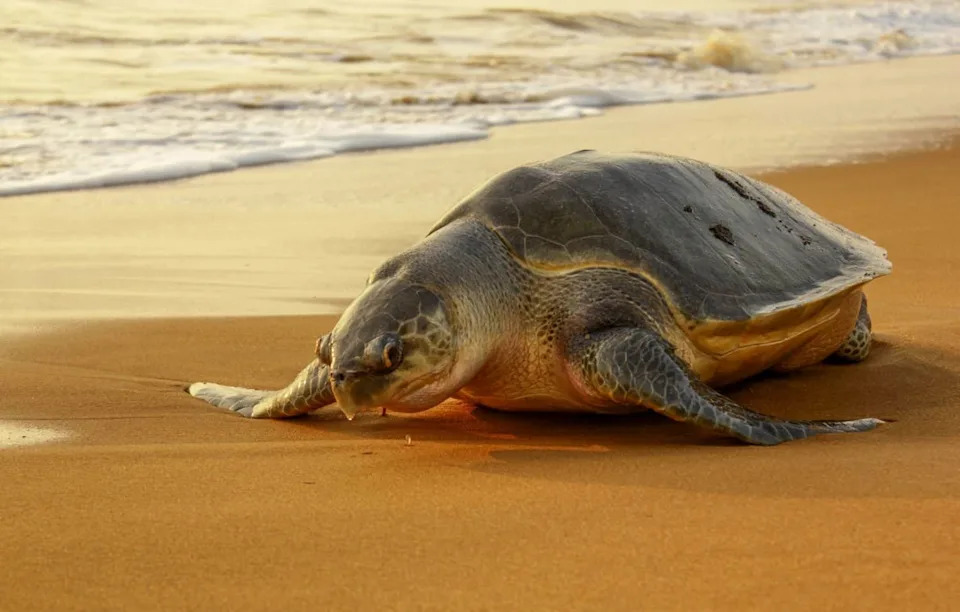
Researchers believe other nests may have been dug on beaches in Southern California.©Ananthu Asokan/Shutterstock.com
Two Separate Turtles
Early reports suggested a single female may have nested twice, which olive ridleys are capable of doing (they can nest one to three times in a season). However, close examination of photographs revealed clear differences in shell size and barnacle patterns, confirming that two distinct turtles nested within days and roughly eight miles of one another.
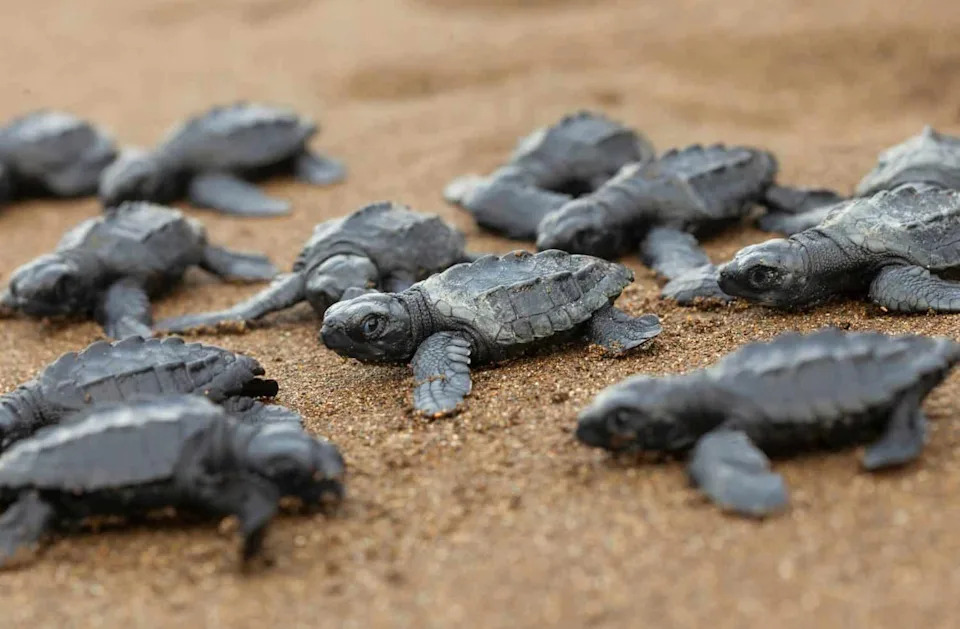
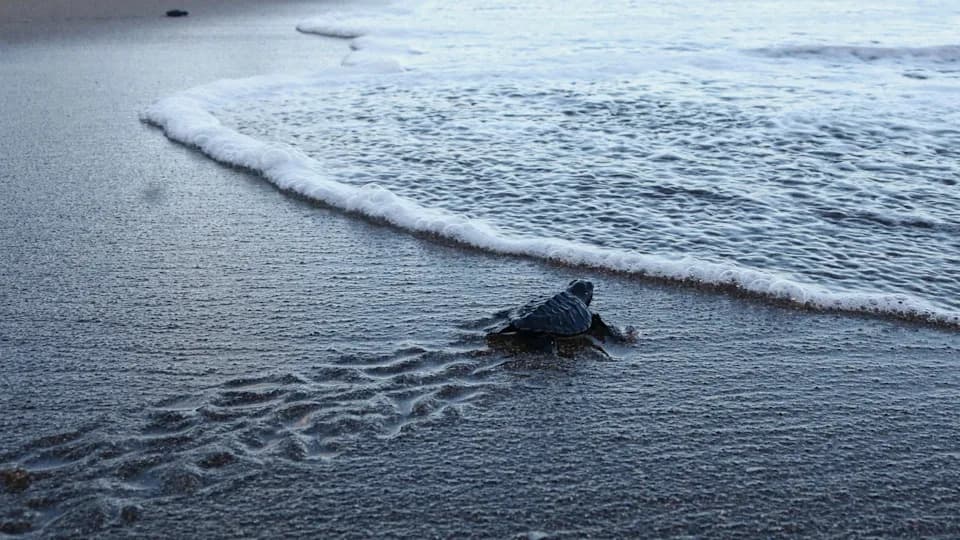
Within the next two months, tens of olive ridley sea turtle hatchlings may hatch and make their way to the ocean.©Memo Ossa/Shutterstock.com
Incubation, Temperatures and Hatchling Outcomes
Olive ridley eggs typically incubate for 45 to 60 days, with incubation length largely determined by sand temperature and nest depth (deeper nests tend to be cooler). Sand temperatures that favor healthy hatching generally range from 82.5°F to 95°F. Incubation temperatures below about 86.9°F tend to produce male hatchlings, while higher temperatures skew female. If sand temperatures exceed 95°F, hatching success drops sharply. Researchers estimate each nest may contain roughly 50 to 100 eggs.
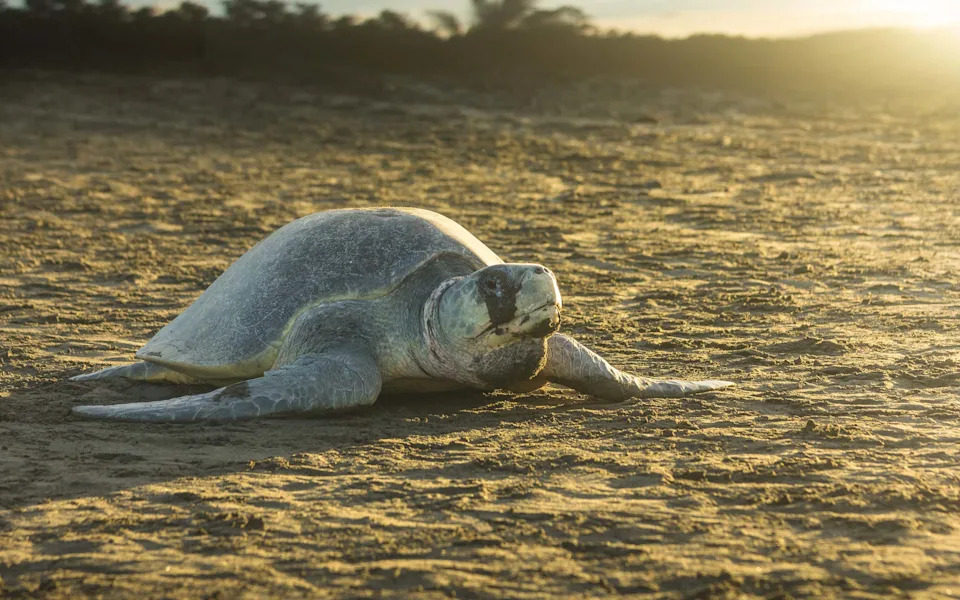
It is not yet clear whether olive ridley sea turtles are nesting in Southern California because of Super El Niño or another event entirely.©Daniel Alvarado Calderon/iStock via Getty Images
Why Are They Here?
Olive ridleys usually nest in the Indian Ocean, the Atlantic and in tropical Pacific regions — not typically the U.S. West Coast. Scientists say the most likely short-term driver is the strong Super El Niño event, which has warmed coastal waters and shifted marine life northward. In addition, recent Pacific storms and hurricanes that churn ocean waters could have disrupted turtles’ migratory cues, pushing some individuals off their usual course toward Mexico.
What Happens Next
With nests identified and protected, researchers are now in a waiting period. If conditions remain favorable, hatchlings could begin emerging within the standard 45–60 day incubation window. Conservation groups advise the public to obey site closures, avoid bright lights near nesting beaches at night, keep a distance from roped-off areas and report any stranded or disoriented hatchlings to local wildlife authorities.
Why this matters: Successful hatching would mark the first documented olive ridley nesting event on the U.S. West Coast and could provide key insights into how episodic events like Super El Niño and longer-term ocean changes influence sea turtle distribution.
Researchers continue to survey the coastline for any additional nests and will study outcomes to better understand whether this is an isolated anomaly or part of a shifting pattern in sea turtle behavior.
Help us improve.