Biologists and aquarium staff moved about 200 olive ridley sea turtle eggs from two historic nests on Seal Beach and Huntington Beach to the Aquarium of the Pacific on Sept. 25, 2026, to protect them from Hurricane Polo. The eggs are being incubated in sand-filled containers with monitored temperature and humidity and will be returned to the same beaches if they hatch. The nests mark the first recorded olive ridley nesting on the U.S. West Coast, a development researchers say may be linked to El Niño and could have lasting conservation implications.
Historic Rescue: About 200 Olive Ridley Eggs Moved to Aquarium of the Pacific Ahead of Hurricane Polo
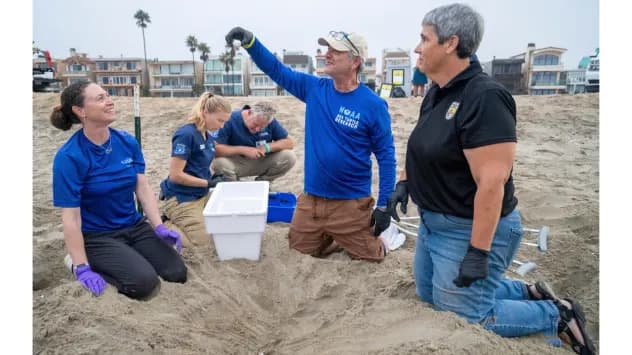
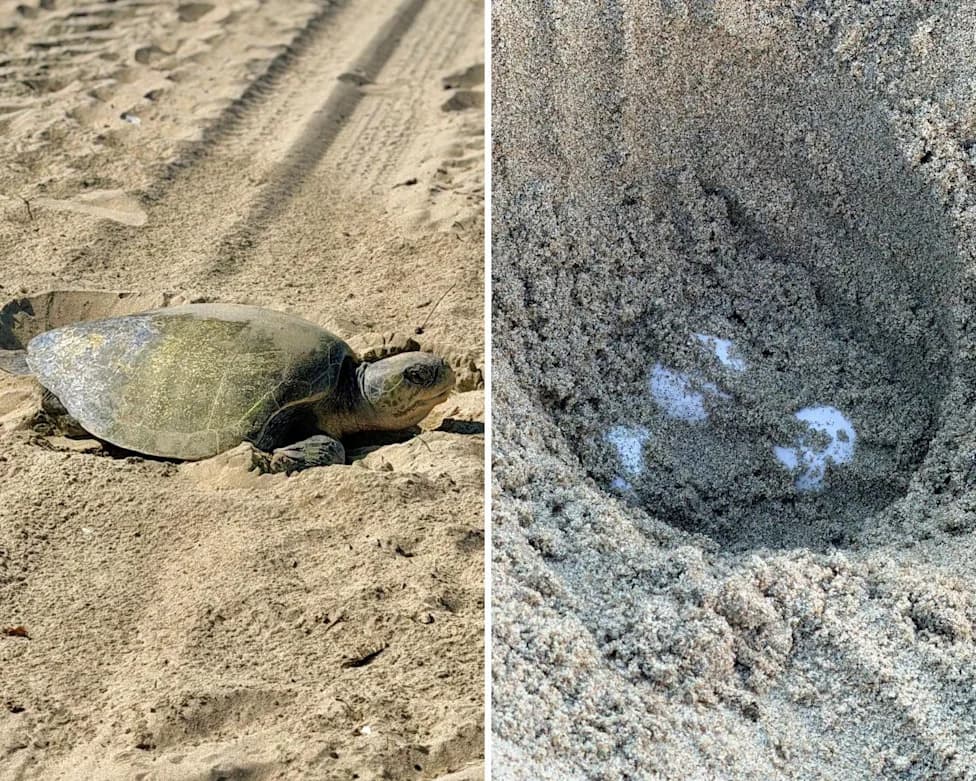
Aquarium of the Pacific animal care staff work with biologists from NOAA Southwest Fisheries Service to collect olive ridley sea turtle eggs from nests on Southern California beaches Friday, Sept. 25, 2026. (Credit: Aquarium of the Pacific)
Biologists and animal care staff moved roughly 200 olive ridley sea turtle eggs from two historic nests on Southern California beaches to the Aquarium of the Pacific in Long Beach as a precaution against damage from Hurricane Polo. The eggs were recovered on Sept. 25, 2026, from nests at Seal Beach and Huntington Beach—the first documented olive ridley nesting events on the U.S. West Coast.
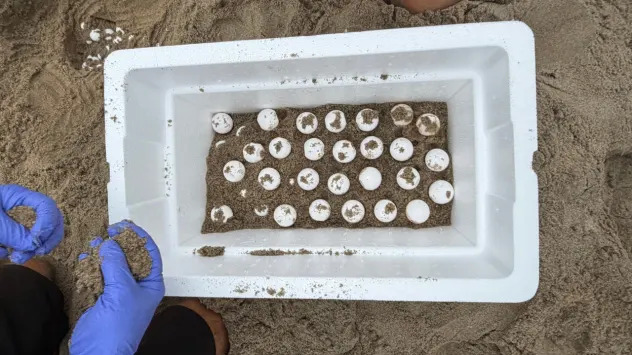
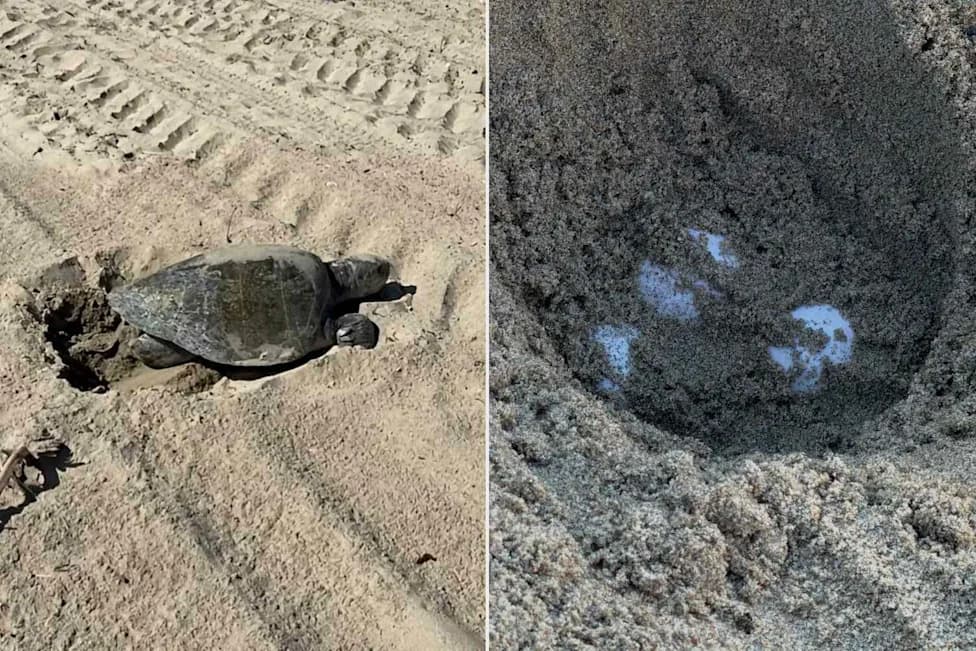
Olive ridley sea turtle egg recovery event in Huntington Beach. (Credit: Aquarium of the Pacific)
Why the Eggs Were Relocated
Officials said beach erosion, hazardous surf and flooding associated with Hurricane Polo created a high risk that the nests could be washed away or destroyed. The U.S. Fish and Wildlife Service has authorized the Aquarium of the Pacific to rescue and temporarily care for threatened sea turtle nests.
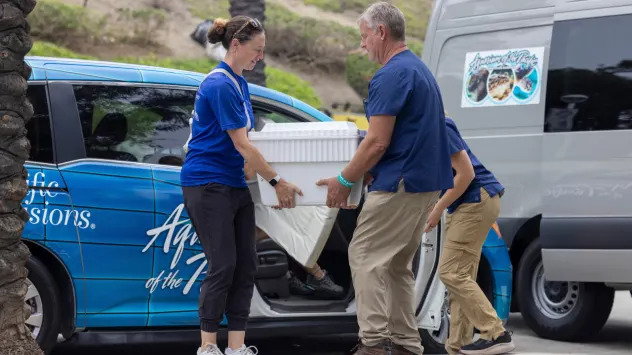
Aquarium of the Pacific animal care staff work with biologists from NOAA Southwest Fisheries Service to collect olive ridley sea turtle eggs from nests on Southern California beaches Friday, Sept. 25, 2026. (Credit: Aquarium of the Pacific)
How the Eggs Are Being Cared For
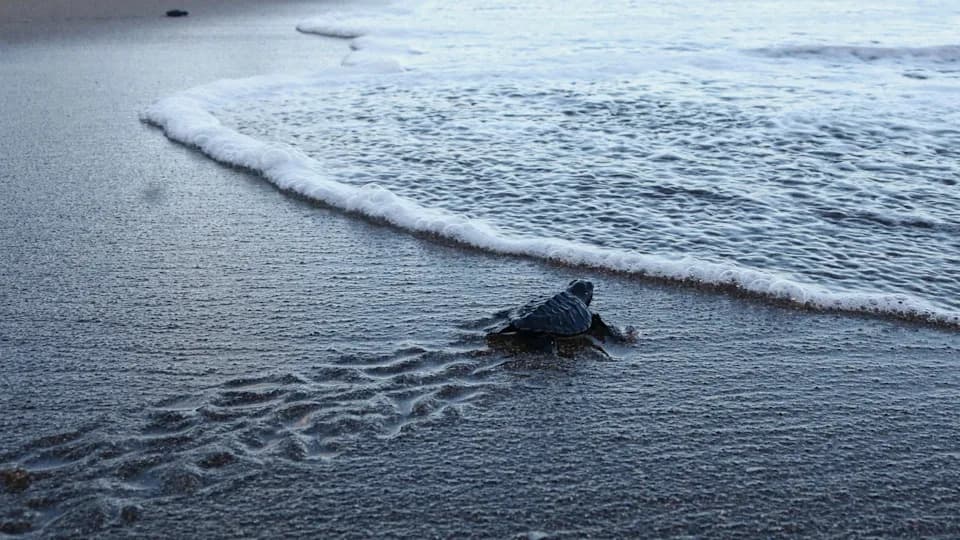
Animal care teams from the Aquarium of the Pacific worked with biologists from the NOAA Southwest Fisheries Science Center to recover the eggs. At the aquarium the eggs are being held in sand-filled containers with temperature and humidity closely monitored and recorded throughout the normal 45–60 day incubation period. If the eggs hatch successfully, the plan is to return hatchlings to the same beaches so they can make their natural crawl to the ocean.
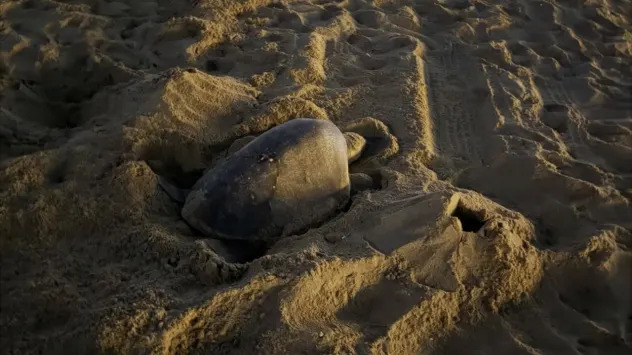
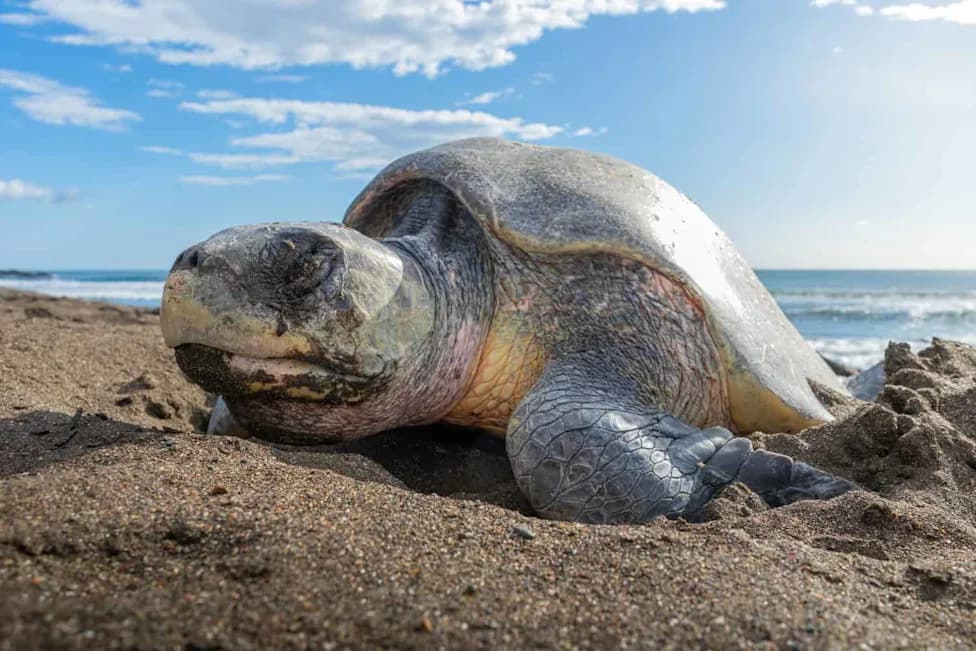
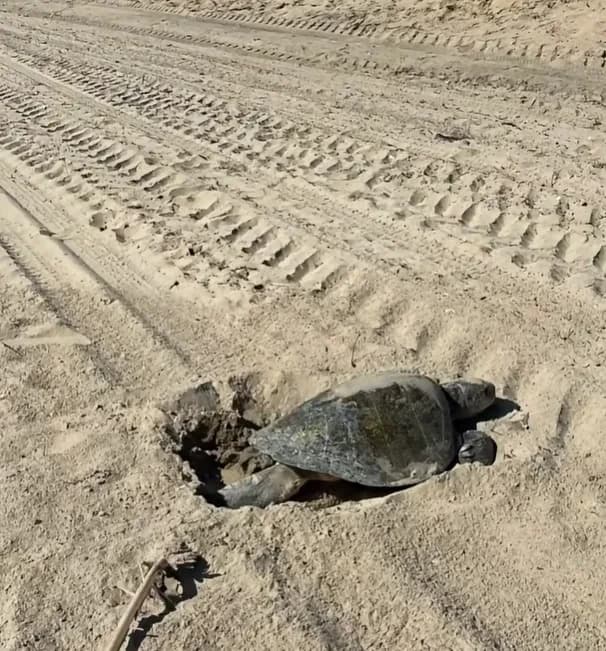
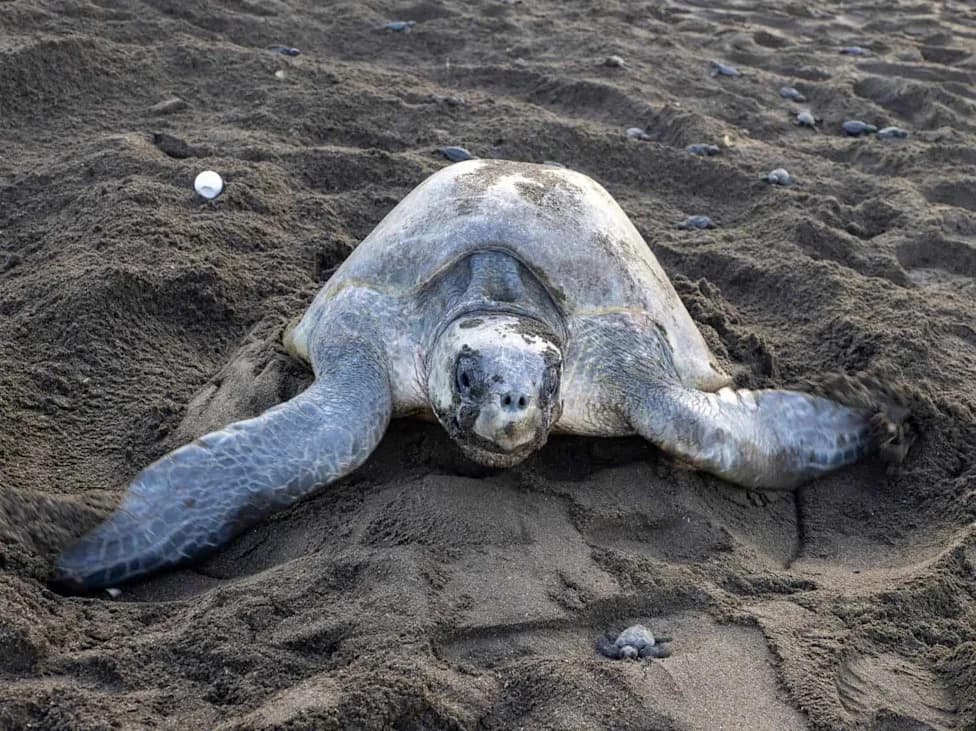
Nesting olive ridley sea turtle near the Huntington Beach Pier. (Credit: Huntington Beach Fire Department)
Historic Significance
The two nesting females made headlines after laying eggs in mid-September, marking the first recorded sea turtle nesting events on the U.S. West Coast, according to the U.S. Fish and Wildlife Service. Researchers do not yet know why the turtles nested so far north; some scientists suspect El Niño–related changes to ocean conditions may have influenced this unusual behavior. Officials say California nesting could reflect an important shift with long-term implications for conservation and local sea turtle management.
Local Context
The Aquarium of the Pacific already cares for two olive ridleys, Theo and Lou, who hatched from eggs seized in an illegal wildlife trafficking case and have lived at the aquarium since 1999. Officials also cautioned that more turtles could nest along Southern California beaches this season or in the future.
What You Should Do If You See A Turtle
Beachgoers are asked to watch for turtle tracks and to avoid disturbing any nesting animals. If you see a nesting turtle or a turtle in distress, call the 24/7 West Coast Sea Turtle Stranding Hotline immediately so trained responders can assist.
"This is an unprecedented situation, and we're proud to provide a temporary home for these eggs as they incubate," said Dr. Lance Adams, veterinarian at the Aquarium of the Pacific. "We're hopeful this will lead to successful hatching and release back to the wild."
Photo credits: Aquarium of the Pacific; Huntington Beach Fire Department.
Help us improve.