California has enacted Assembly Bill 2244 to create a voluntary "Non‑Ultra‑Processed Certified" front‑of‑pack seal, with accreditation and certification managed by agents appointed by the Department of Public Health. The programme must be implemented by 1 June 2029, uses the state's 2025 standard for eligibility, and requires three‑year recertification cycles. The law also creates an education fund, a public database, retailer display requirements for large grocers, and penalties for misuse. Industry scientists urge a consistent, science‑based federal framework to avoid fragmented state rules.
California Enacts Voluntary 'Non‑Ultra‑Processed Certified' Label — AB 2244 Sets June 1, 2029 Deadline
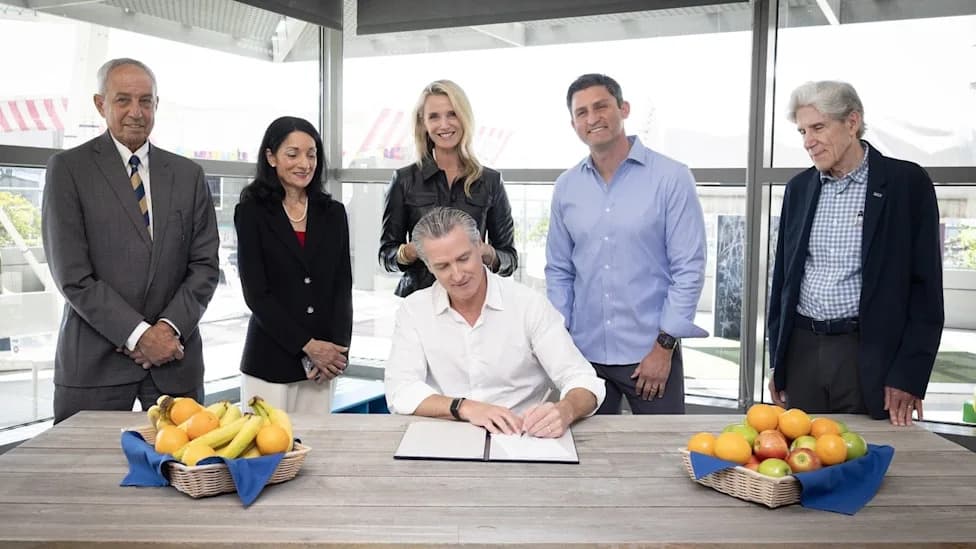
Governor Gavin Newsom signing the law
California Governor Gavin Newsom has signed Assembly Bill 2244, establishing a voluntary front‑of‑pack "Non‑Ultra‑Processed Certified" seal for qualifying food products. The law directs the California Department of Public Health to appoint accredited certifiers to assess products against the state's standard and to maintain a public registry of certified items.
What the Law Requires
Implementation of the programme must be in place by 1 June 2029. Eligibility will be determined using California's 2025 standard, which flags products that contain certain additives or exceed set thresholds for sodium, saturated fat and added sugars. Certifications will be issued by accredited agents and are subject to review and renewal every three years.
The statute also creates the Public Health Food and Nutrition Education Fund to support administration and outreach, mandates a public database of certified products, and establishes penalties for fraudulent or misleading use of the seal.
Retailer Requirements
Under the law, California grocers with annual gross revenues above $10 million who stock more than 25 certified non‑UPF products must prominently display at least three qualifying items. The aim is to increase visibility and accessibility of whole, minimally processed options for shoppers.
Reactions From Industry Scientists
Governor Newsom described the measure as a "first‑in‑the‑nation" effort focused on "making whole, healthy foods as accessible as possible."
Anna Rosales, Vice President of Science and Policy at the Institute of Food Technologists (IFT), cautioned that state‑by‑state approaches could produce fragmented standards before a federal definition of ultra‑processed foods is established. She urged a consistent, science‑based framework that prioritises overall nutritional quality and remains flexible as evidence evolves.
IFT has warned that some current classification systems can label staples such as whole‑grain bread or yogurt as ultra‑processed, which underscores their call for a unified, evidence‑based approach at the federal level to avoid divergent state interpretations that could complicate compliance for manufacturers, retailers, schools and consumers.
Next Steps
State agencies will now set certification criteria and accredit certifying agents ahead of the 2029 implementation deadline. Companies and retailers should monitor guidance from the California Department of Public Health and plan for registry, labeling and compliance obligations.
Help us improve.