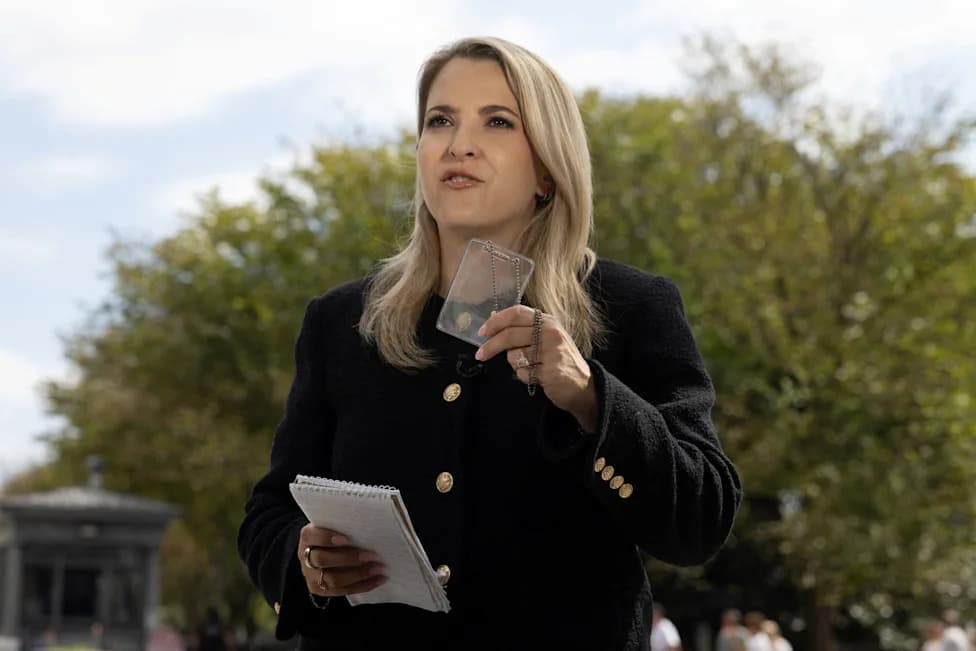
The Supreme Court opens a new term amid mounting public tension between President Trump and his three appointees. A Newsweek review of 10 major cases since January 2025 found Justice Amy Coney Barrett broke with the administration most often (7 of 10), followed by Brett Kavanaugh (5) and Neil Gorsuch (3). Chief Justice John Roberts also opposed the administration in seven cases and authored several key majority opinions. Upcoming cases on detention in removal proceedings, third-country deportations and voter-registration rules could again test these alignments.
Which Supreme Court Justice Has Been Most 'Disloyal' to Trump? New Term Reopens Old Tensions
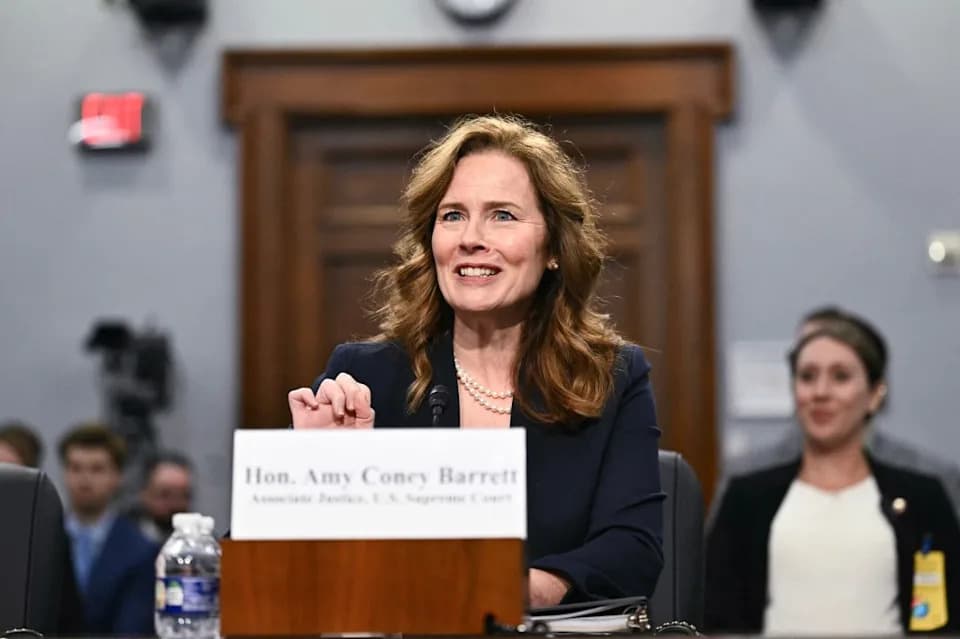
U.S. Supreme Court Justice Amy Coney Barrett testifies during a House Appropriations Subcommittee on Financial Services hearing on Capitol Hill in Washington, DC, on July 14. (Photo by Kent NISHIMURA / AFP via Getty Images)
President Donald Trump has publicly voiced growing frustration with the three justices he nominated to the U.S. Supreme Court, accusing them of disloyalty after a string of high-profile rulings that rejected his administration's positions. The court opens a new term this week, and several upcoming cases could again put the justices in the position of ruling for or against the man who appointed them.
Newsweek Analysis: Who Broke With the Administration Most?
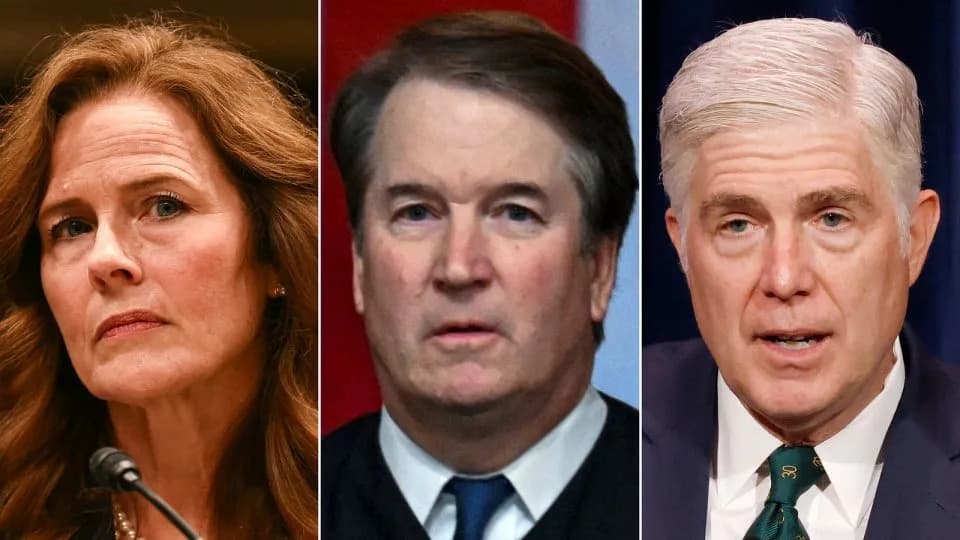
A Newsweek review of 10 major rulings involving the Trump administration since January 2025 found that Justice Amy Coney Barrett most often voted against the administration's position (7 of 10 cases). Justice Brett Kavanaugh opposed the administration in five of the cases, while Justice Neil Gorsuch did so in three. Chief Justice John Roberts, a George W. Bush appointee, also voted against the administration in seven of the 10 cases and authored majority opinions in several of the administration's biggest losses, including cases on tariffs, birthright citizenship and the attempted removal of Federal Reserve Governor Lisa Cook.
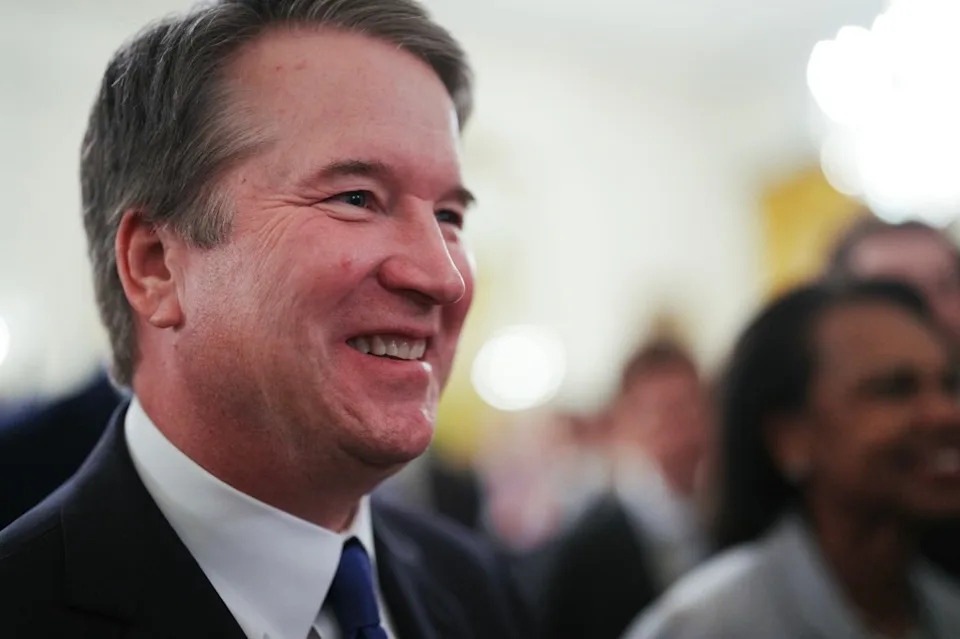
U.S. Supreme Court Associate Justice Brett Kavanaugh departs from the East Room of the White House after a swearing in ceremony for the new Chairman of the Federal Reserve Kevin Warsh in Washington, DC, on May 22. (Photo by Aaron Schwartz / AFP via Getty Images)
How The Justices Voted—and Why It Matters
Barrett sided with Chief Justice Roberts and the court's liberal bloc in two of the administration's most consequential defeats. She joined the 6-3 majority that held the International Emergency Economic Powers Act did not authorize the president to impose the challenged tariffs, and she joined the majority that rejected an executive order seeking to end birthright citizenship. Barrett also authored the 5-4 majority opinion in Watson v. RNC, ruling that states may count mail ballots postmarked by Election Day that arrive afterward—a position the administration opposed.
Kavanaugh's record is more mixed. He wrote the principal dissent in the tariffs case and received public praise from the president, but he provided the decisive fifth vote to block the administration from removing Fed Governor Cook and concurred in the judgment rejecting the executive order on birthright citizenship (finding a violation of federal immigration statutes while leaving the constitutional question unresolved). Kavanaugh also joined a temporary stay blocking the Postal Service mail-ballot rule before the midterms.
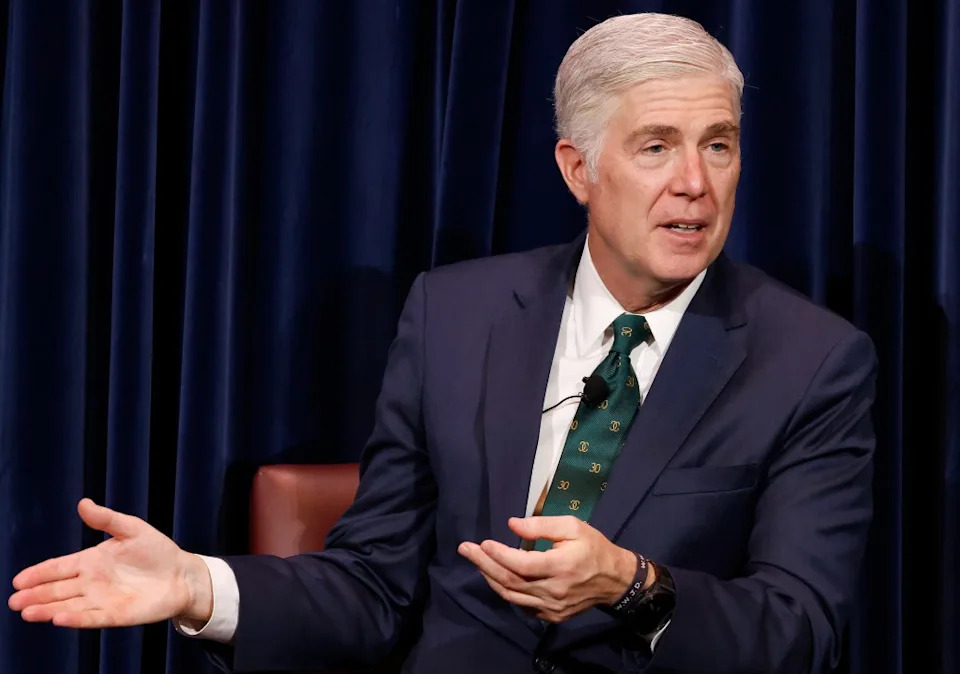
U.S. Supreme Court Justice Neil Gorsuch speaks at the Reagan Library on May 5 in Simi Valley, California. (Photo by Mario Tama/Getty Images)
Gorsuch, the president's first nominee and frequent target of Mr. Trump's criticism, opposed the administration in the tariffs and certain election-rule cases, but he sided with the administration in several other disputes, including dissents in the birthright citizenship and Fed removal rulings. Outside Trump-related cases, Gorsuch is the conservative justice most likely to join the liberal wing on some issues, according to SCOTUSblog analyses.
Broader Court Trends
The Brennan Center for Justice counted 32 emergency rulings on Trump administration actions since January 2025; the administration prevailed at least in part in 24 of them (75 percent). All three Trump appointees joined the 6-3 majority in Trump v. Slaughter in June, which allowed the president to fire a member of the Federal Trade Commission at will and overturned the long-standing Humphrey's Executor precedent protecting the independence of certain agencies. The trio also joined the majority in Trump v. CASA, which limited lower-court nationwide injunctions, and Gorsuch and Kavanaugh were in the 5-4 majority upholding removals under the Alien Enemies Act in April 2025.
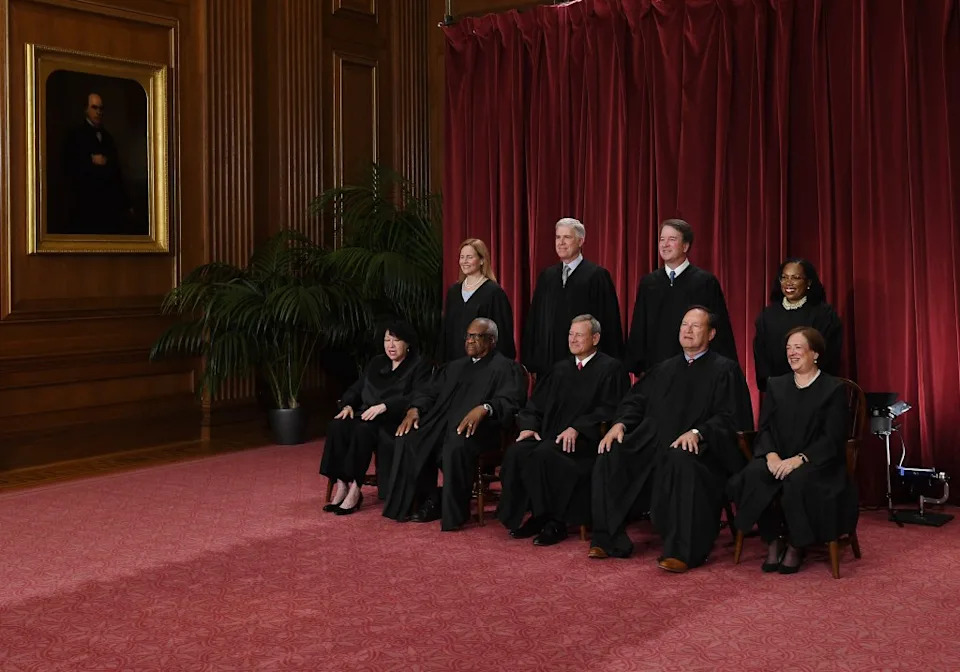
Justices of the U.S. Supreme Court pose for their official photo in Washington, DC, on October 7, 2022. Seated from left: Associate Justice Sonia Sotomayor, Associate Justice Clarence Thomas, Chief Justice John Roberts, Associate Justice Samuel Alito and Associate Justice Elena Kagan. Standing behind from left: Associate Justice Amy Coney Barrett, Associate Justice Neil Gorsuch, Associate Justice Brett Kavanaugh and Associate Justice Ketanji Brown Jackson. (Photo by OLIVIER DOULIERY / AFP) (Photo by OLIVIER DOULIERY/AFP via Getty Images)
Chief Justice Roberts: The Court's Bridge
Chief Justice John Roberts continues to be a pivotal swing vote who often builds consensus across the ideological divide. Analyses show Roberts and Justice Elena Kagan voted together frequently, and Roberts authored key opinions that shaped the administration's major setbacks. Among Trump's appointees, Kavanaugh most often joins Roberts and the three liberal justices to form narrow majorities in 5-4 decisions.
What To Watch This Term
The new term will revisit several consequential issues: the administration's policy of detaining immigrants in removal proceedings without bond, its third-country deportation policy, and a challenge to Arizona's proof-of-citizenship voter registration rules (RNC v. Mi Familia Vota)—a case in which the administration supports aspects of the state law. The court also received seven emergency requests over the summer related to administration actions; it ruled for the administration in four, against it in one, with one withdrawn and one still pending.
As the term unfolds, the voting patterns of Barrett, Kavanaugh and Gorsuch—and Roberts's role as a bridge—will continue to shape how the Supreme Court resolves high-profile disputes tied to the administration's agenda.
Reporting note: Newsweek reporters and editors used the AI assistant Martyn in reporting and producing this story. Contact reporters Jenni Fink and Anthony Murray for more information.
Help us improve.