Senators Maggie Hassan and Tommy Tuberville will introduce the Keep Food Containers Safe From PFAS Act (H.R. 9593), seeking to ban food packaging with intentionally added PFAS from interstate commerce beginning Jan. 1, 2028. The bill would add the prohibition to the Federal Food, Drug, and Cosmetic Act and give the FDA enforcement authority, but it would not ban trace, unintentional PFAS contamination or address PFAS already in the environment. Sponsors say codifying the phaseout provides legal certainty, protects businesses that already switched to PFAS‑free packaging, and fills important data and enforcement gaps.
Senators Hassan and Tuberville Seek Federal Ban On Intentionally Added PFAS In Food Packaging
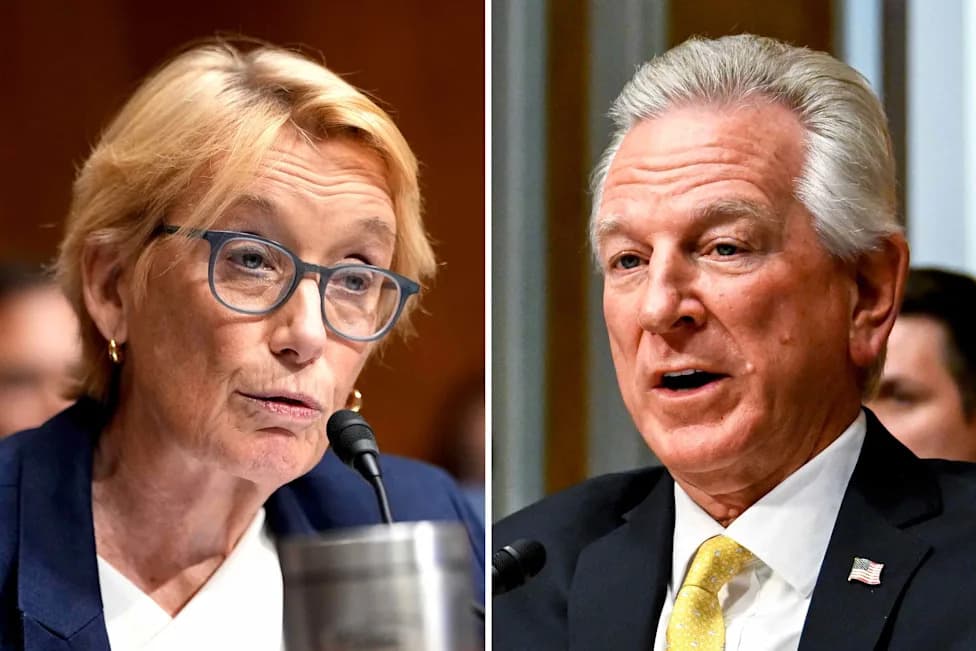
The Keep Food Containers Safe from PFAS Act of 2026, introduced by Sens. Maggie Hassan and Tommy Tuberville, would give the FDA authority to enforce a ban on food packaging with intentionally added PFAS.Credit: Daniel Heuer / Bloomberg via Getty Images
Senators Maggie Hassan (D-N.H.) and Tommy Tuberville (R-Ala.) will introduce the Keep Food Containers Safe From PFAS Act of 2026 (H.R. 9593), a bill that would prohibit food packaging containing intentionally added per- and polyfluoroalkyl substances (PFAS) from entering interstate commerce beginning January 1, 2028. The legislation would add the prohibition to the Federal Food, Drug, and Cosmetic Act and give the U.S. Food and Drug Administration (FDA) explicit enforcement authority.
Why This Matters
PFAS—often called "forever chemicals"—are valued for grease- and water-repellent properties but resist environmental degradation and can accumulate in the body. Some PFAS, including PFOA and PFOS, have been linked to cancer, reproductive harms, and weakened vaccine responses. Although many PFAS grease‑proofing agents were phased out of U.S. food packaging in recent years, that shift was driven mainly by voluntary industry actions rather than a statutory ban.
Timeline Of The Phaseout
- 2011: Manufacturers agreed to stop selling older, long‑chain PFAS grease‑proofing agents.
- 2016: FDA revoked authorizations for those uses.
- 2020: Industry agreed to phase out some shorter‑chain alternatives after FDA safety concerns.
- By 2023: Remaining manufacturers ceased U.S. sales for reasons the FDA said were unrelated to safety.
- Feb 2024: FDA announced PFAS grease‑proofing materials "are no longer being sold for use in food packaging in the U.S."
- Jan–Jun 2025: FDA declared 35 authorizations no longer effective and gave companies until June 30, 2025 to exhaust inventories.
What The Bill Would Do
- Ban Intentionally Added PFAS in food packaging from interstate commerce starting Jan. 1, 2028.
- Codify The Ban Into Law by adding it to the Federal Food, Drug, and Cosmetic Act.
- Give FDA Enforcement Authority to prohibit sales and take action against violators.
- Protect Businesses that already switched to PFAS‑free packaging by leveling the playing field.
What The Bill Would Not Do
- It Would Not Require Zero Detectable PFAS—the ban targets intentionally added PFAS, not every trace contaminant.
- It Would Not Address Environmental PFAS already in soil, water, or food chains.
- It Does Not Define "Food Packaging" Explicitly, leaving some ambiguity about the full scope (for example, certain restaurant or specialty containers).
Evidence And Data Gaps
Testing since the voluntary phaseout has shown mixed but generally improved results. A U.S. Department of Agriculture study of 66 retail packages detected at least one PFAS in 64% of samples but at very low levels and found no evidence of migration into food. An FDA survey of 57 pet and livestock food packages found a phased‑out PFAS in only two. Consumer Reports earlier detected organic fluorine—an indicator for PFAS—in more than half of 118 restaurant and retail products tested in 2021, including items labeled as "reduced PFAS." The FDA has not released comparable, comprehensive testing data for human food packaging since the June 2025 deadline, a gap supporters cite as a reason to make the phaseout statutory.
"Voluntary action is good, but we need to make sure that the FDA has the tools to insist that all companies take action," Senator Hassan said, arguing the law would prevent companies from reversing course after ownership or supply‑chain changes.
Limitations And Considerations
The bill is narrowly focused and would convert the current industry-driven commitments into enforceable federal policy for intentionally added PFAS in food packaging sold across state lines. However, enforcement will depend on regulatory definitions, testing protocols, and the FDA's resources. The lack of an explicit definition for "food packaging" and the exclusion of unintentional contamination and environmental PFAS mean additional rules or future legislation may be needed to address those gaps.
If enacted, the law would change the status quo from voluntary pledges to a legally binding prohibition—reducing the risk that PFAS are intentionally reintroduced into food-contact materials and giving regulators a clear basis to act.
Help us improve.