Robert P. Jones argues in Backslide that the U.S. faces a dangerous democratic "backslide" driven in part by Christian nationalism, demographic anxiety among white Christians and normalised racialised rhetoric. He likens the moment to 1933 Germany, invoking Martin Niemöller to warn against moral silence. Jones points to PRRI data showing how church attendance can correlate with more extreme views among white evangelicals, notes the prominence of Christian symbols on January 6, and warns of institutional efforts to embed Christian nationalist policies. He closes with guarded optimism: democratic erosion can be reversed if pro-democracy faith leaders organise and white Christians reclaim a democratic vision of their faith.
“This Is Our 1933”: Robert P. Jones Warns Christian Nationalism Is Driving A Democratic Backslide
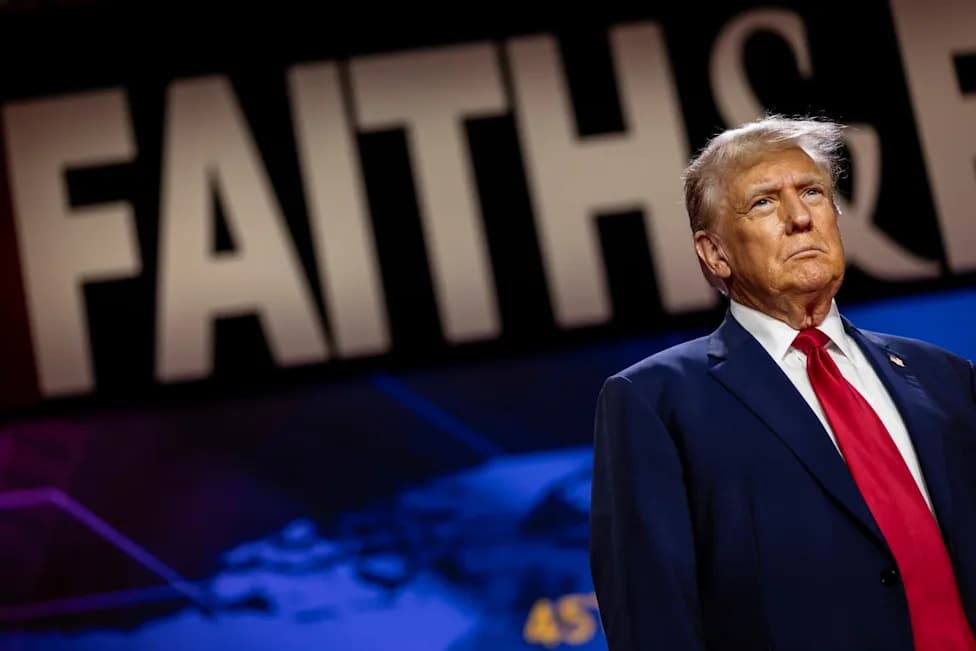
Donald Trump delivers the keynote address at the Faith & Freedom Coalition's Road to Majority Policy Conference on 22 June 2024 in Washington DC.Photograph: Samuel Corum/Getty Images
Robert P. Jones, founder and president of the Public Religion Research Institute (PRRI), argues in his new book Backslide: Reclaiming a Faith and a Nation After the Christian Turn Against Democracy that the United States is experiencing a dangerous erosion of democratic norms fueled by Christian nationalism and amplified by racially charged political rhetoric. After studying demographic trends, religious shifts and campaign language, Jones concludes that parallels with 1933 Germany are urgent and instructive.
Why the Nazi Analogy?
Jones opens his book with the rise of the Nazi party and the complicity of many ordinary Germans, including Christian churches. He invokes Lutheran pastor Martin Niemöller, remembered for the poem that begins “First they came…,” to illustrate moral failure by omission. Niemöller himself did not consistently oppose the Nazis in the early years and later regretted that German Protestants had not spoken out sooner. Jones warns that a similar moral accounting will be asked of U.S. Christians if democratic erosion continues unchecked: “Just as God asked Niemöller where he was between 1933 and 1937, God will ask us where we were between 2025 and 2028.”
Demographics, Panic and Politics
Jones frames part of the problem in demographic terms. When Barack Obama was elected in 2008, white Christians comprised roughly 54% of the U.S. population; by 2014 that share fell to 47%, and today it is about 41%. The decline among white evangelicals is steeper: from roughly 25% of Americans at the turn of the 21st century to about 13% today. The Southern Baptist Convention, the largest U.S. evangelical denomination, has lost more than 3 million members since its 2006 peak.
Faced with shrinking numbers and perceived cultural marginalisation, many white evangelical communities — Jones argues — responded not with spiritual renewal but with existential panic. That anxiety, he says, created fertile ground for a transactional political alliance: support for a political leader in exchange for promises to restore power and status to Christian institutions.
Rhetoric, Normalisation and Risk
Jones highlights examples of dehumanising rhetoric and appeals to racial purity as evidence of normalisation. He cites instances of language describing immigrants as “vermin” or “poisoning the blood,” and notes a 2020 speech in Minnesota in which Donald Trump spoke about “good genes,” a formulation Jones sees as evocative of racialised thinking. Jones warns that such rhetoric, when normalised, moves a society toward exclusionary and authoritarian logic.
Religious Institutions and Political Reinforcement
PRRI research, Jones says, undermines the assumption that regular church attendance necessarily fosters civic tolerance. Among white evangelicals, churchgoing correlates on several measures with stronger anti-immigrant, anti-Black and anti-Muslim views. Segregated congregations reinforced by partisan media — Fox News, Christian radio and like-minded social networks — make explicit partisan sermons less necessary: in largely homogeneous communities, omission of critique functions as tacit endorsement.
Symbols, January 6 and Institutional Influence
The theological radicalisation Jones describes surfaced visibly on January 6, 2021, when Christian symbols — wooden crosses and “Jesus Saves” banners — appeared alongside Confederate flags at the U.S. Capitol. Jones says official investigations largely downplayed this religious element, a choice he views as a missed opportunity to fully understand the insurgency’s motivations.
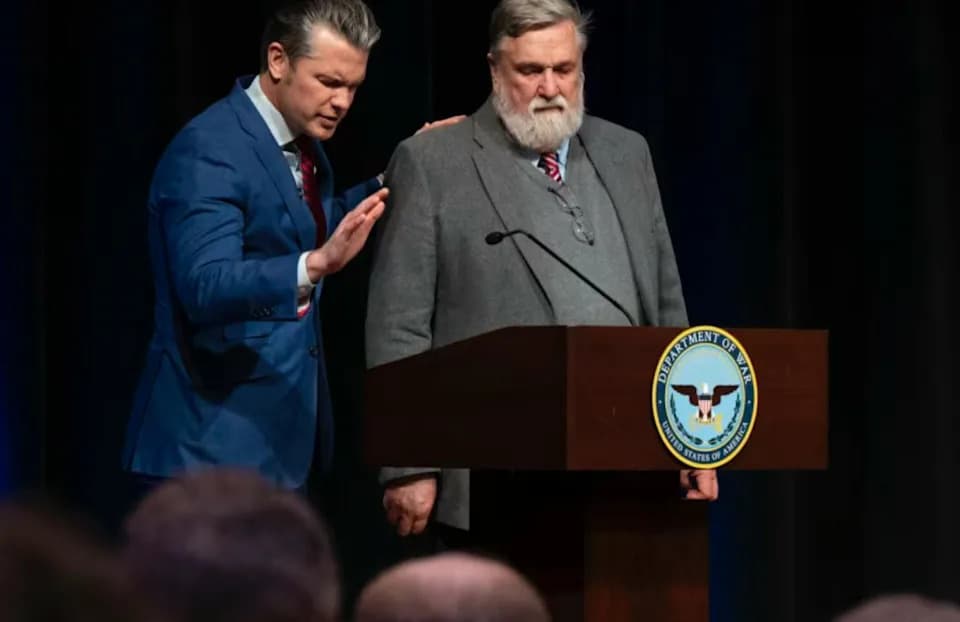
He also warns about the penetration of Christian nationalist sentiment into national security and administrative institutions. Jones cites examples of prominent figures and structural efforts — including Project 2025 and advocates of a “unitary executive” — working to reshape federal governance to reflect Christian nationalist principles. He expresses particular concern about officials who combine religious absolutism with control over military or security power.
Not All Faith Leaders Are Complicit
Despite the alarming trends, Jones resists fatalism. The central argument of Backslide is that democratic erosion is reversible through honest historical reckoning, sincere repentance and organised alternatives within faith communities. He highlights emerging pro-democracy Christian voices — from clergy to lay leaders — who are proposing a public Christianity compatible with democratic values and care for the vulnerable.
Closing Warning
Jones’s message is both a diagnosis and a moral summons: those who identify as Christian — especially white Christians who have been most aligned with political power — must choose whether to reclaim a faith that affirms democratic pluralism or to maintain allegiances that, in his view, risk legitimising illiberal and authoritarian tendencies. He frames this choice as comparable to the decisions faced by parts of the German church in 1933, and urges urgent action before democratic backsliding becomes irreversible.
"Backsliding is not irreversible," Jones writes, "but it requires clear-eyed recognition of the forces at work and courageous moral leadership to chart another path."
Help us improve.