The Strait of Hormuz has seen a notable rebound in traffic: Kpler estimates Middle East crude exports rose to about 16.328 million bpd in September, with roughly 9.719 million bpd passing through Hormuz — roughly 80% of pre-war flows. Despite this recovery, high tanker insurance costs, depleted strategic reserves, constrained refined-fuel shipments and infrastructure damage keep energy markets vulnerable. Iran faces severe economic strain (10.1% GDP contraction; ~70% inflation), which may increase its incentive to negotiate even as disputes over sequencing and conditions continue.
Strait of Hormuz: Traffic Recovers to ~80% — But Iran’s Leverage Remains Partly Intact
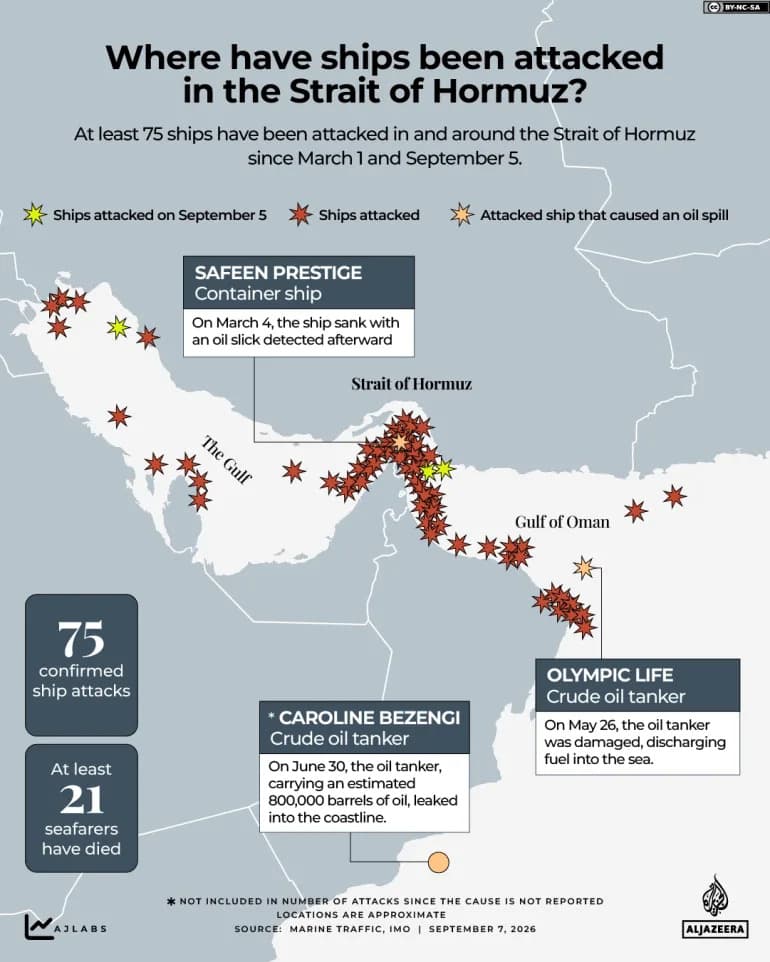
interactive - Where have ships been attacked in the Strait of Hormuz - sep 8, 2026-1788867749
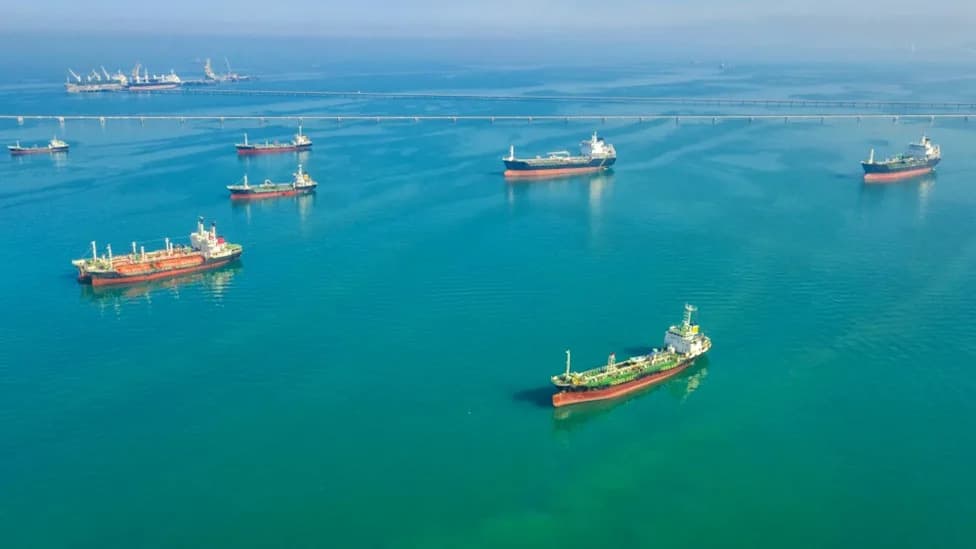
As mediators press to end seven months of hostilities between Iran and the United States, conditions in the Strait of Hormuz are shifting in ways that could affect Tehran’s negotiating leverage.
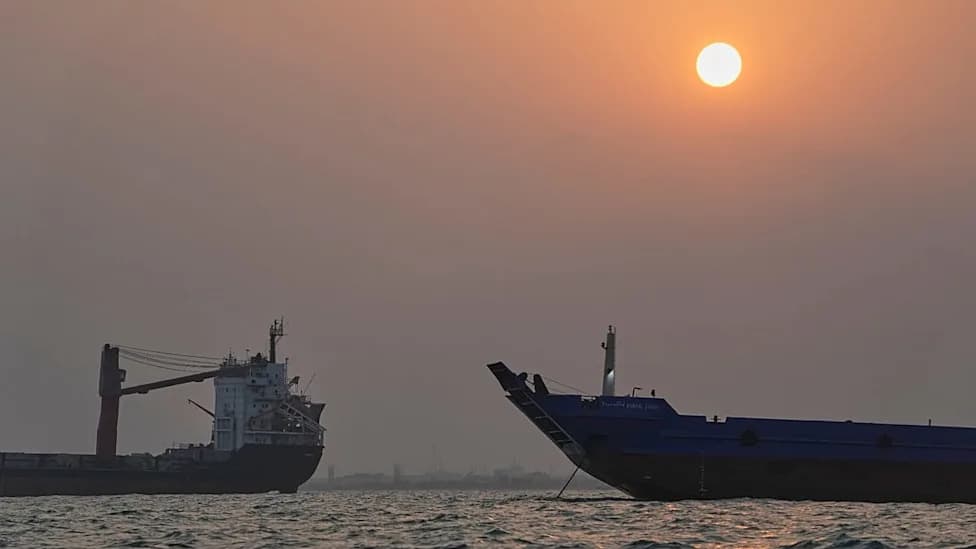
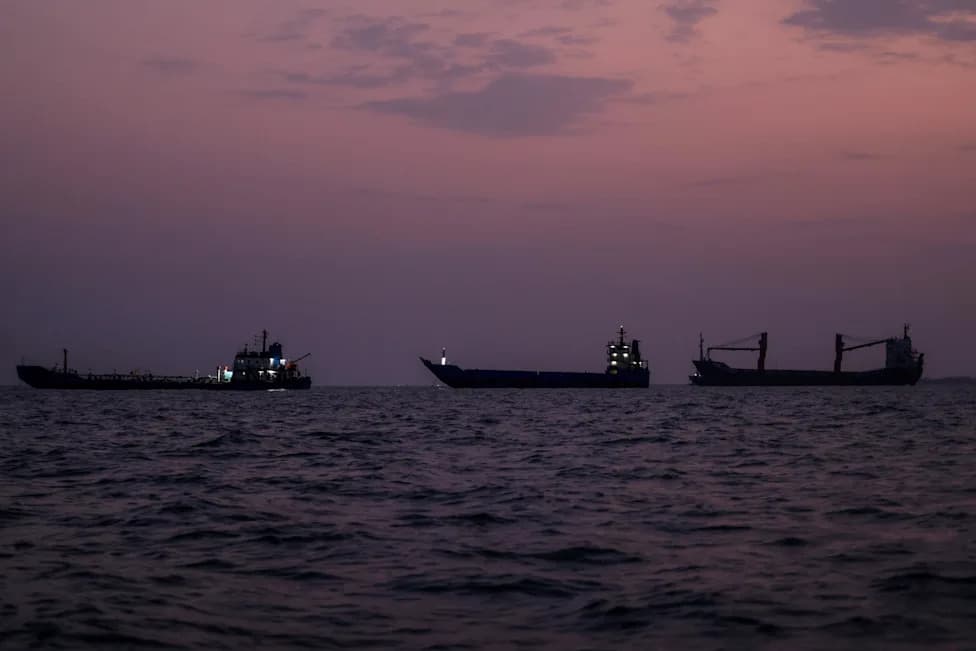
Tanker-tracking sites and commodity analytics firm Kpler show a steady rebound in Middle East oil exports: estimated regional crude exports climbed to about 16.328 million barrels per day (bpd) in September, with roughly 9.719 million bpd transiting the Strait of Hormuz. Kpler puts current exports at just under 80% of pre-war levels, though flows remain roughly 3.2 million bpd below February’s totals.
Why the Recovery Matters — And Why Risks Persist
The rebound weakens Tehran’s ability to use disruption of Hormuz as decisive leverage: if large volumes of oil continue to move through the strait despite a US naval blockade of Iranian ships and ports, Iran’s bargaining power in negotiations could be reduced. Saudi Arabia’s rapid export recovery — from about 2.446 million bpd in August to roughly 5.4 million bpd in September — has been a major factor in the recovery.
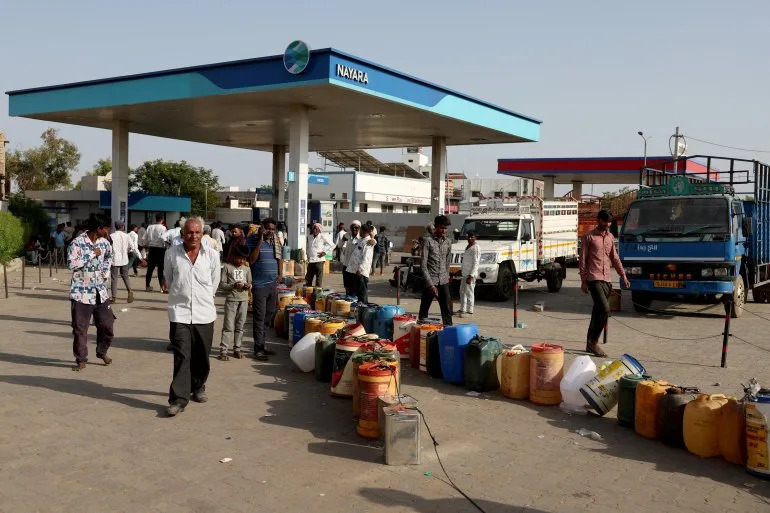
Villagers stand near plastic containers at a fuel station to fill their water pumps, as India faces rising oil prices, in Halvad, Gujarat, India [File: Amit Dave/Reuters]
Still, several important constraints keep risk elevated. Tanker insurance premiums remain high, strategic reserves have been drawn down by consumer countries, and refined-fuel shipments (diesel and gasoline) are still constrained. Damage to infrastructure and strained supply chains add further fragility to energy markets.
“The fact that oil is getting through the Strait of Hormuz is encouraging, but flows are not yet regarded as completely secure or guaranteed, particularly while the wider conflict remains unresolved,” said Susannah Streeter, chief investment strategist at Wealth Club.
Market And Economic Indicators
Brent crude eased to $102.59 a barrel after traders reacted to improving flows, but the contract still recorded a substantial monthly gain. Analysts warn markets remain sensitive to any renewed attacks: the resilience of US-led protection against missile and drone barrages is uncertain.
Iran’s domestic economy shows deep strain. Official data from the Statistical Center of Iran reported a 10.1% year-on-year GDP contraction between March 21 and June 20, while the oil and gas sector contracted 26.4%. Twelve-month average inflation hit about 69.9%, and the rial plunged past 2.2 million to the US dollar earlier in September.
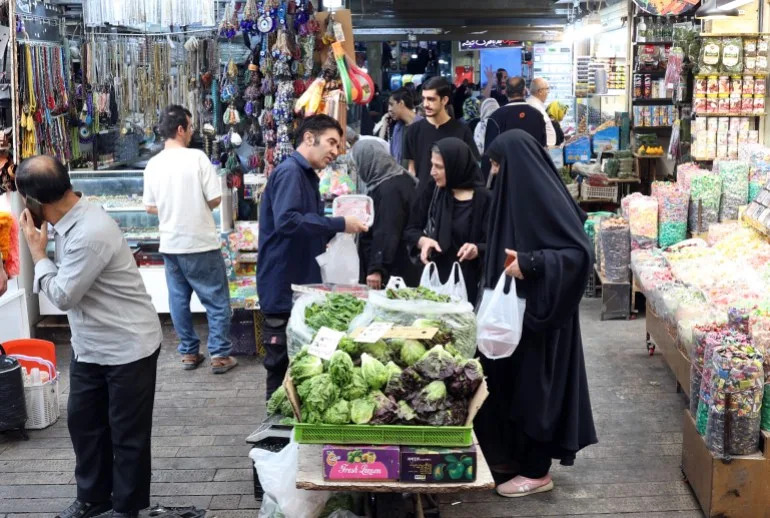
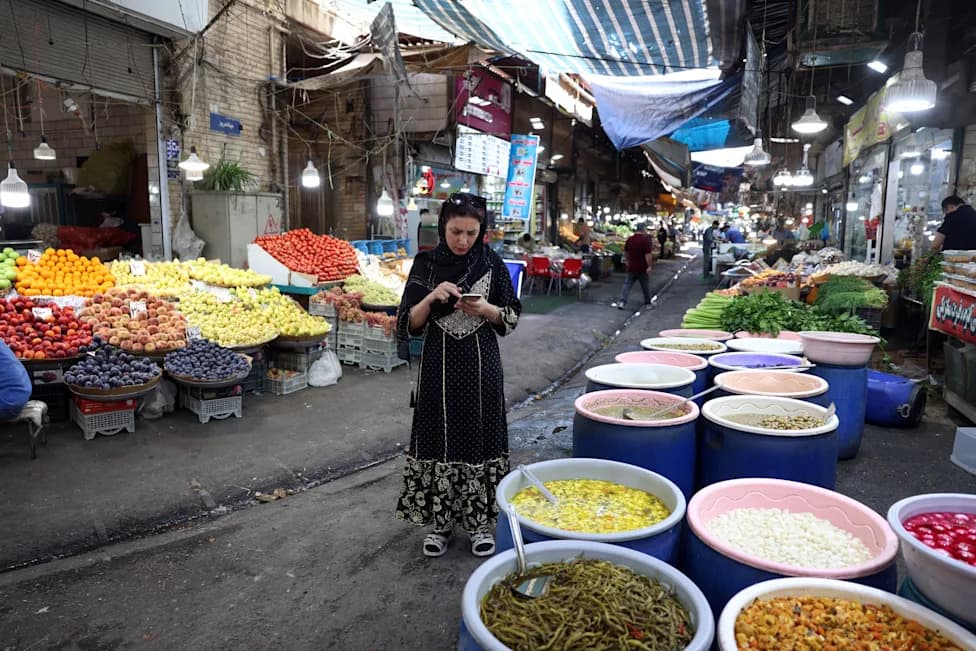
People shop at Tajrish Bazaar in northern Tehran, Iran [File: Abedin Taherkenareh/EPA]
Politics And Diplomacy
Despite military and economic pressure, negotiations continue. At the UN General Assembly, US envoys held indirect talks with Iranian officials. Iran proposed a seven-day roadmap to reopen Hormuz in exchange for measures such as ending the naval blockade, sanction relief, and release of frozen funds — a plan Washington rejected outright. Recent reporting suggests mediators are relaying feedback and that the remaining gap may now be sequencing rather than substance.
Iranian officials dispute claims that their control of the strait has eroded. Islamic Revolutionary Guard Corps spokesperson Hossein Mohebbi warned that vessels transiting under US protection do not indicate a return to normality.
In sum, while maritime traffic through Hormuz has recovered significantly, persistent market, insurance and infrastructure vulnerabilities — together with Iran’s deep economic pain — mean the balance of leverage is shifting but not decisively broken.
Help us improve.