When Iran closed the Strait of Hormuz, roughly 15 million bpd of oil exports were at risk. Gulf states and partners quickly used spare pipelines, longer sea routes and a covert southern corridor to restore about 8 million bpd, while inventories, weaker demand and extra supplies covered the remainder. Those fixes have kept prices near $100 a barrel but are costly and vulnerable to further attacks or disruptions.
Gulf Oil Flows Kept Afloat Despite Iran War — But Detours Are Costly and Fragile

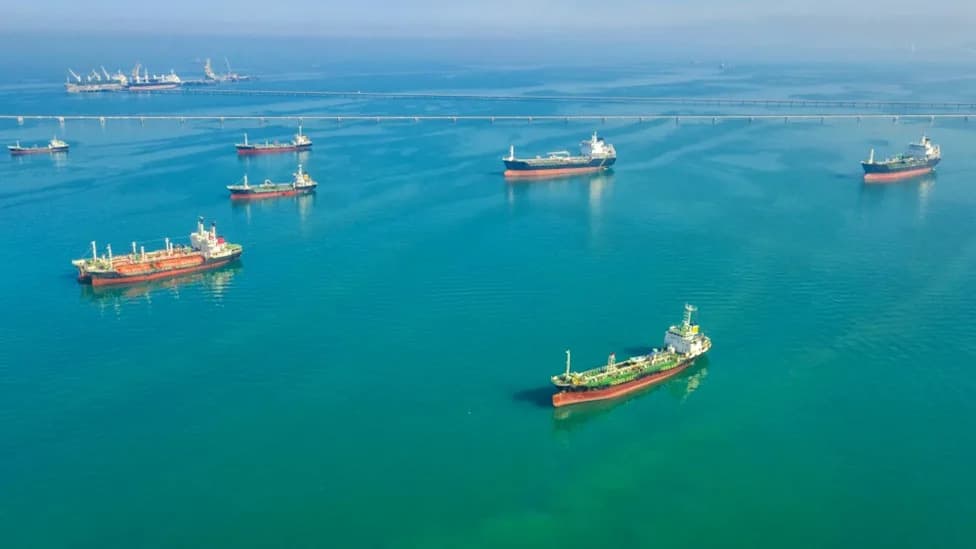
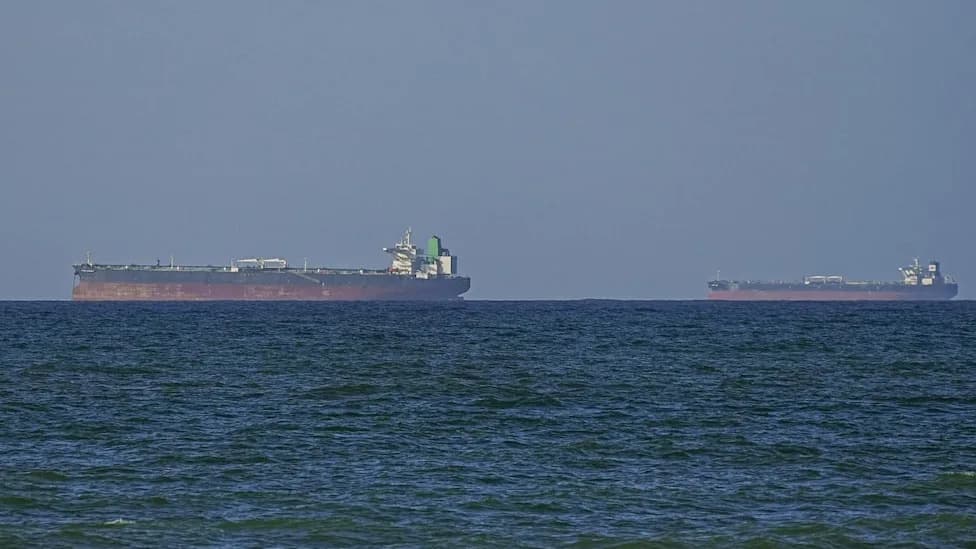
A gull flies overhead as a boy stands with his bicycle on a beach overlooking commercial vessels anchored in the Strait of Hormuz off Bandar Abbas, Iran, Monday, Sept. 7, 2026. (AP Photo/Vahid Salemi, File)(AP Photo/Vahid Salemi)
FRANKFURT, Germany — When Iran closed the Strait of Hormuz at the start of the war, about 15 million barrels per day (bpd) of oil were threatened. Nearly seven months on, crude prices are higher but not catastrophic, because Gulf producers, shippers and the U.S. military improvised a series of workarounds to keep oil moving — at growing financial and operational cost.
How Gulf States Bypassed Hormuz
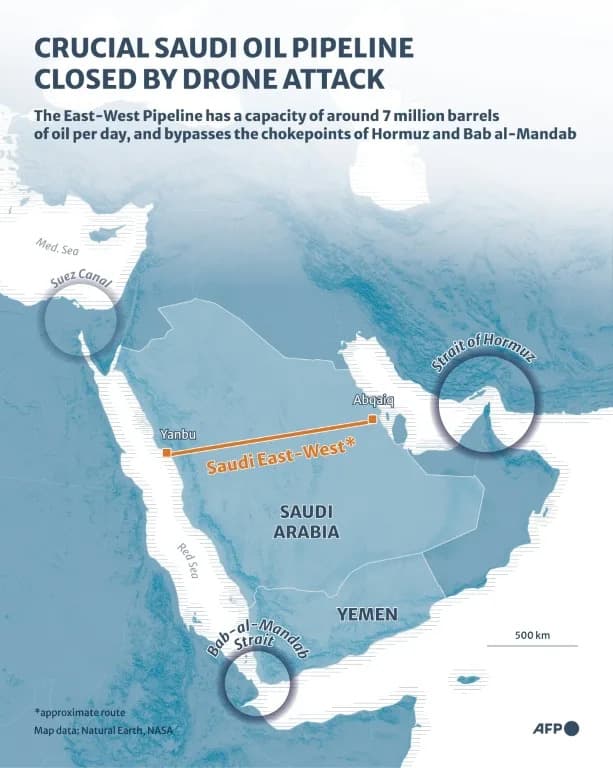
Saudi Arabia and the United Arab Emirates quickly diverted exports to spare pipeline capacity. Riyadh used its East–West pipeline to the Red Sea port of Yanbu, while the UAE routed shipments via an Oman-crossing pipeline to Fujairah on the Gulf of Oman. Operators also began using a U.S.-supervised southern corridor near Oman, conducting covert night transits and ship-to-ship transfers to avoid Iran’s demanded route.
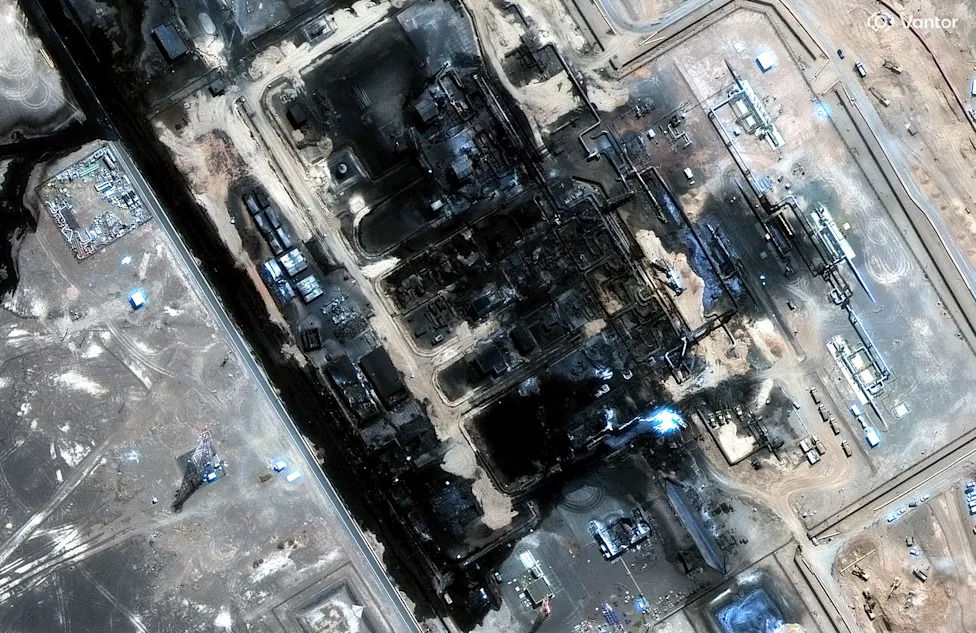
This satellite image provided by Vantor on Sunday, Sept. 13, 2026 shows the aftermath of the recent drone attack on the East-West pipeline in Saudi Arabia. (Satellite image ©2026 Vantor via AP)(Satellite image ©2026 Vantor via AP)
Temporary Fixes, Lasting Costs
Those measures restored roughly 8 million bpd of the prewar 15 million bpd: an estimated 6–7 million bpd flow on the southern shuttle route and about 2 million bpd via the Fujairah pipeline, according to industry analysts. The market has been further balanced by drawing down inventories (about 3.5 million bpd), lower demand (an estimated 5 million bpd reduction from higher prices and slower growth) and extra supplies from other producers (around 0.5–0.7 million bpd).
“Our take is that the market is very tightly balanced,” said Rahul Choudhary of Rystad Energy, explaining why crude has held near $100 instead of spiking much higher.
Time, Distance and Money
These routes add transit time and cost. Routing Asia-bound oil through the Suez Canal or around Africa can add weeks to voyages. The southern shuttle trade requires tankers to wait offshore for ship-to-ship transfers, increasing voyage days and tying up expensive tonnage.
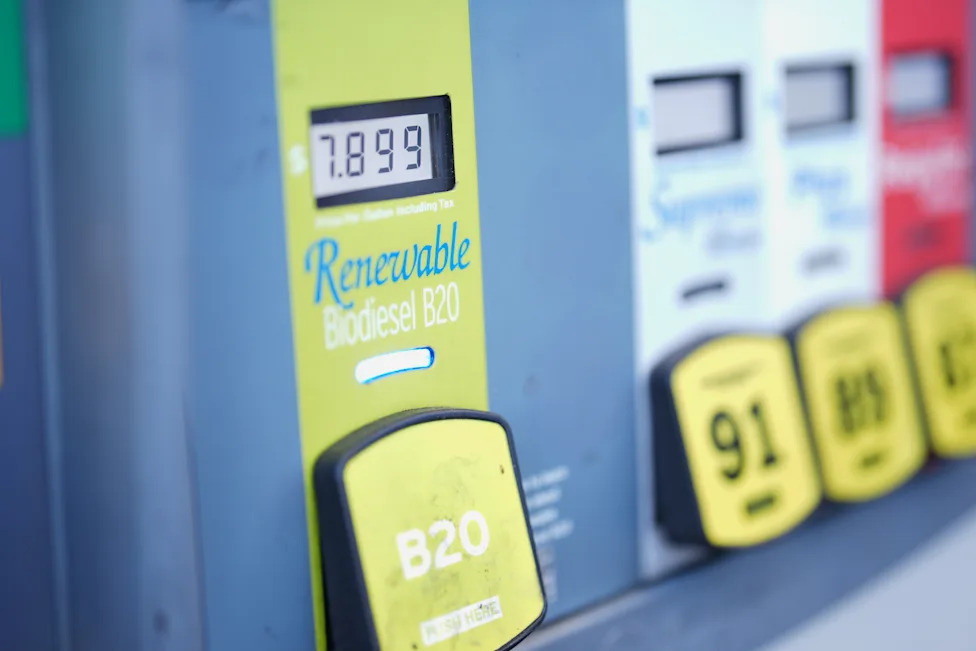
FILE -Diesel prices are displayed at a gas station Thursday, Sept. 10, 2026, in Carlsbad, Calif. (AP Photo/Gregory Bull, File)(AP Photo/Gregory Bull)
Supertanker demand has driven charter rates far above normal: where spot hires typically run $30,000–$50,000 per day, Windward reported Hormuz-transit spot rates hit roughly $1 million per day on Sept. 11 — the equivalent of about $26 per barrel, making shipping account for roughly 25% of delivered cost instead of the usual 1–3%.
Vulnerabilities Remain
The workarounds themselves are fragile. Houthi attacks on routes near the Bab el-Mandeb and the recent strike that shut down the East–West pipeline show infrastructure is vulnerable. Saudi Arabia and other producers have repeatedly had to reroute shipments: Yanbu loading was halted after the pipeline attack, forcing return to the U.S.-guided corridor in the Gulf. Iran could still target the southern corridor or transfer locations, forcing transfers farther offshore and driving costs and transit times even higher.
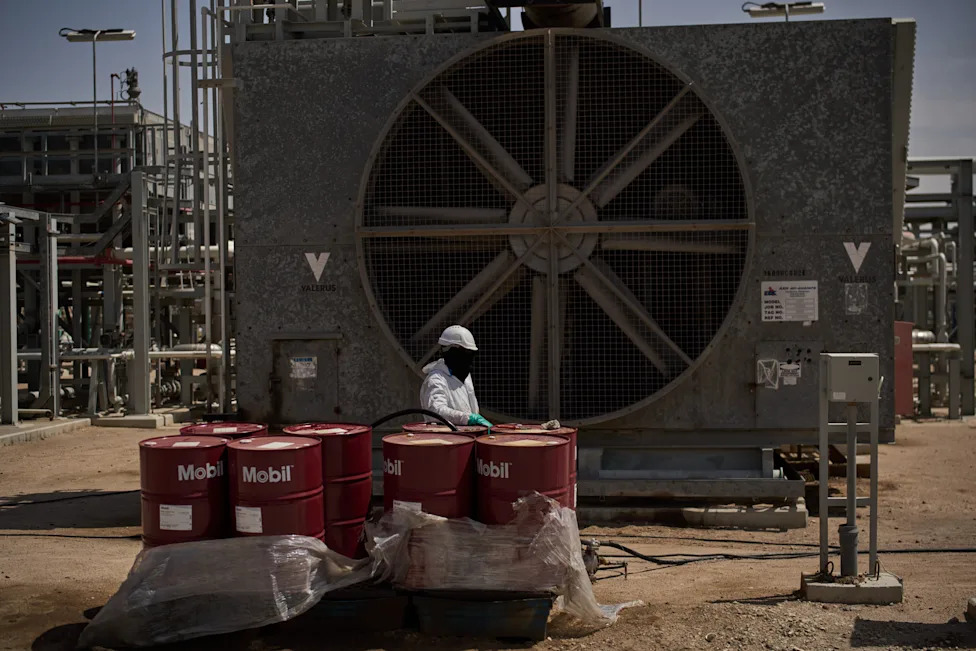
FILE - A worker collects engine oil as he works at a degassing station in Zubair oil field, whose operations have being reduced due to the Mideast war triggered by the U.S. and Israeli attacks on Iran, near Basra, Iraq, Saturday, March 28, 2026. (AP Photo/Leo Correa, File)(AP Photo/Leo Correa)
Outlook
With Brent around $100 a barrel, Rystad Energy projects prices could ease to $85–$90 in the final quarter and to about $80–$82 next year if the Strait reopens. But that outlook depends on the sustainability of costly detours, inventory draws and no further major disruptions to export infrastructure.
Key Sources: Shipping data firm Kpler, energy researcher Rystad Energy, U.S. Central Command statements, and maritime data provider Windward.
Help us improve.