Overview: Susan Collins, a long-serving Republican senator from Maine, faces an unusually vulnerable reelection bid in 2026 after a series of candidate shifts and scandals left Democrats unified behind Troy Jackson. Collins’ 2018 Kavanaugh vote, the fallout from Dobbs, her record on judicial nominations and civil-rights legislation, and recent reporting alleging questionable donor activity have narrowed her path to victory. Voters must decide whether her seniority and record of delivering federal projects outweigh concerns about judges, reproductive and civil rights, and possible influence-peddling.
Susan Collins’ Houdini Act May Be Coming to an End as Maine Race Tightens
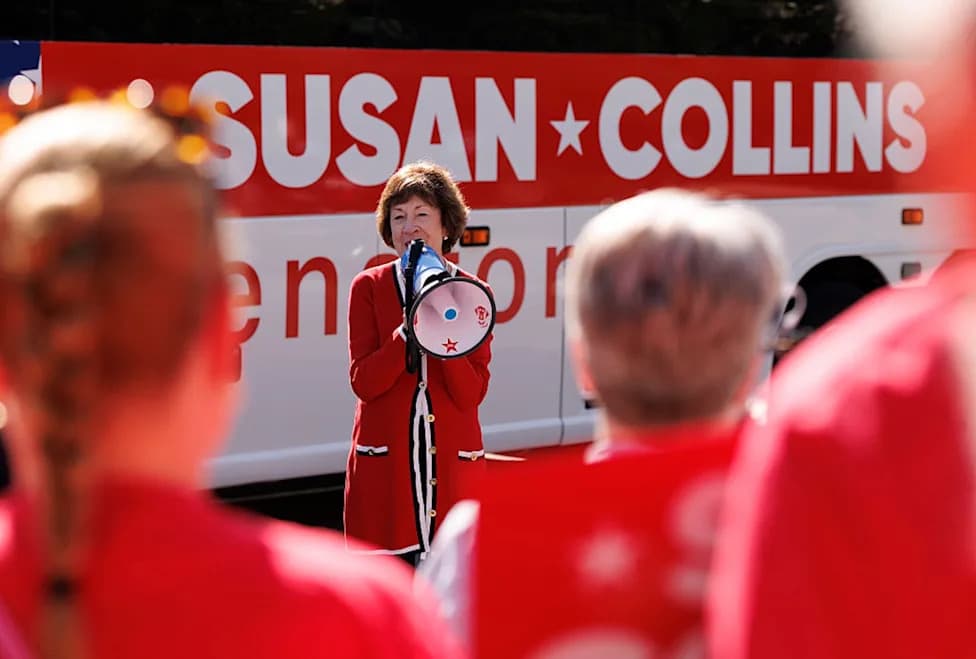
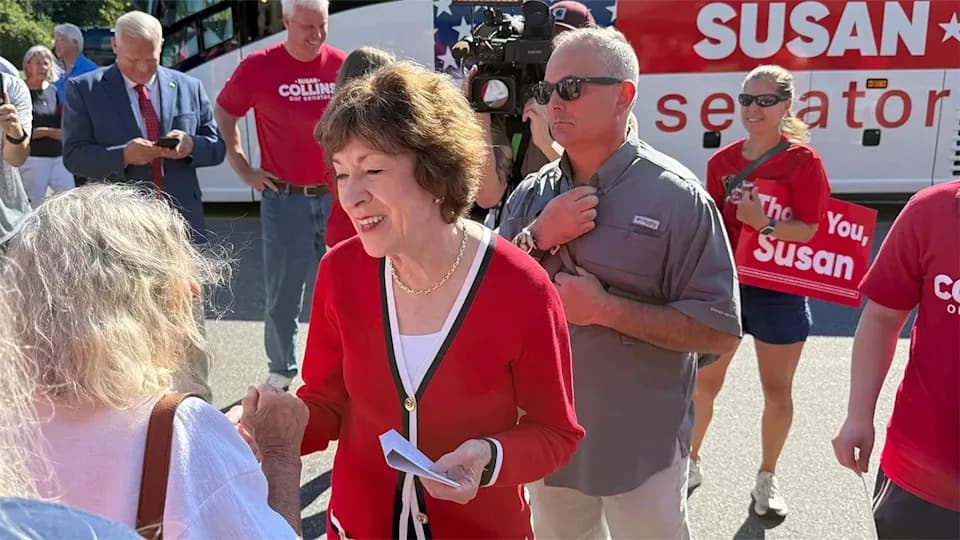
Sen. Susan Collins, R-Maine, greets supporters outside the Kittery Trading Post to kick off her reelection campaign bus tour of Maine on Aug. 14, 2026. CJ Gunther/Getty Images
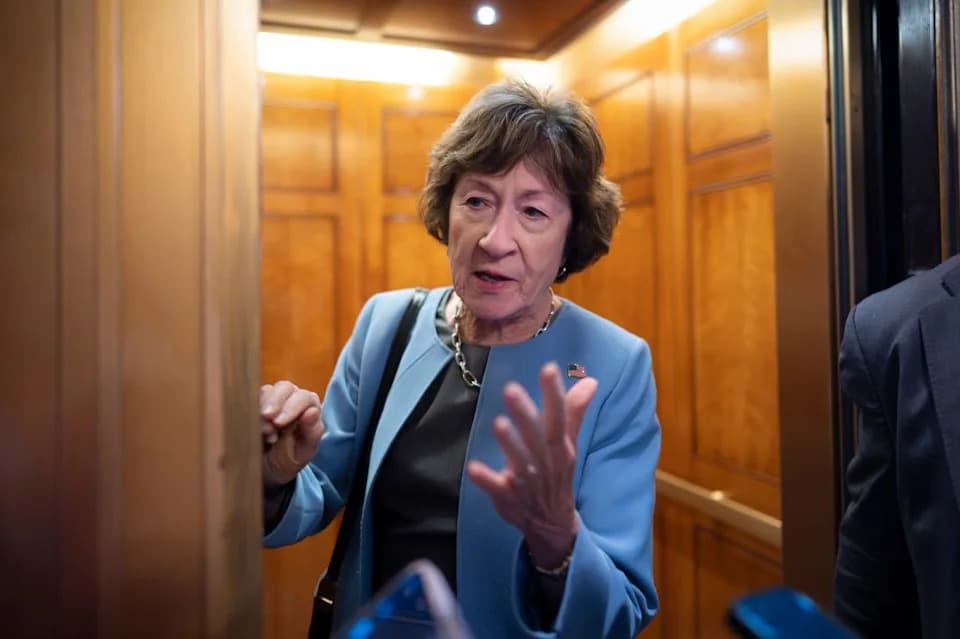
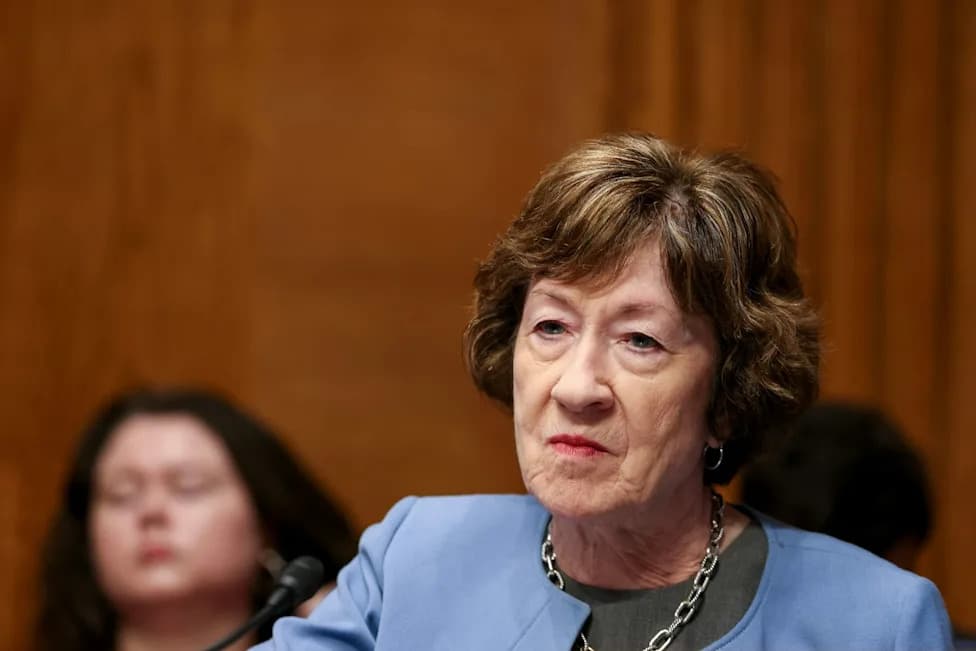
Susan Collins, the Maine senator who has held the same seat for nearly 30 years and long been one of the few Republican survivors in a blue state, now faces arguably her toughest reelection test as the 2026 cycle approaches. Once praised for her ability to outmaneuver difficult political currents, Collins today confronts shifting electoral dynamics, fresh ethics questions and a Democratic challenger who has consolidated support.
Campaign Shuffle and the Challenger
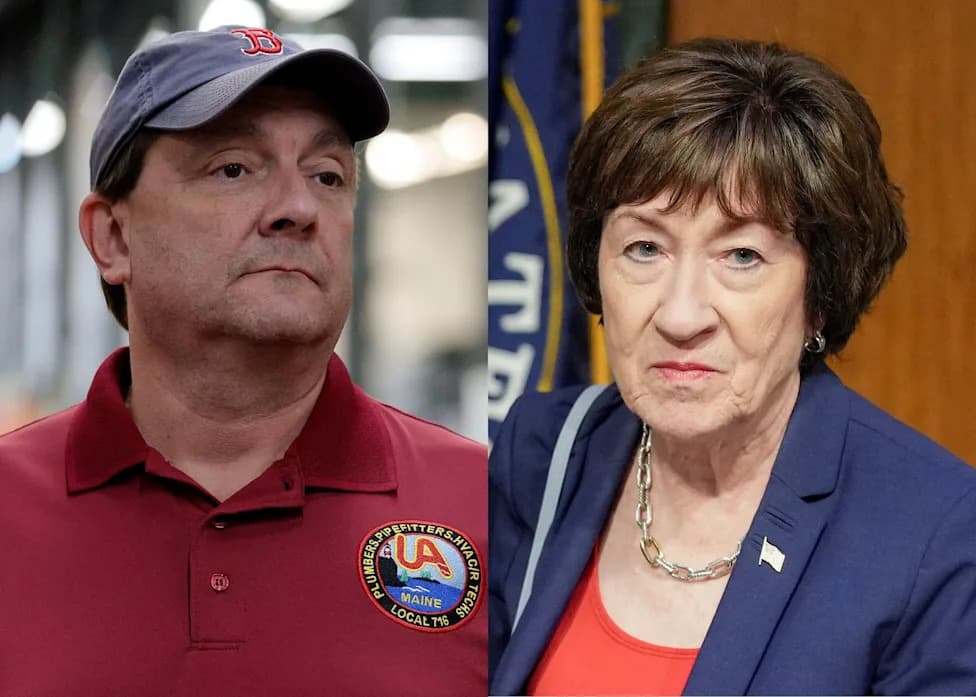
Democrats began the race with competing strategies. Senate Minority Leader Chuck Schumer pushed for a candidate who could mirror Collins’ appeal to women—briefly persuading popular Gov. Janet Mills to enter the contest—while progressives favored a younger, populist outsider and recruited lobster fisherman Graham Platner. Mills quickly withdrew and Platner later left the race after credible sexual-assault allegations. The party ultimately coalesced around Troy Jackson, a fifth-generation logger and former president of the Maine State Senate, who is now the consensus Democratic nominee. Most polls show Collins trailing Jackson, though a recent New York Times/Portland Press Herald/Siena poll indicated she retained a narrow lead.
Policy Votes That Shifted Perceptions
The political backdrop tilts toward Democrats for several reasons. This is Collins’ first campaign since the Supreme Court’s Dobbs decision overturned Roe v. Wade, making abortion access a central issue—especially among women voters in Maine. Collins’ 2018 vote to confirm Brett Kavanaugh, coupled with her comment that Roe was "settled law" at the time, undermined her standing with voters who expected a more consistent defender of reproductive rights. She now says she was misled by Kavanaugh’s testimony but has not repudiated her confirmation vote.
Additional votes have complicated her moderate image. Analysis from Planned Parenthood found Collins supported roughly 95% of former President Trump’s judicial nominees—consistent with her history of broadly backing judicial picks across administrations but politically salient given concerns about judges hostile to abortion rights. She also voted against the Equality Act, which would have added sexual orientation and gender identity protections to federal civil-rights law, despite previously cosponsoring the measure.
Allegations, Reporting and the Ethics Cloud
Jackson’s campaign has repeatedly cast Collins as emblematic of a corrupt Washington establishment, and that line of attack gained steam after ProPublica published reporting alleging questionable pay-to-play activity involving a Washington lobbyist close to Collins and her husband. The New York Times reported corroborating details. According to those reports, a former defense-contractor CEO told the FBI he used a shell company to conceal a $150,000 donation to a super PAC supporting Collins in exchange for assistance in securing millions in contracts. Investigators say there is evidence Collins was aware of and may have helped facilitate parts of the arrangement. A 2023 preliminary FBI inquiry produced no charges, and reporting indicates the probe later lost momentum amid personnel changes at the Justice Department.
Collins says she was cleared of wrongdoing, but the allegations—accurately framed as alleged in court of public opinion—hang over her campaign at a moment when voters are highly sensitive to corruption and influence-peddling.
Power, Pork and the Voter Calculus
Collins’ core reelection argument is straightforward: her seniority, particularly on the Senate Appropriations Committee, allows her to deliver federal projects and funding to Maine. While parochial spending has faced increased scrutiny since scandals such as the "bridge to nowhere," Collins has long cited constituent benefits as proof of her value to the state.
Voters must now weigh tangible local benefits against broader concerns about judicial records, reproductive and civil-rights votes, and new ethics questions. Complicating the calculus is Collins’ mixed record of resisting or enabling elements of the Trump-era agenda: she sometimes breaks with her party but has supported many nominees and voted for officials linked to Project 2025’s expansive executive theories, raising questions about how she would act in future crises of executive power.
Bottom line: The race will test whether Maine voters prioritize Collins’ ability to deliver federal resources and her institutional influence, or whether concerns about rights, judges and alleged ethics lapses are decisive enough to end her long streak of political survival.
Help us improve.