New York Times/Siena polling (Sept. 15–22) finds Sen. Susan Collins leading Troy Jackson 49% to 46% among 619 likely Maine voters. The survey was mostly completed before a Sept. 22 ProPublica report alleging pay‑to‑play activity tied to Collins’ 2020 campaign, which she denies. Collins retains stronger personal favorability and cross‑party support despite broader Democratic preference for Senate control, and the race is expected to remain competitive through November.
New Poll: Sen. Susan Collins Holds Narrow Lead Over Democrat Troy Jackson In Maine

Maine Sen. Susan Collins has edge over Democratic challenger in new poll
A New York Times/Siena University survey released Sept. 24 shows Sen. Susan Collins (R‑Maine) with a slim lead over Democratic nominee Troy Jackson in one of the most closely watched Senate races this midterm season.
Poll Details
The poll, conducted Sept. 15–22 among 619 likely Maine voters, recorded 49% support for Collins and 46% for Jackson. Pollsters noted this is the weakest public showing for Jackson since he entered the race in July. By contrast, an Aug. 28–Sept. 14 UMass Lowell/YouGov survey—also published Sept. 24—found Jackson ahead by five points, underscoring the race’s volatility.
Why This Race Matters
Collins is the only Republican senator up for reelection in a state that President Donald Trump largely lost in 2024, making Maine a high-priority target for Democrats hoping to reclaim Senate control. At the same time, Collins has a history of outperforming Republicans in New England: she won reelection comfortably in 2020 despite trailing some polls during that campaign season.
Timing And Controversy
The Times/Siena survey was largely completed before a Sept. 22 ProPublica report alleging Collins’ team participated in a pay‑to‑play scheme tied to her 2020 campaign—claims Collins denies. The report noted the FBI had reportedly closed the related inquiry in 2025. Collins called the ProPublica story a “partisan hit job” and said it was “so offensive” in remarks to a Wall Street Journal opinion columnist.
Voter Views And State Dynamics
Across the three states included in the Times survey (Maine, New Hampshire and Michigan), 54% of respondents said they preferred Democrats to control the Senate after the midterms—a larger share than support for any individual Democratic candidate. In Maine specifically, the poll found that 12% of voters said they wanted Democrats to control the Senate yet still planned to vote for Collins, highlighting her cross‑party appeal.
Pollsters report Collins enjoys stronger name recognition and a more favorable personal rating than Jackson, with many Mainers crediting her for bringing federal resources to the state over five terms. Still, Republicans face broader headwinds tied to Trump’s approval: Morning Consult’s aggregated polling for April 1–June 30 showed 38% of Mainers approved of Trump’s job as president and 61% disapproved, roughly mirroring a weak national approval trend.
Candidates’ Backgrounds And Campaign Activity
Troy Jackson was chosen by the Maine Democratic Party on July 25, 2026, to replace Graham Platner, who withdrew from the race in July amid sexual assault allegations that he denies. Jackson, a northern Maine native who grew up in a logging family, served as president of the Maine Senate from 2019 to 2024 and previously ran in the Democratic gubernatorial primary.
Campaign events in recent weeks have featured both local and national figures. Collins launched a re‑election bus tour with a stop at the Kittery Trading Post on Aug. 14; Jackson has campaigned across the state, appearing at events including the Neil Rolde York‑Ogunquit Democrats lobster bake on Sept. 13. Other competitive races and high‑profile campaigns in Maine—such as the contests for the 2nd Congressional District and governor—are also drawing attention and national visits.
Outlook
While the Times/Siena snapshot gives Collins a narrow edge, other surveys show a shifting picture. The combination of lingering controversy, national dynamics around presidential approval and voters’ desire for checks on the executive branch suggests the race will remain competitive through the fall.
Contributing reporting: Zachary Schermele, USA TODAY.

Troy Jacksonspeaks as he became the Maine Democratic Party's choice to be their U.S. Senate nominee to replace Graham Platner on the ballot in November on July 25, 2026, in Bangor, Maine. Troy Jackson will face off against Sen. Susan Collins, R-Maine, in the general election.(Joe Raedle, Getty Images)

Incumbent U.S. Sen.Susan Collins, R-Maine, greets supporters outside the Kittery Trading Post, the first stop of a weekend re-election campaign bus tour of the state of Maine, on August 14, 2026, in Kittery, Maine. Collins has been in office since 1997.(CJ Gunther, Getty Images)

Former governor of Maine Paul LePage speaks at Compotech defense technology manufacturing facility in Brewer, Maine, U.S. August 24, 2026. LePage is the Republican candidate for Maine's 2nd Congressional District, currently held Rep. Jared Golden, who is not running for reelection.(Taylor Coester, REUTERS)

Matt Dunlap, the Democratic candidate for Maine's 2nd Congressional District, applauds during a May Day rally organized by local unions, on May 1, 2026, outside City Hall in Portland, Maine.(Graeme Sloan, Getty Images)

U.S. Vice President JD Vance is greeted by former Maine Gov. Paul LePage, his wife Ann LePage, as he disembarks Air Force Two at Bangor International Airport in Bangor, Maine, U.S., May 14, 2026. Vance visited again in August.(Tierney L. Cross, via REUTERS)

Graham Platner raises hands with Troy Jackson during a "Fighting Oligarchy" campaign rally with U.S. Senator Bernie Sanders (I-VT) in Portland, Maine, U.S., May 25, 2026. Platner won the Democratic primary for U.S. Senate but dropped out of the race after a rape alliegation, which he denies.(Amanda Sabga, REUTERS)

U.S. House candidate from Maine Matt Dunlap (L) and former U.S. Senate candidate from Maine Graham Platner (C) during a May Day rally organized by local unions, on May 1, 2026, outside City Hall in Portland, Maine.(Graeme Sloan, Getty Images)

Rep. Chellie Pingree, D- Maine, arrives for a Democratic caucus meeting on Capitol Hill on September 1, 2026, in Washington, DC. Pingree has been in office since 2009 and is running for reelection in Maine's 1st Congressional District.(Andrew Harnik, Getty Images)
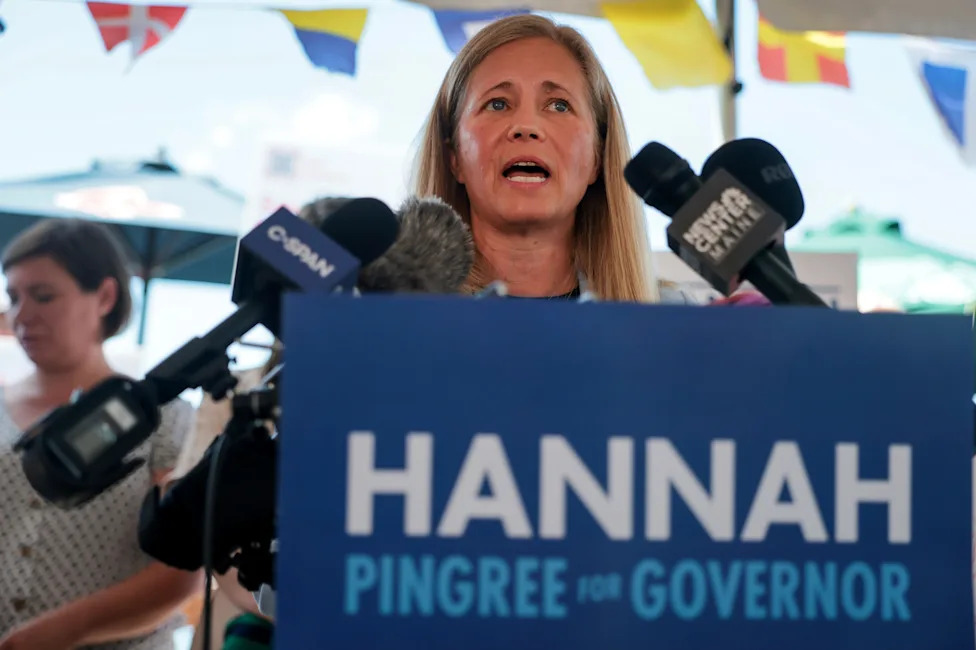
Maine Democratic gubernatorial candidate Hannah Pingree speaks during a press conference on July 24, 2026, in Damariscotta, Maine. Pingree held the press conference with members of the Miles Delivers Action Coalition to discuss the future of labor and delivery services and maternity care in Maine. Pingree is facing off against Republican gubernatorial candidate Bobby Charles. Hannah Pingree is the daughter of incumbent Rep. Chellie Pingree.(Joe Raedle, Getty Images)

Democratic candidate for the U.S. Senate Troy Jackson speaks to reporters during a campaign stop at American Roots apparel manufacturing facility in Westbrook, Maine, U.S.(Brian Snyder, REUTERS)

U.S. Sen. Susan Collins, R-Maine, greets supporters outside the Kittery Trading Post, the first stop of a weekend re-election campaign bus tour of the state of Maine, on August 14, 2026, in Kittery, Maine.(CJ Gunther, Getty Images)

Maine Democratic Senate candidate Troy Jackson greets voters the 2026 Neil Rolde York-Ogunquit Democrats Celebration Lobster Bake on September 13, 2026, in York, Maine. Jackson is running against U.S. Senator Susan Collins, R-Maine, after replacing Graham Platner as Maine's Democratic nominee.(Joseph Prezioso, Getty Images)
Help us improve.