Jeanerpeton mazonensis is a newly described, salamander-like amphibian from the Mazon Creek fossil beds, dated to about 309 million years ago. The genus name honors two mothers named Jean, while the species name recognizes Mazon Creek. The fossil preserves rare soft-tissue details — including scales, gastralia, toe pads, and eye impressions — and was reclassified after detailed study, separating it from the catch-all taxon Amphibamus grandiceps. The research was co-led by two Field Museum Women in Science interns and published in the Journal of Vertebrate Paleontology.
Named for Two Moms: Jeanerpeton mazonensis — A 309-Million-Year-Old Amphibian From Mazon Creek
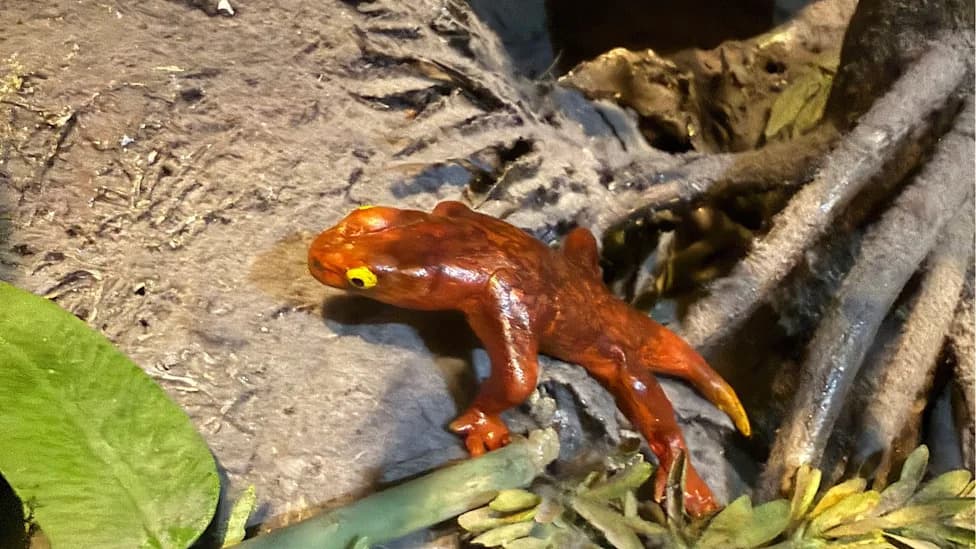
A model of 'Jeanerpeto' on the floor of the Carboniferous forest at the Field Museum's Evolving Planet exhibition.
Researchers have described a new, squat, salamander-like early amphibian from the famed Mazon Creek fossil beds and named it Jeanerpeton mazonensis — literally, 'Jean's crawler from Mazon Creek.' The genus name honors the mothers of two student researchers (both named Jean), while the species name, mazonensis, recognizes the fossil's provenance in the Mazon Creek deposits south of Chicago. This animal lived roughly 309 million years ago during the Carboniferous period and helps illuminate the early evolution of traits seen in modern frogs and salamanders.
Discovery and Naming
An amateur fossil collector discovered the specimen and donated it to the Field Museum, where researchers examined it in detail. Initially, the fossil had been grouped with the better-known taxon Amphibamus grandiceps, a so-called 'waste-bin taxon' used historically for poorly understood or superficially similar amphibian remains. After careful anatomical study, the team concluded the specimen represents a distinct genus and species and formally named it Jeanerpeton mazonensis.
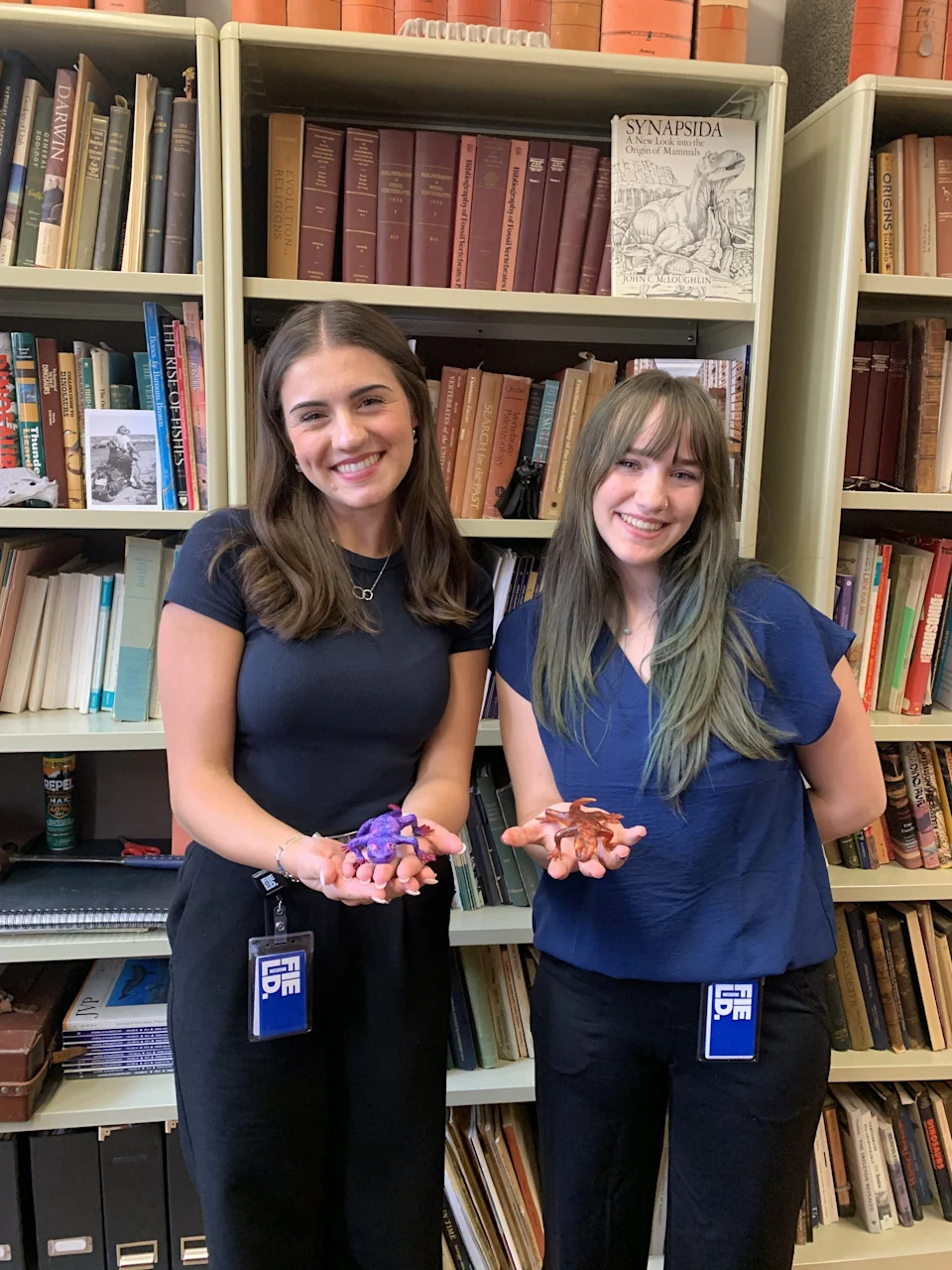
Allison Sefcovic and Payton Kohlberg hold epoxy sculptures of their new species, Jeanerpeton mazonensis.Image: Arjan Mann.
Exceptional Preservation
Mazon Creek is renowned for preserving soft tissues and fine anatomical details because organisms were rapidly buried in an organic-rich deltaic environment. The Jeanerpeton specimen shows remarkable features rarely preserved in fossils, including traces of scales on the back, tiny belly ribs called gastralia, toe pads, and even eye impressions. These details give scientists a clearer picture of body form and integument in early tetrapods.
Research, Authors, and Significance
The study, published in the Journal of Vertebrate Paleontology, was co-led by undergraduate researchers Allison Sefcovic (University of Michigan) and Payton Kohlberg (University of Illinois), both members of the Field Museum's 2025 Women in Science internship cohort. The work was conducted in the Mann Lab under Arjan Mann, assistant curator of fossil fishes and early tetrapods, with co-author Cam So contributing as a postdoctoral researcher.
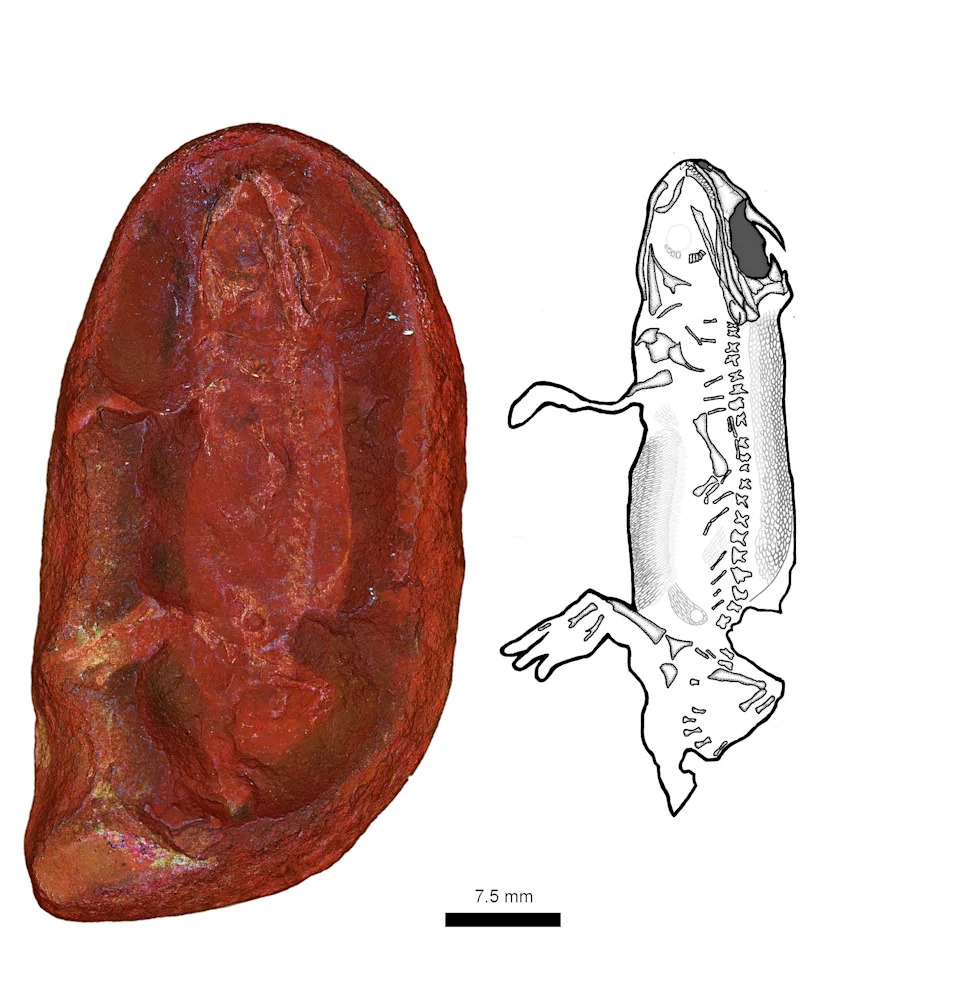
Photo and illustration of the fossil ofJeanerpeton mazonensis.Image: Allison Sefcovic
'What's really cool about Mazon Creek is that it preserves all of these unusual details—things like toe pads and body outlines,' said Allison Sefcovic. 'In the fossil of Jeanerpeton, we can see some of the scales on its back and tiny 'belly ribs' called gastralia. You can even see the eye impressions!'
By distinguishing Jeanerpeton from the previously assigned waste-bin assemblage, the study refines our understanding of early amphibian diversity and the sequence of anatomical changes that led to modern amphibians. The fossil adds important data to reconstructions of Carboniferous ecosystems in what is now Illinois and underscores the scientific value of museum collections and community collectors.
Personal and Educational Impact
Beyond its scientific value, the naming also acknowledged a personal connection: the genus honors the mothers of the student co-authors, both named Jean, reflecting the students' gratitude and the image of this early tetrapod as an evolutionary 'ancestor' to later amphibian lineages. The project highlights how hands-on internships and mentorship can introduce new researchers to paleontology and contribute meaningfully to published science.
Help us improve.