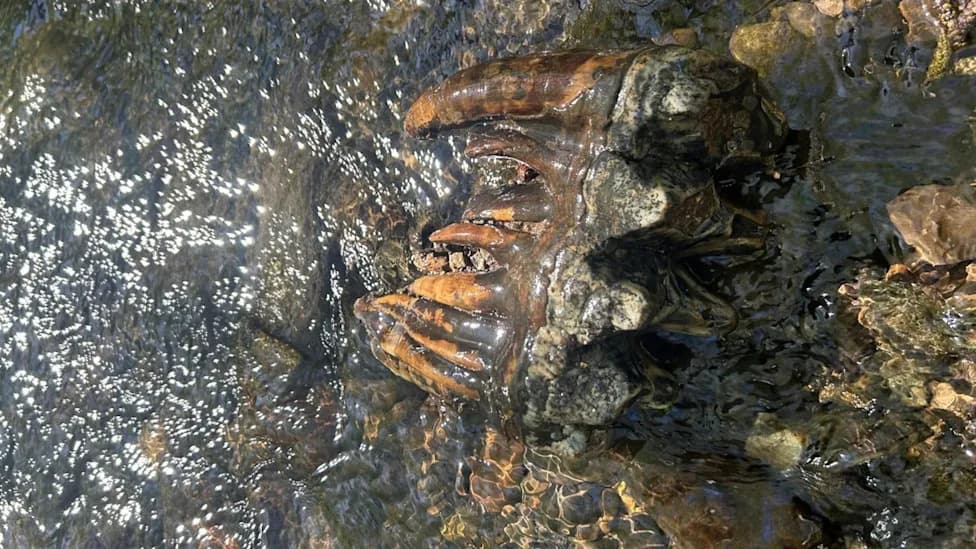
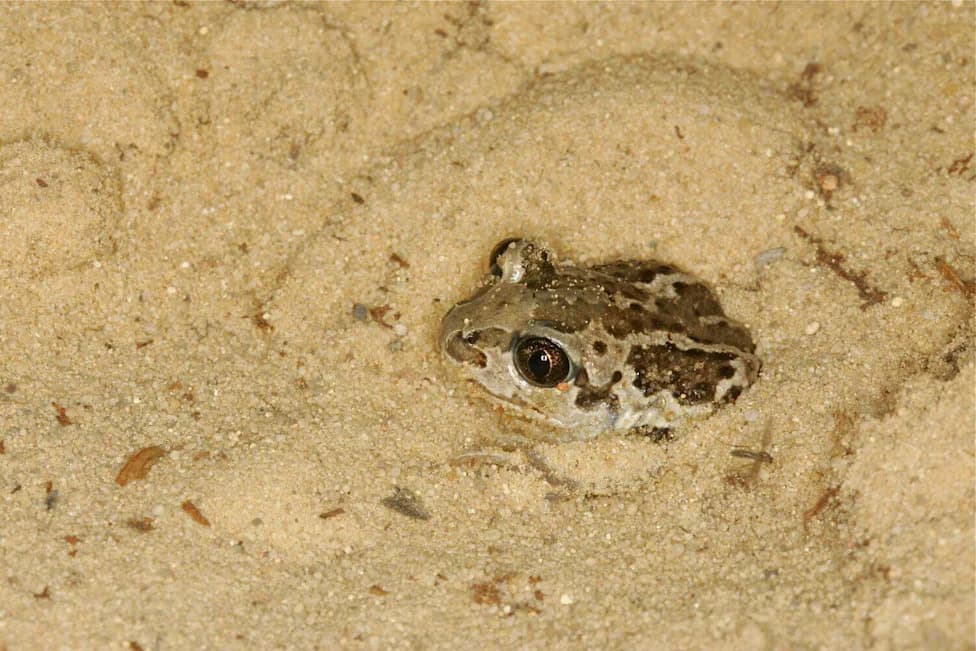
A geomorphologist surveying habitat for the threatened California red-legged frog found an exceptionally well-preserved Pacific mastodon molar in a San Mateo County creek. Paleontologists confirmed the tooth is an adult molar in "immaculate condition," calling it the most complete specimen recovered from the area. The Pacific mastodon lived across the West and northern Rockies during the Pleistocene; mastodons went extinct about 11,700 years ago. Midpen will donate the fossil to Stanford's Doerr School of Sustainability for study and curation.
Geomorphologist Surveying Frog Habitat Finds Exceptionally Preserved Pacific Mastodon Molar in San Mateo County
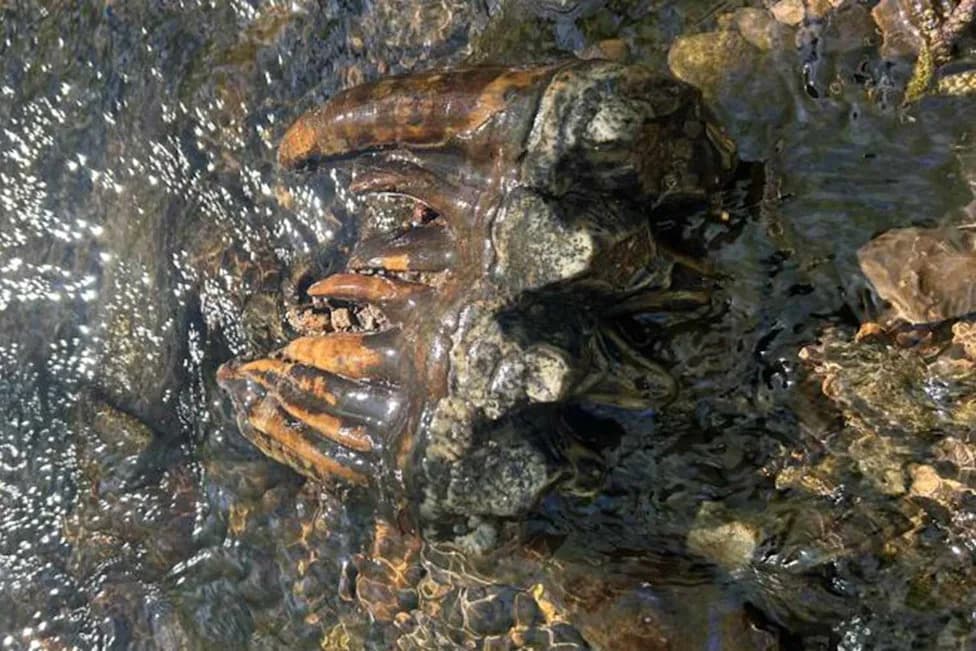
A scientist found a fossilized molar of a Pacific mastodon.Credit: Balance Hydrologics/Midpeninsula Regional Open Space District
A geomorphologist working on a habitat-improvement project for a threatened frog discovered an exceptionally well-preserved fossilized molar from a Pacific mastodon while surveying a creek in San Mateo County.
Brigid Lynch, a geomorphologist with the Midpeninsula Regional Open Space District, noticed what at first looked like an oddly shaped rock during fieldwork for the California red-legged frog. On closer inspection, the specimen proved to be an adult Pacific mastodon molar—remarkably intact and unusually complete for the region.
"As a geologist, I've gone out and seen stuff in the field, but definitely nothing as exciting as this," Lynch said in a statement shared by Midpen.
Paleontologists examined the find and confirmed it is an adult tooth from a Pacific mastodon. Wayne Thompson, owner of Pacific Paleontology, described the specimen as "in immaculate condition," calling it the most complete mastodon molar recovered from the area and saying the discovery gave him "chills and shivers up and down my spine." He added that the tooth helps fill another piece of the Ice Age puzzle for the region.
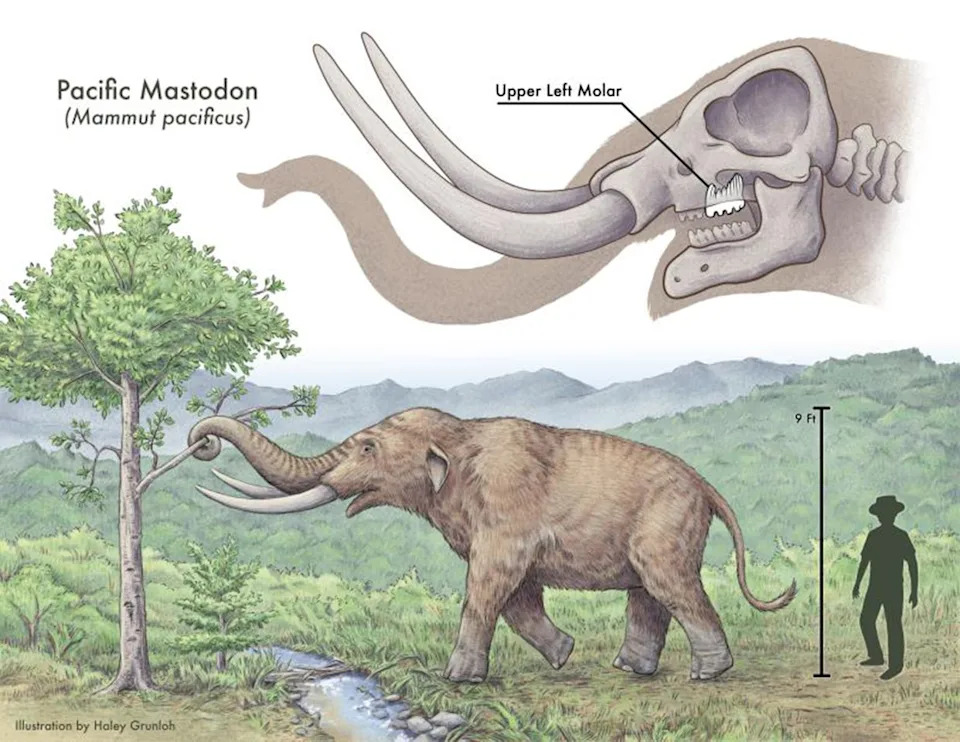
A rendering of a Pacific mastodon by Haley Grunloh for Midpen.Credit: Haley Grunloh
About the Pacific Mastodon: The Pacific mastodon is a recently recognized species that differs from the better-known American mastodon. Midpen notes that Pacific mastodons had narrower teeth, thicker leg bones and distinct tusk morphology. They are believed to have ranged across what are now Oregon and California and into parts of the northern Rocky Mountains during the Pleistocene epoch, which began roughly 2.5 million years ago. Mastodons as a group went extinct around 11,700 years ago.
Following the identification, Midpen announced plans to donate the molar to the Doerr School of Sustainability at Stanford University so the specimen can be studied and preserved for research and education.
"This highlights for me that the presence of mastodons wasn't that long ago, in geologic time," said Matt Sharp Chaney, a Midpen biologist. "That mastodons were out here in the same landscape that we're in today really drives home how important the work that we do is to keep species from winking out forever."
The preserve's announcement also included artwork depicting a Pacific mastodon by Haley Grunloh for Midpen. The unexpected find provides a rare, tangible connection to the region's Ice Age history—discovered during routine conservation fieldwork focused on protecting a threatened frog species.
Help us improve.