The Pew Research Center found that only 17% of Israelis and 21% of Palestinians in the West Bank and east Jerusalem believe peaceful coexistence between Israel and an independent Palestinian state is possible. Majorities on both sides said coexistence was impossible, citing territorial disputes, decades of violence and deep distrust. Israelis most often cited security concerns; Palestinians pointed to settlements, checkpoints and movement restrictions. Pew conducted face-to-face interviews with 1,001 Israelis and 1,038 West Bank/east Jerusalem Palestinians; Gaza was not surveyed due to security constraints.
Pew Poll: Only 17% of Israelis and 21% of West Bank Palestinians Say Peaceful Coexistence Is Possible

Jews who support the re-establishment of Israeli settlements in the Gaza Strip march near the Israeli border with Gaza, in southern Israel, July 19, 2026 (photo credit: JAMAL AWAD/FLASH90)
A new Pew Research Center survey finds that only a small minority on each side of the Israeli-Palestinian conflict believes Israel and an independent Palestinian state could coexist peacefully.
Key findings: 17% of Israelis and 21% of Palestinians in the West Bank and east Jerusalem said peaceful coexistence was possible. Majorities on both sides disagreed: 56% of Israelis and 68% of West Bank/east Jerusalem Palestinians said coexistence was not possible. The survey did not include Palestinians in the Gaza Strip due to security constraints.
Why Many Doubt Coexistence
Pew asked respondents to explain their answers in their own words, revealing both shared concerns and important differences. Common themes among those who said coexistence was impossible included territorial disputes, decades of violence, and deep mutual distrust. Respondents on both sides often described the relationship as one of competing claims to land and pointed to religious and cultural divides that make reconciliation difficult.
Diverging Priorities
Among Israelis who rejected a two-state outcome, security concerns were frequently cited: fears that an independent Palestinian state could become hostile, gain access to weapons, or leave Israel with less defensible territory. Some Israeli respondents expressed the view that Palestinian leaders or public opinion ultimately do not accept Israel's right to exist.
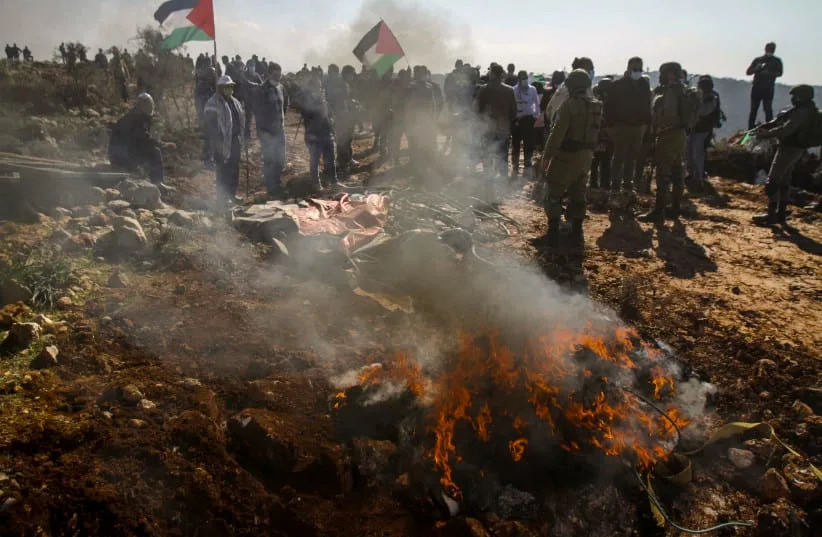
Israeli settlers clash with Palestinians protestor during a protest against Israeli settlements, near the West Bank city of Salfit, November 30, 2020. (credit: NASSER ISHTAYEH/FLASH90)
Palestinians in the West Bank and east Jerusalem most commonly pointed to Israeli control of territory, the expansion of settlements, checkpoints, and restrictions on movement as primary obstacles. Many said settlement growth has undermined the possibility of a viable, contiguous Palestinian state.
Voices of Optimism
Among the minority who thought coexistence was possible, respondents from both sides cited a desire to avoid further bloodshed and the belief that neither people would disappear. Some said clear borders and political separation could offer a practical path forward. Optimistic Palestinians emphasized potential economic benefits and existing commercial ties; some optimistic Israelis stressed the need for renewed trust, political concessions, and stronger leadership as preconditions for peace. Others on both sides pointed to changes in education, public attitudes, international involvement, or security guarantees as essential factors.
Demographic Divides and Methodology
The survey highlighted divisions within Israel: among Jewish Israelis, 16% said coexistence was possible and 64% said it was not. Arab Israelis were more divided: 23% said coexistence was possible, 26% said it was not, and 46% declined to give a substantive answer. Overall, about one-fifth of Israeli respondents declined to answer the coexistence question — twice the share that refused to answer in Pew's 2025 survey.
Pew conducted face-to-face interviews with 1,001 adults in Israel from April 5 to May 6 and with 1,038 Palestinians in the West Bank and east Jerusalem from March 30 to April 28. Fieldwork spanned a period of active fighting and the aftermath of an initial ceasefire declared on April 7.
Context
The Pew findings align with other recent polls that show mixed Palestinian attitudes. An INSS poll earlier in September found 46% of West Bank respondents said Israel did not have a right to exist while 52% favored negotiations to end the conflict. Other surveys have shown rising support for peaceful negotiations, declining support for armed resistance, and increased backing for a two-state framework when it is presented based on the 1967 lines.
Implication: The survey underlines deep pessimism on both sides and highlights the distinct obstacles each population perceives. That gap in priorities — security fears for many Israelis versus territorial control and movement restrictions for many Palestinians — helps explain why agreement on the basic terms of coexistence remains elusive.
Help us improve.