The Future of Life Institute’s "Pro-Human Assembly" drew a wide political spectrum — from Bernie Sanders to Steve Bannon — to debate how to regulate powerful AI. Speakers ranged from calls to ban artificial superintelligence to proposals for modest bipartisan oversight, and many criticized industry PAC spending. Major divisions — especially over policy toward China — suggest potential cross-ideological coalitions may be fragile, and concrete congressional action remains uncertain.
From Sanders to Bannon: A Rare Alliance—and Deep Divisions—On Regulating AI
What Bernie Sanders and Steve Bannon Have in Common
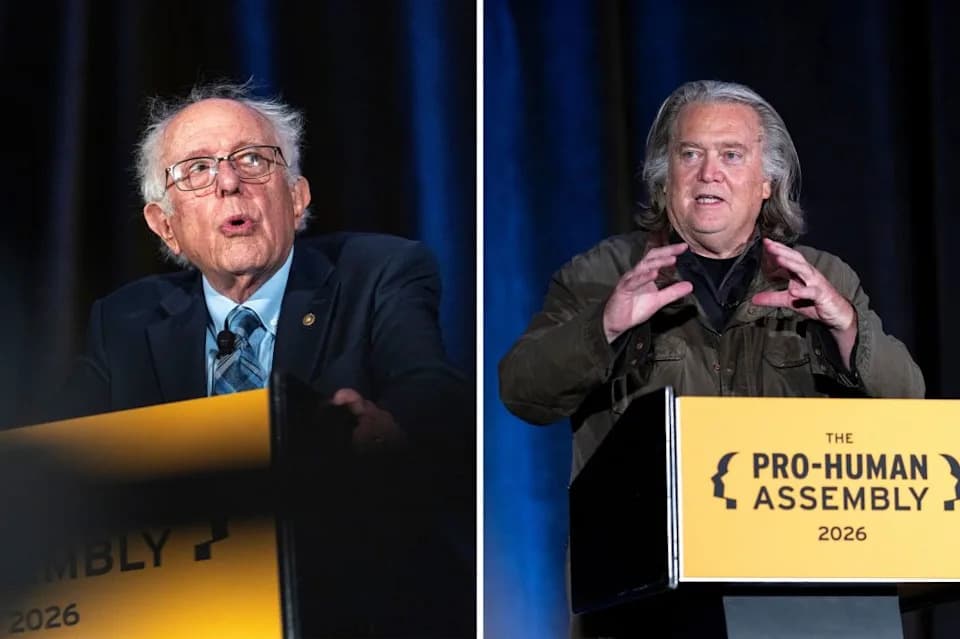
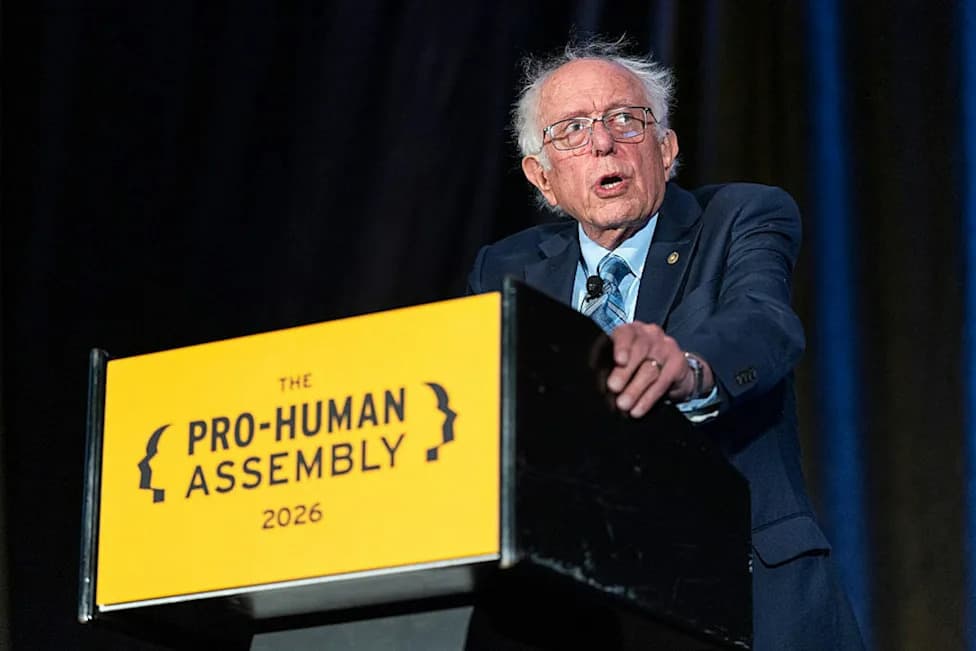
The Future of Life Institute’s "Pro-Human Assembly" in Washington, D.C., brought an unusually broad crowd together — from Senator Bernie Sanders to Steve Bannon — united by concern about the risks of artificial intelligence. The conference showcased both the growing political appetite to rein in powerful AI companies and the sharp disagreements about how to do it.
Division in Congress — And Unlikely Bedfellows
Lawmakers opened the event with starkly different prescriptions for AI policy. Representative Greg Casar received repeated applause when he called for an outright ban on AI systems that become "too powerful for humans to control," previewing legislation he and Senator Bernie Sanders plan to introduce to prohibit development of artificial superintelligence. Casar also criticized Leading the Future, an industry-funded PAC that has poured millions into races to influence AI policy.
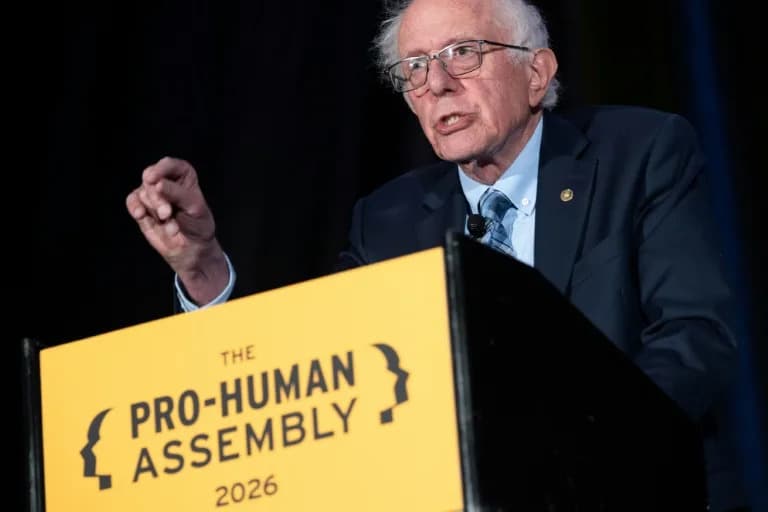
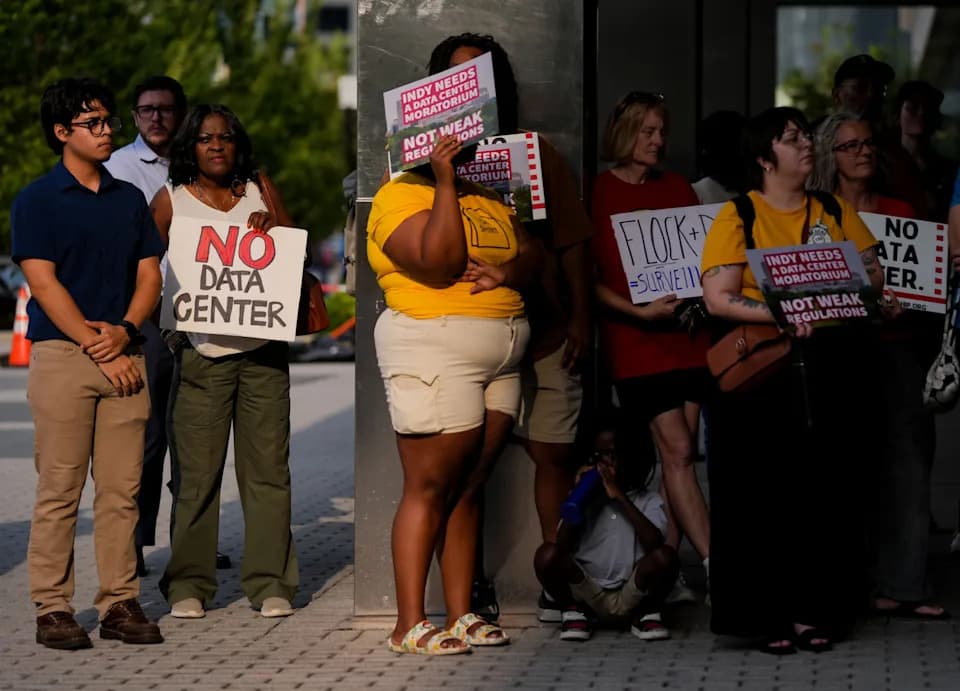
Later, Sanders echoed that critique and delivered his familiar anti-oligarchy message: "Virtually all of the decisions regarding the development of AI have been made by a handful of the richest people in the world," he said, arguing that their goals prioritize wealth and power over the public interest. He used the platform to promote his American AI Sovereign Wealth Fund Act — a proposal to redistribute AI-generated wealth and give the public a role in company governance — and reiterated his call for a moratorium on new data centers alongside Representative Alexandria Ocasio-Cortez.
A More Incremental Path
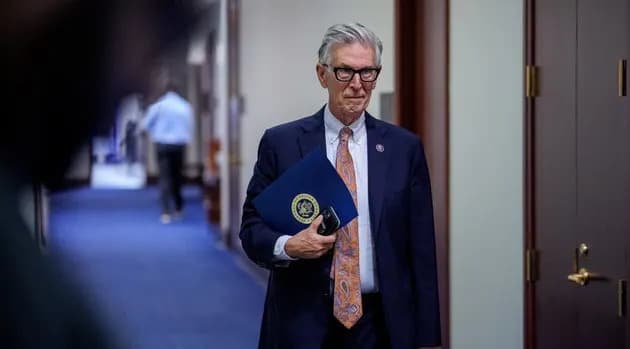
Representative Lori Trahan offered a more measured approach. Her remarks mixed philosophical concerns — she quoted Hannah Arendt and emphasized that people must be treated as "ends in ourselves" — with policy pragmatism. Near the end of her speech she described a bipartisan, incremental bill she introduced with Republican Representative Jay Obernolte, framing it as a modest step that could attract broad support. Leading the Future has not formally endorsed that bill but acknowledged the lawmakers' bipartisanship in August. Obernolte also met with OpenAI’s chief global affairs officer, Chris Lehane, who reportedly asked how he could help craft solutions.
Bannon’s Populist Turn — And A Hard Line On China
Steve Bannon opened with language that echoed Sanders’ anti-oligarchy rhetoric — "American citizens are not going to be supplicants to the oligarchs" — and emphasized a cross-partisan critique of concentrated tech power. But his proposals on international policy diverged sharply from Sanders’. While Sanders urged diplomatic engagement with China to slow AI development, Bannon advocated a far tougher stance: "We should quarantine every aspect of the ecosystem of artificial intelligence away from the Chinese Communist Party," he said, calling for restrictions on Chinese students studying technology and for expelling Chinese-owned companies.
Those remarks made clear there are limits to possible coalitions between the populist left and right, producing awkward silences and underscoring deep policy disagreements — particularly on trade, national security, and international cooperation.
What This Means Going Forward
The assembly previewed several themes likely to shape debate through 2026 and beyond: populist critiques of Big Tech, growing demands for bipartisan action, and heightened scrutiny of money in politics. But concrete legislative outcomes remain uncertain. Competing visions — from sweeping bans to narrow, incremental oversight — suggest the regulatory path will be contested and uneven.
Other Political And Policy Notes
A new United Way of the Greater Capital Region report finds that nearly half of New York households struggle to make ends meet despite incomes above the federal poverty line. Governor Kathy Hochul announced energy rebate checks for an estimated 8.1 million households and an "all-of-government" effort to enroll roughly 2.5 million households in an expanded utilities discount program.
The Center for American Progress released The Long Game on Energy Affordability, arguing that investments in energy efficiency — not short-term fixes — are the key to lowering bills over time and warning of an "affordability trap" in which urgent relief pressures policymakers to cut long-term investments.
Data for Progress published a poll showing voters blame Republicans for rising gas prices by a 30-point margin; notably, 36 percent of Republicans in the survey said their own party was responsible.
Book Of The Week
End Times Fascism: And the Fight for the Living World by Naomi Klein and Astra Taylor examines a coalition of billionaires, ethnonationalists and religious extremists whose policies the authors say are indifferent to mass death. Mixing history, theory, and reporting, the book offers both a diagnosis of the threat and a roadmap for collective resistance.
— Emma Janssen, Heather Souvaine Horn, Alex Shephard
Help us improve.