Platinum-based chemotherapy given to children produces extensive DNA damage in healthy tissues and reveals a previously unknown liver-specific mutational signature called SBSA. Using NanoSeq on >200 exposed samples and 61 controls, researchers found ~12-fold higher mutation burdens in exposed livers (about 2,200 substitutions per sample) and identified ~22,000 nonsynonymous changes including ~1,500 potentially pathogenic variants. The study cautions that these mutations are not proof of future cancer but may help explain long-term health risks in survivors and warrants further research.
Study: Platinum Chemotherapy Leaves Lasting DNA Footprints in Children's Organs, Especially the Liver
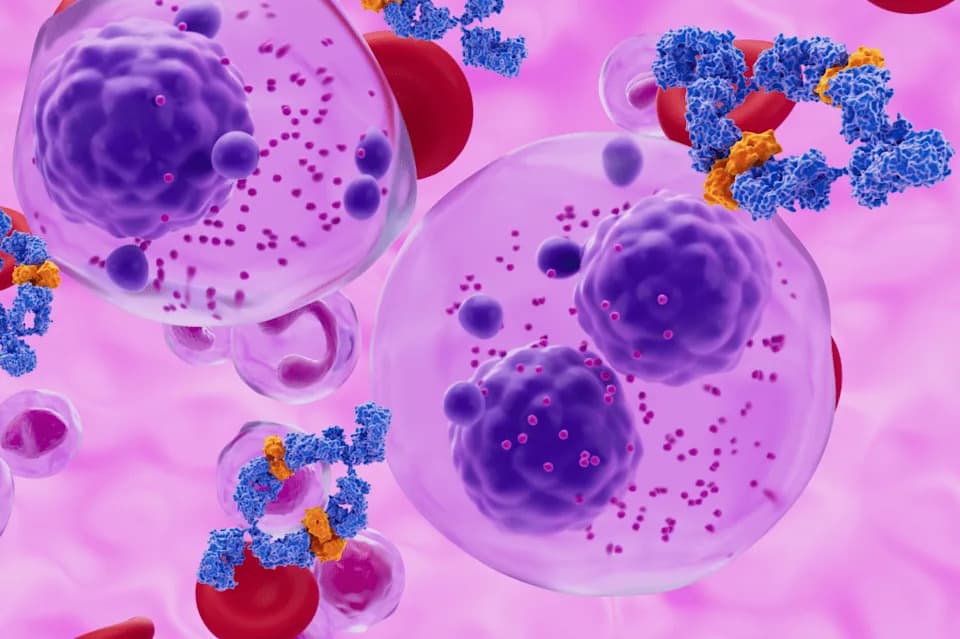
A closeup view 3D illustration of a monoclonal antibody treatment in multiple myeloma, which is a type of bone marrow cancer.
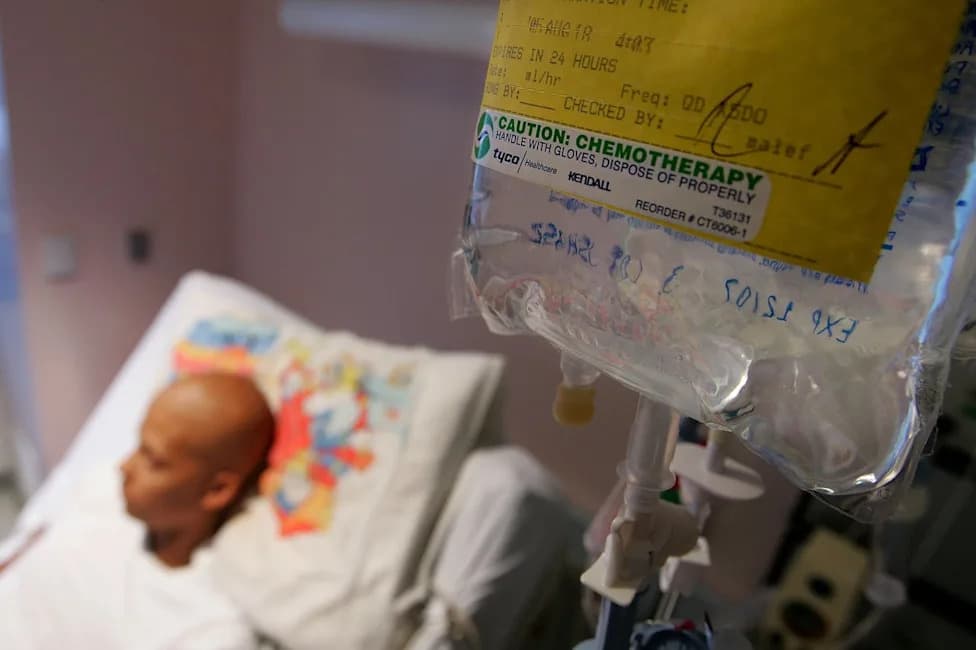
Researchers report that platinum-based chemotherapy drugs commonly used to treat childhood cancers leave lasting DNA damage in healthy tissues and create a previously unrecognized, liver-specific mutational pattern.
The international team, led by Anna Wenger of the Sahlgrenska Center for Cancer Research and described in Science, analyzed healthy tissues from children treated with cisplatin and carboplatin. Using an ultra-sensitive sequencing method called NanoSeq, the researchers compared more than 200 platinum-exposed samples with 61 samples from children who had not received these drugs.
Key Findings
Platinum exposure raised mutation burdens across multiple organs and blood cells, effectively producing a genetic pattern consistent with accelerated tissue ageing. The most striking result was in the liver: the authors identified a novel mutational signature, named SBSA, that appeared consistently in liver tissue but not in blood or many other organs despite systemic drug exposure.
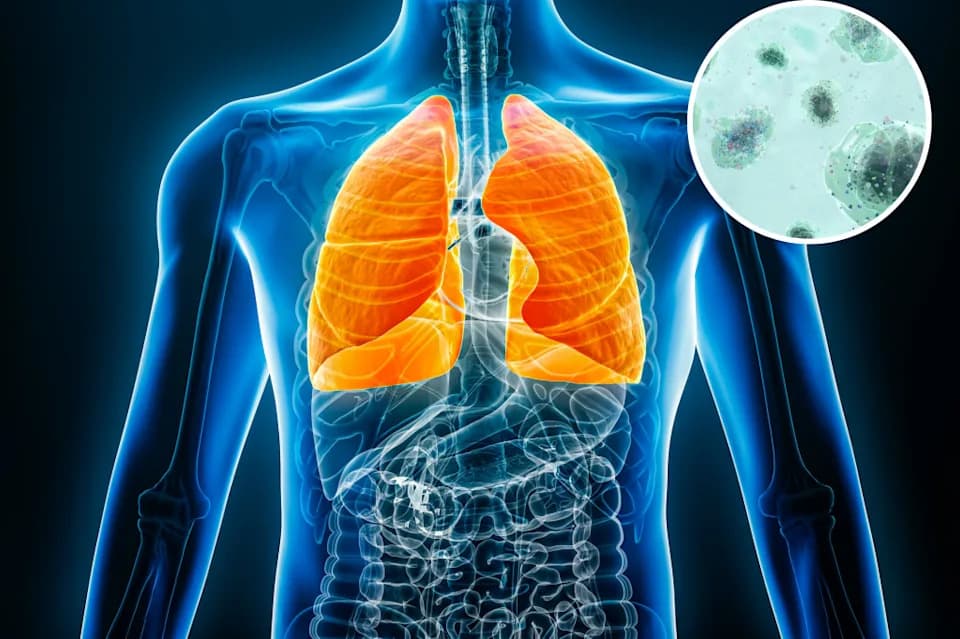
Quantitatively, normal liver tissue from exposed children showed roughly a 12-fold increase in DNA substitutions compared with untreated samples, with the average platinum-exposed liver specimen containing about 2,200 substitutions—levels comparable to adult liver tissue. In one infant, a single cycle of carboplatin was associated with a four-fold increase in DNA mutations compared with age-matched, platinum-naïve children.
The team also detected thousands of mutations in genes linked to cancer. Across platinum-exposed liver tissue the researchers estimated about 22,000 nonsynonymous substitutions, including roughly 1,500 variants that would be considered pathogenic in cancer contexts. The authors emphasize that the presence of such mutations does not mean cancer will develop in any individual.
What This Means
Wenger and colleagues caution that their study was not designed to prove these mutations directly cause later disease, and more work is needed to determine the clinical significance of the findings. Nonetheless, the results provide a plausible biological explanation for the elevated rates of secondary cancers and chronic health problems observed in some survivors of childhood cancer.
Importantly, the study reiterates that platinum-based chemotherapy remains an effective, often life-saving treatment for many pediatric cancers, and that comparable alternatives are limited. The authors call for further research to understand how to preserve treatment effectiveness while reducing long-term harm to healthy tissues.
Citation: Anna Wenger et al., 'Extensive and Differential Platinum Chemotherapy Mutagenesis in Livers of Children,' Science 393, eady0339 (2026). DOI:10.1126/science.ady0339.
Help us improve.