Fatou Jarjue and other women in Ndangan are restoring mangroves in the Tanbi Wetland to protect local livelihoods and shield nearby Banjul from erosion and flooding. Trained by a local conservation programme, they plant and tend seedlings and respect a seasonal oyster closure under The Gambia's Oyster and Cockle Co-management Plan to protect stocks and food safety. Restoration has helped oyster populations rebound, but challenges such as unreliable electricity still limit fishery preservation. The mangroves now serve as both a livelihood and a frontline defence for the low-lying capital.
Gambian Women Replant Mangroves to Shield Banjul — One Seedling at a Time
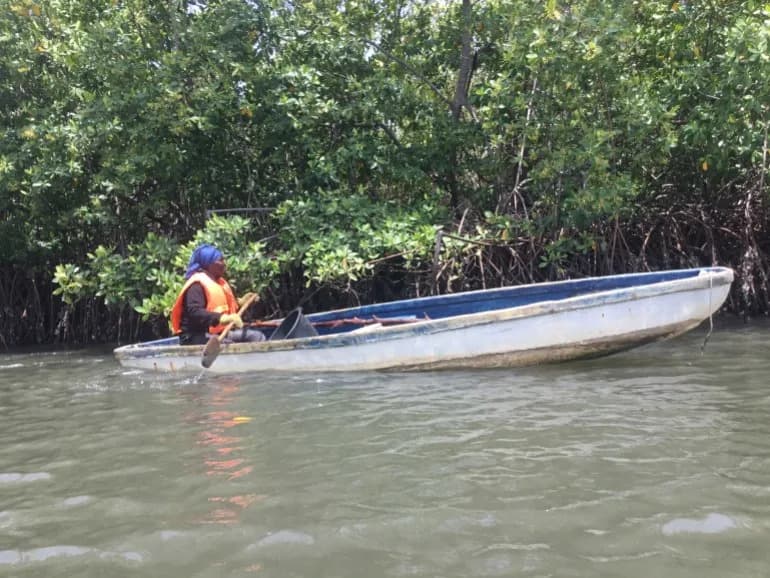
Fatou pushes her canoe into the water, beginning another day of searching for crabs in the mangrove wetlands that sustain her livelihood [Kaddy Jawo/Al Jazeera]
At first light, before the coast warms, Fatou Jarjue times her movements with the ebbing tide. Donning gloves and socks, she steps into the mud of the Tanbi Wetland, pushes a wooden canoe through narrow channels braided with mangrove roots and sets out empty pans that will be filled not with oysters today but with crabs hiding beneath the surface.
Jarjue’s life is bound up with the wetland. The salt-tolerant mangrove trees that fringe the coast provide oysters, crabs and fish that underpin her family’s income and act as a natural defence against erosion and flooding for her coastal community.
From Harvester To Restorer
At 34, Jarjue divides her time between harvesting and restoring the mangroves. “I have restored more than 5,000 mangroves since last year,” she told Al Jazeera. She learned to harvest oysters and catch crabs at 12, trailing her mother into the forest near Ndangan, a settlement of roughly 300 people about 2 km from Banjul. Over the years Jarjue witnessed rising seas, worsening erosion and shifting weather patterns that threatened the wetland her community depends on — so she began returning seedlings and tending the trees.
She inspects young plants, replaces damaged seedlings and monitors restoration sites. When she spots oysters clinging to roots, she leaves them alone, knowing that protecting them now will yield a better harvest later.
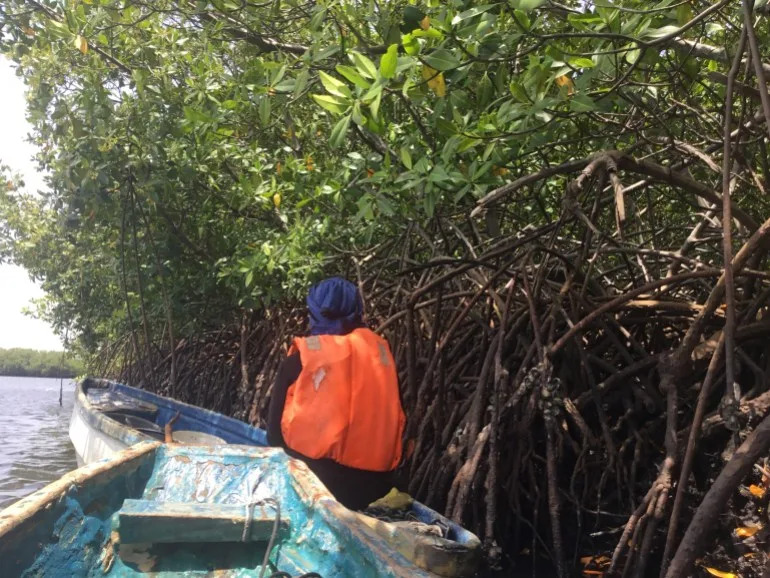
Fatou peers through the mangrove branches, monitoring the oysters that depend on the health of the wetland ecosystem [Kaddy Jawo/Al Jazeera]
Why The Oyster Season Closes
Only months earlier, women filled the waterways harvesting oysters attached to mangrove roots. With The Gambia’s rainy season, the oyster season closes and many women switch to catching crabs and fish until shellfish harvesting reopens. Marine scientist Dawda Saine explains that the closure is not because oysters become poisonous but because of conservation, ecology and food safety. The closure is part of The Gambia’s Oyster and Cockle Co-management Plan, giving stocks time to reproduce and grow while reducing pressure.
“We don't close the season because oysters are poisonous,” Saine said. “We close it to protect the resource and because, during the rains, oysters filter everything in the water, including increased run-off, which can affect their quality, taste and safety.”
A milk-can measure of oysters sells for about 100 dalasis (around $1.34), making oysters a valuable local income source despite being harder to harvest than crabs.
Community Impact And Training
Jarjue is one of several women in Ndangan trained by a local conservation programme to restore degraded mangrove stands, protect fisheries and boost resilience to climate change. For women like 48-year-old Sussan Colley, restoration has renewed oyster numbers and improved wetland productivity. Colley teaches her children both harvesting skills and the importance of protecting the systems that sustain them.
For the women of Ndangan, restoration has reshaped the mangrove from a harvest site into a shared responsibility and safeguard for future livelihoods.
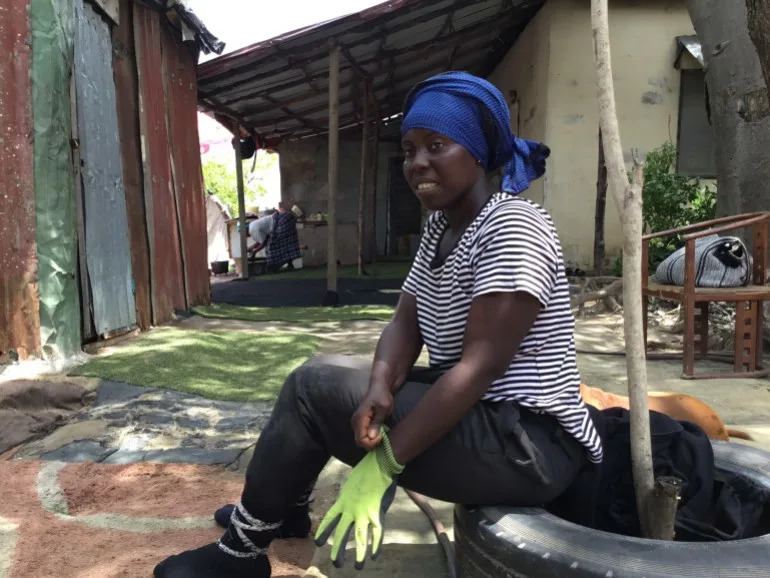
Fatou prepares for a day of crab harvesting, pulling on her gloves before venturing into the mangrove forest [Kaddy Jawo/Al Jazeera]
Mangroves As A Line Of Defence For Banjul
The work in Ndangan matters far beyond the settlement. Banjul, the nation’s low-lying island capital, faces mounting threats from sea-level rise, erosion and flooding. Experts warn a 1-metre sea-level rise could inundate parts of the city. Severe flooding in 2022 affected thousands across The Gambia, underscoring coastal vulnerability.
Rohey Malick Lowe, mayor of Banjul: "Banjul is an island. If the mangroves disappear, it goes with the city."
Local leaders say supporting women who restore mangroves strengthens both household incomes and the city’s resilience. Yet practical obstacles remain: without reliable electricity, preserving oysters and crabs is difficult when market demand is low and harvests cannot be sold immediately.
Slow Work, Lasting Hope
The work is gradual — a mangrove sapling will not fix a coastline overnight — but each root matters. As the tide rises, Jarjue steers her canoe back to shore, leaving behind thousands of young mangroves she helped plant. Months from now she expects to harvest oysters from the very roots she protects today.
“Every morning I wake up and see the mangroves growing,” she said. “That gives me peace. If the mangroves disappear one day, our lives will disappear with them.”
Help us improve.