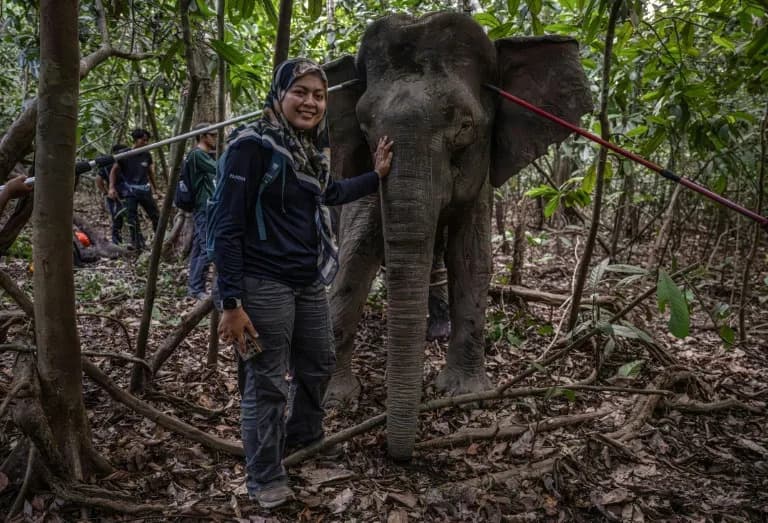
Conservation teams in Cambodia’s Cardamom Mountains are using hidden cameras, bioacoustic monitors and machine learning to document rare wildlife and bolster protection efforts. A 2024 systematic camera-trap survey deployed nearly 150 devices and recorded 100+ resident species, with almost two dozen classed as vulnerable or endangered. Acoustic recorders captured nearly 800 gibbon calls in six weeks, and AI is being trained to distinguish sex and eventually individual animals. Despite drops in poaching, the region lost about 7,000 hectares of tree cover in five years, driven largely by infrastructure and development.
Hidden Cameras, Microphones and AI Reveal Rare Wildlife in Cambodia’s Cardamom Mountains
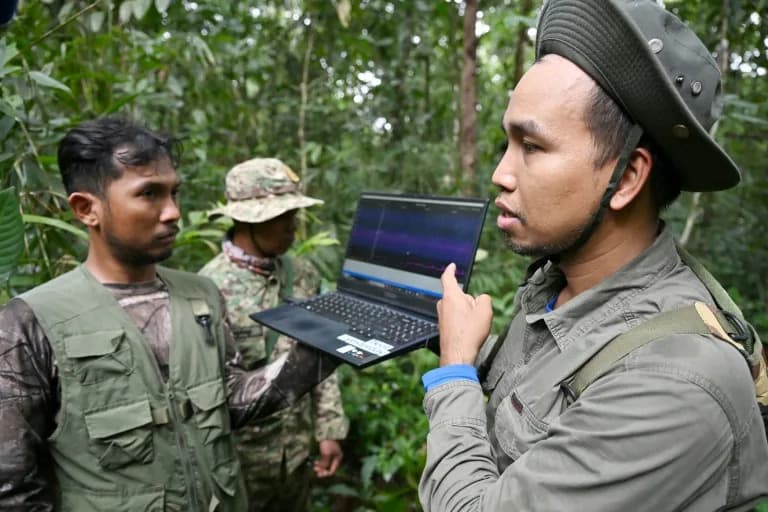
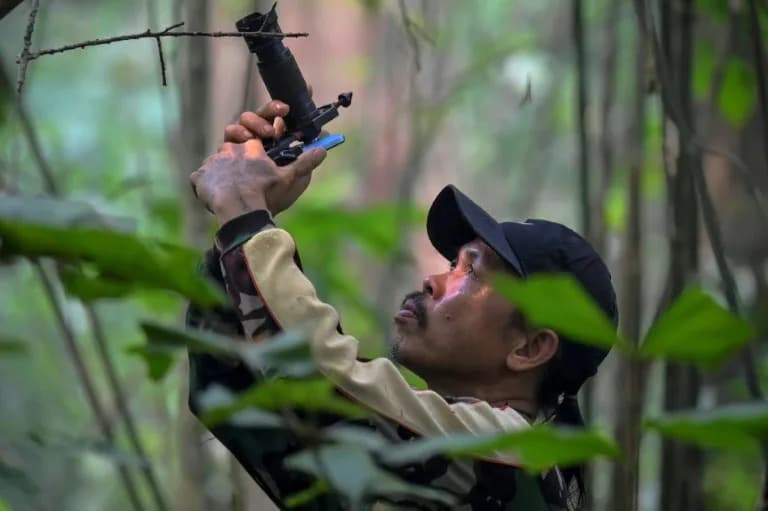
Hidden microphones, cameras and artificial intelligence to reveal the secrets of species living deep in Cambodia's Cardamom Mountains (TANG CHHIN Sothy)(TANG CHHIN Sothy/AFP/AFP)
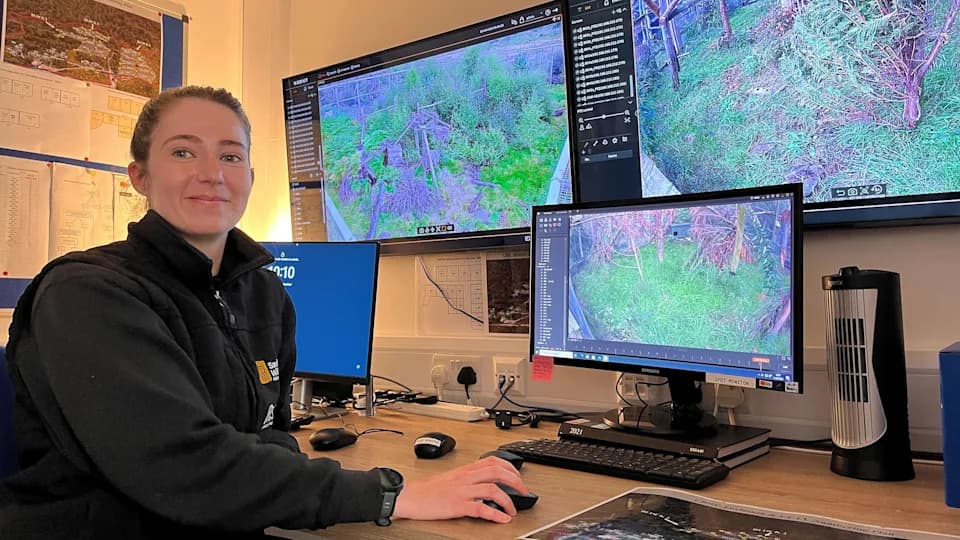
Above the steady patter of rain through the jungle canopy, the eerie whoops of a pileated gibbon ring out as it sings to ward off intruders in Cambodia’s Cardamom Mountains. Conservation teams are using concealed microphones, camera traps and artificial intelligence to document species living deep in this rainforest and to strengthen efforts to protect them.
Evidence From the Canopy and Forest Floor
Conservation International (CI) and local partners carried out the first systematic camera-trap survey of the Central Cardamom region in 2024, deploying nearly 150 devices at regular intervals. The survey recorded more than 100 resident species, almost two dozen of which are classified as vulnerable or endangered. Targeted camera trapping continues in areas where animals are most likely to appear, offering deeper insight into population trends and behaviour.
Sounding Out Gibbons With Bioacoustics and AI
Gibbons are difficult to capture on camera because they live high in the trees and move quickly. To overcome this, researchers deployed dozens of bioacoustic monitors at 10 sites spaced at least three kilometres apart — roughly the minimum distance between neighbouring gibbon groups. Over six weeks the recorders logged nearly 800 gibbon calls.
CI staff spent about three months training a machine-learning model to distinguish gibbon calls from other sounds — essentially teaching the system "this is gibbon, this is not." The team plans to refine the algorithm to tell male and female calls apart and ultimately to identify individual animals by their vocal signatures.
Local Knowledge and Fieldwork
Rangers and Indigenous community members play a central role in locating devices and monitoring equipment. Pan Sok, a 50-year-old member of the Chong minority who describes himself as a "jungle man," helped place cameras and later watched footage showing pig-tailed macaques, endangered dholes (wild dogs) and elephants. "My efforts paid off," he said, describing pride at seeing these animals on camera.
Persistent Threats
While poaching has declined in some areas and patrolling has reduced small-scale encroachment, larger threats remain. Infrastructure projects — including dams — continue to drive deforestation. Global Forest Watch data show the Central Cardamom protected area lost nearly 7,000 hectares of tree cover in the past five years. CI staff say some government-backed projects are outside their control, but hope that concrete evidence of rich wildlife will strengthen arguments for protection.
"Gibbons are indicators that our forest is still alive," said Ratha Sor, Biodiversity and Science Manager at Conservation International. The recordings and images provide tangible proof that this vast evergreen forest supports a rare and valuable array of species.
By combining remote cameras, sound recorders, local expertise and AI, conservationists aim to build a stronger, evidence-based case to safeguard the Cardamom Mountains — one of Southeast Asia’s most important remaining rainforests.
Help us improve.