States and cities enacted binding climate laws in the early 2020s, but rising energy costs and the loss of federal incentives have led several governments to roll back or weaken those commitments in 2026. Despite a difficult "mid-transition," wind, solar and batteries remain the cheapest sources of new power, and household efficiency measures can cut bills and emissions. The author recommends four practical state actions: make data centers pay for grid upgrades and use AI to map emissions, adopt targeted industrial policy and workforce training, expand urban housing near transit, and support carbon-removal projects that boost rural economies.
States Are Rolling Back Climate Laws — Four Practical Steps To Keep The Energy Transition On Track
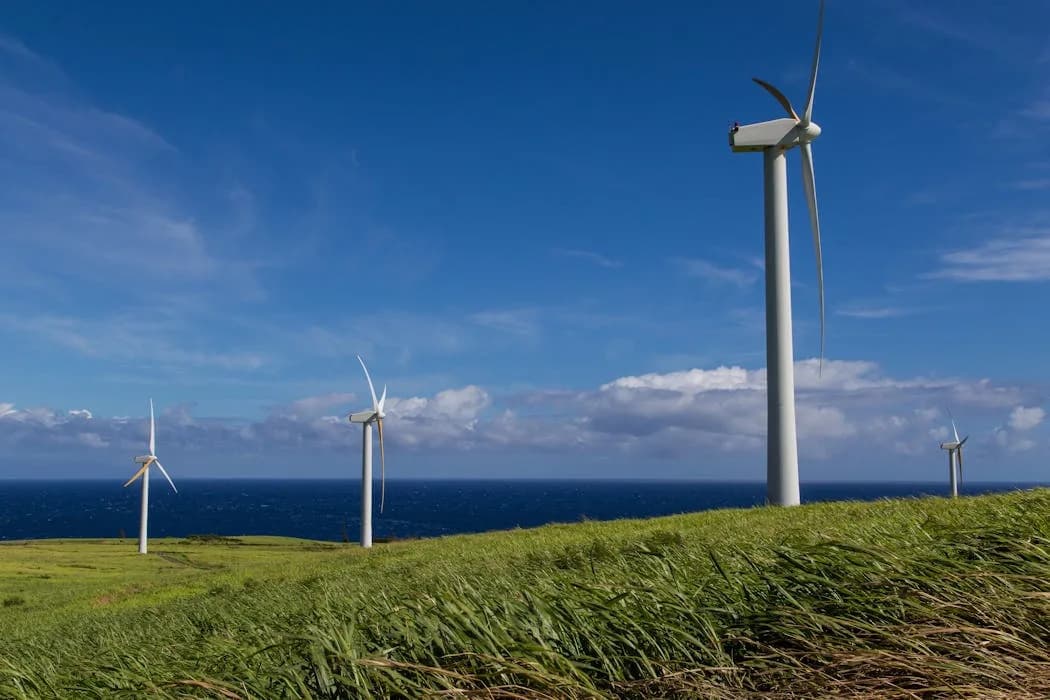
Over a third of Hawaii's power comes from renewable energy, which cuts its need for fossil fuel imports.John S Lander/LightRocket via Getty Images
When the federal government stalled on climate and energy policy during the first Trump administration, many states and cities wrote enforceable laws to speed the transition away from fossil fuels. Those laws reflected the best information available then, but in 2026 several governments have begun retreating from earlier commitments.
New York in May 2026 replaced a binding 2030 target to cut emissions by 40% with a looser 2040 goal. Governor Kathy Hochul cited high energy prices and the move also avoided a court ruling that her administration had missed a statutory deadline. In Virginia, the largest utility argues it cannot both meet surging demand and retire gas plants on the statutory timeline, and is seeking approval for a new gas "peaker" plant to keep expanding data centers powered. Hawaii recently signed a package that phases out a rooftop-solar tax credit, and California issued billions of dollars in pollution permits to refineries and heavy industry to ease fuel-price pressure — a decision that shifts local pollution and reduces revenue for public transit.
Rising energy prices, the removal of federal subsidies, and political shifts in Washington have given state leaders reasons and cover to roll back or loosen climate commitments. I understand the political and practical pressures — I worked on energy policy in the Biden White House — but the climate challenge remains. Abandoning the energy transition to blunt price inflation is the wrong response. Instead, states should update their playbooks to reflect mid-transition realities while still driving emissions down and protecting affordability.
Why The Mid-Transition Is Hard
Researchers call the current phase a "mid-transition": both clean and fossil systems are needed to meet demand. Gas plants that run only during peaks still impose fixed costs on customers. Transmission projects can take years to build. Utilities may keep investing in aging plants that would otherwise have been retired and replaced with cheaper renewable generation paired with storage.
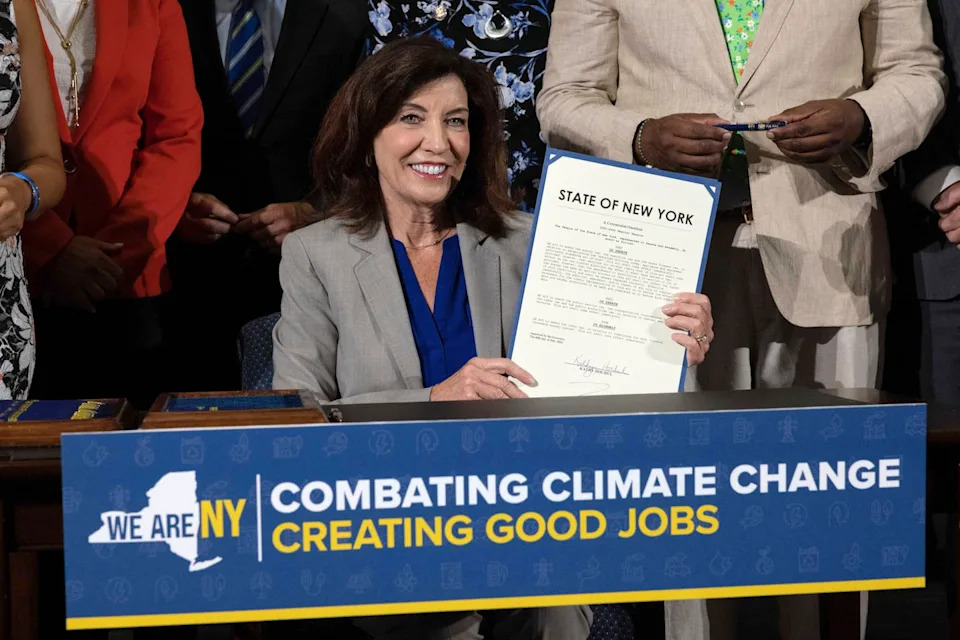
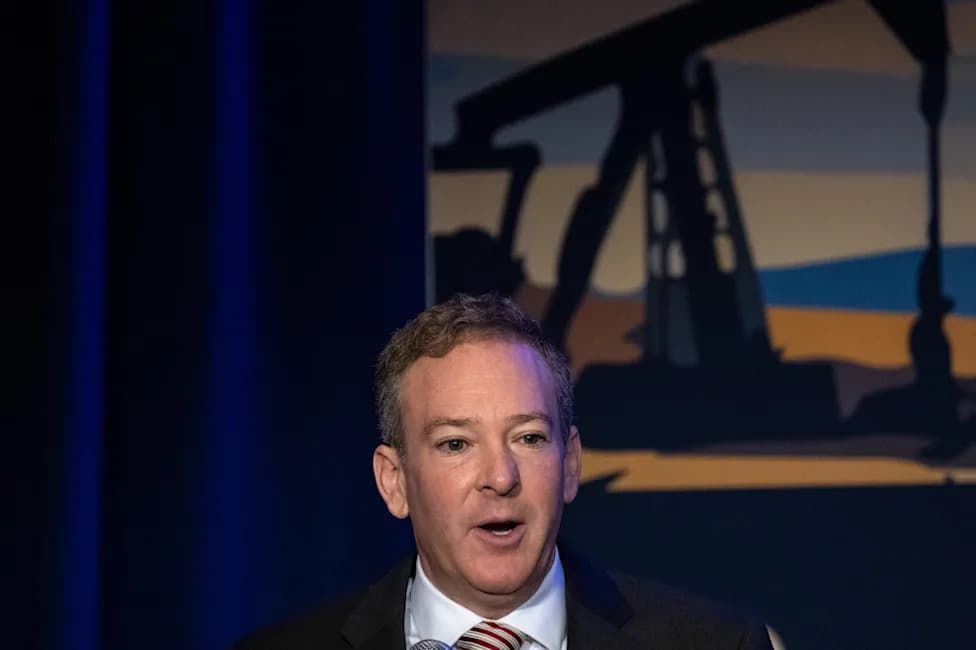
New York Gov. Kathy Hochul celebrated the passage of a climate law to reduce greenhouse gas emissions and create green jobs in 2022. In 2026, with the war in Iran stressing fuel supplies and the expansion of AI data centers demanding increasing power, she rolled back the state’s flagship climate law.AP Photo/Yuki Iwamura
Despite these frictions, wind, solar and batteries remain the cheapest sources for new power. In 2025 wind and solar generated a record 17% of U.S. electricity, and in 2026 nearly all planned new capacity is solar, wind or batteries. At the household level, swapping an electric-resistance heater for a heat pump can save a typical home roughly $1,530 a year while cutting emissions — savings that often require upfront investment and, historically, federal subsidies to smooth adoption.
Federal incentives created by the 2022 Inflation Reduction Act played a major role in lowering adoption costs for clean technologies. The subsequent One Big Beautiful Bill Act removed many of those incentives, including EV tax credits, heat-pump rebates, and funding for interstate transmission improvements, making state-level responses more urgent.
Four Practical Steps States Can Take
1. Use Data Centers And AI To Accelerate Electrification
Data centers are driving a large share of new electricity demand. States can require companies that create that demand to pay their fair share of grid upgrades, accelerating transmission and storage build-out that benefits households and electric vehicles. Artificial intelligence can also be deployed to combine satellite imagery, meter data and building records into near-real-time, block-by-block emissions maps — enabling targeted enforcement and faster mitigation where it matters most.
2. Embrace Smart Industrial Policy
The transition raises unresolved questions across manufacturing, freight, aviation and construction. During periods of technological change, industrial policy can steer investment into strategically important industries — from EVs and batteries to panels and critical minerals — while building local supply chains and jobs. States should partner with public universities and community colleges to solve technical problems and train the workforce that decarbonizing industries will require.
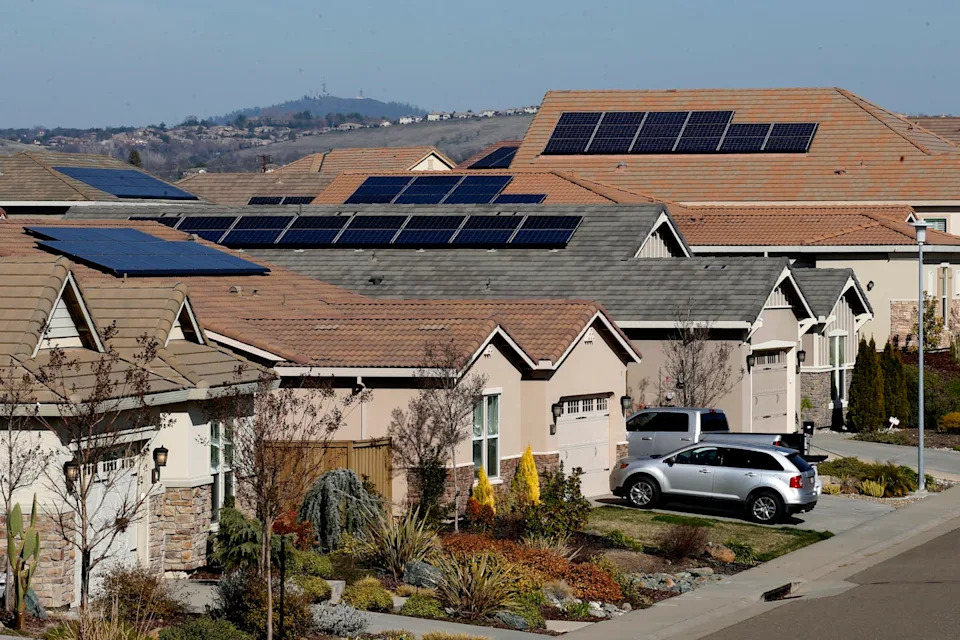
California still has the nation’s largest solar market, even after regulators rolled back incentives.AP Photo/Rich Pedroncelli
3. Build More Urban Housing Near Jobs And Transit
America faces a shortage of housing that keeps rents and commuting costs high. Compact, well-located housing reduces household energy use and transportation emissions: smaller units are cheaper to heat and living near transit cuts driving. States such as California, Oregon and Montana have taken steps to override restrictive local rules to expand housing supply — a pragmatic climate and affordability policy in one.
4. Support Carbon-Removal And Nature-Based Solutions In Rural Areas
Carbon-removal projects can deliver multiple benefits for rural economies. Restoring coastal marshes sequesters carbon and rebuilds storm buffers; adding biochar or mineral amendments can improve soil water retention and yields; smarter forest management reduces wildfire risk. Properly designed programs channel conservation, jobs and climate mitigation to communities that need them.
Policy Tradeoffs And The Path Forward
Rolling back targets may ease short-term political pressure, but it shifts costs and pollution to future years and to neighboring communities. The fastest, most equitable path forward balances near-term affordability with longer-term investment: require demand drivers to contribute to grid build-out, target subsidies to lower-income households, use AI and data to prioritize interventions, and align workforce and industrial strategy with decarbonization goals.
The nation has gone through several energy transitions — from wood to coal, coal to oil and gas, and now to a cleaner, electrified system. Each came with disruption but ultimately delivered net benefits. As an engineering professor, I remain optimistic: the fossil-fueled past was never as cheap as its defenders recall, and the coming system can be both cleaner and more affordable if states act pragmatically.
Author: Andres Clarens, University of Virginia. This piece is republished from The Conversation, a nonprofit independent news organization.
Help us improve.