Researchers at the University of Utah analyzed 48 family hair samples, some dating to 1916, to track lead exposure across the Wasatch Front. Mass spectrometry shows lead in hair falling from roughly 50 ppm before EPA regulation to about 10 ppm by the 1990s and under 1 ppm after 2020. The decline lines up with EPA policies that phased lead out of gasoline and other products, underscoring public-health benefits of those regulations.
Century-Old Mormon Hair Reveals Dramatic Drop in Lead Exposure After EPA Regulations
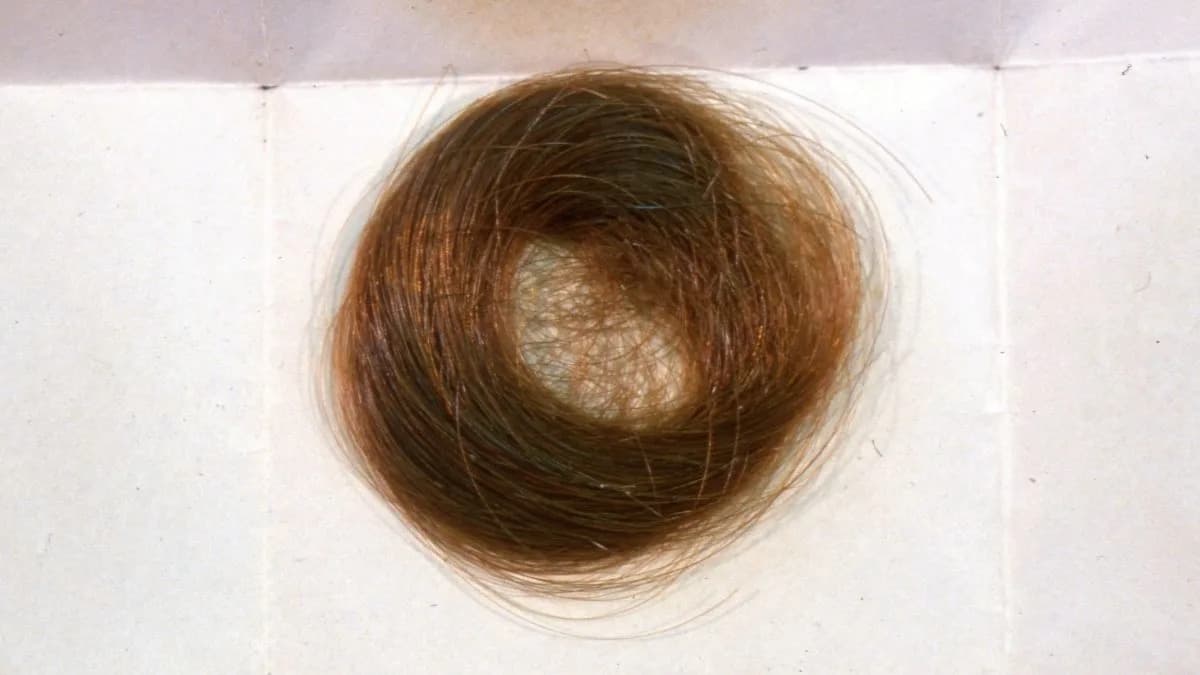
a lock of brown hair on a white piece of folded paper
Family keepsakes — locks of hair preserved in scrapbooks and journals — have become an unexpected archive of America's environmental history. A University of Utah team used 48 such samples, some collected as early as 1916, to trace a century-long fall in human lead exposure along Utah's Wasatch Front.
Study And Methods
Researchers measured lead concentrations in the preserved hair using high-precision mass spectrometry. Because lead accumulates in hair, these heirloom samples provided a rare opportunity to reconstruct personal exposure across decades and generations. Many samples came from members of Utah's Latter-day Saint community, where keeping childhood mementos such as hair locks and family journals is a common practice.

Subscribe to ScienceAlert's free fact-checked newsletter
Findings
Lead levels in the hair samples fell sharply after federal regulation began. The team reports roughly 50 parts per million (ppm) in samples from before the Environmental Protection Agency (EPA) existed, declining to about 10 ppm by the 1990s and averaging under 1 ppm in samples taken after 2020. The timing of the decline corresponds closely with EPA actions that phased lead out of gasoline and other consumer products following the agency's founding in 1970.
Thure Cerling, lead author: We should not forget the lessons of history. Those regulations have been very important for public health, even if they sometimes feel burdensome to industry.
Context And Sources Of Exposure
Before broad regulation, gasoline often contained large amounts of lead that was emitted from vehicle tailpipes and dispersed into air, soil and dust. In Utah, emissions from local smelting operations further increased community exposure. Removing lead from gasoline and consumer products over the past decades is widely credited with driving the population-level declines documented here.
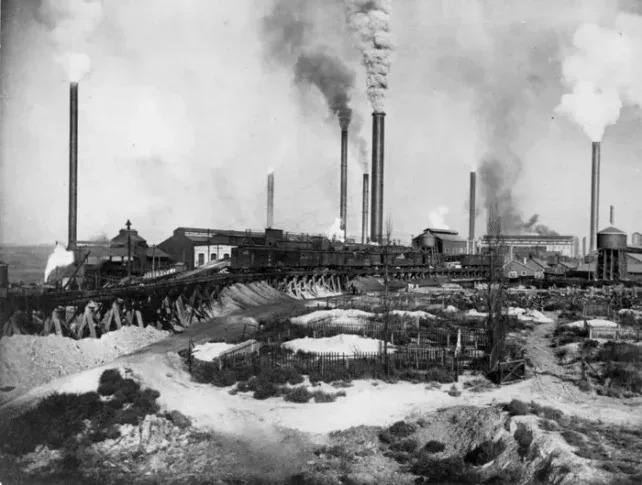
The US Mining and Smelting Co. plant in Midvale, Utah, 1906. (Photo used by permission, Utah Historical Society)
Why This Matters
- Lead is a potent neurotoxin linked to lowered IQ in children, mental-health risks, and higher risks of cardiovascular disease.
- Demonstrating a sustained drop in actual biological uptake — not just emissions — strengthens the evidence that regulation improved public health.
Limitations
The study uses a relatively small convenience sample (48 hair specimens) drawn from one region and a community with a particular cultural practice of preserving hair. While the temporal trend is clear and aligns with national policy changes, larger and more geographically diverse biological archives would help confirm how representative the magnitude of decline is across the United States.
The research was published in the Proceedings of the National Academy of Sciences.
Help us improve.