The Mexican government has fined Zinc Nacional $4.8m and ordered 24 corrective measures after Guardian and Quinto Elemento Lab investigations exposed heavy-metal contamination around the plant and broader toxic emissions in Monterrey. Authorities pledged a new industrial atmospheric monitoring network and updates to air and soil standards, while lawmakers and citizen groups push for tighter controls on toxic-waste imports and stronger emission monitoring. Residents and researchers demand transparent, real-time data and enforceable deadlines to ensure remediation protects public health.
Mexico Announces Sweeping Action on Industrial Pollution After Guardian Investigations
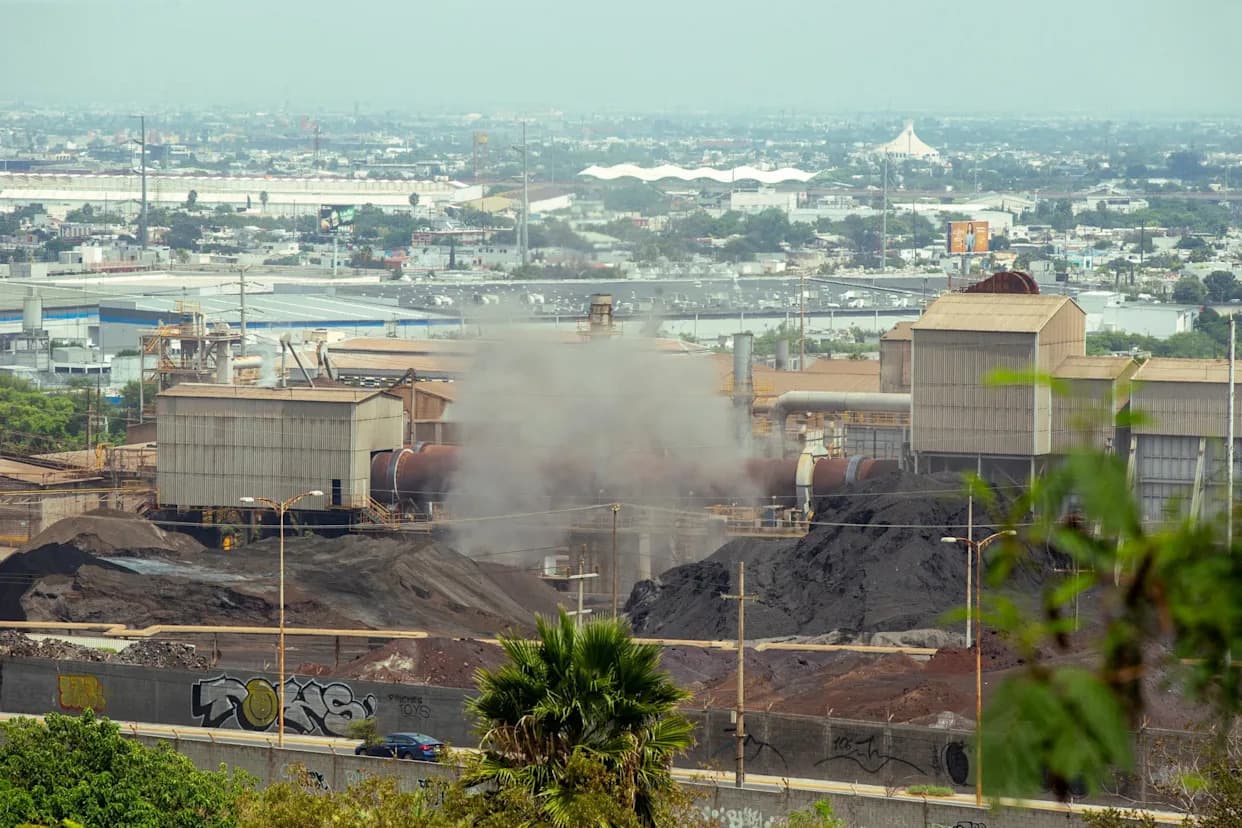
Northern Monterrey, Mexico, where pollution concerns have sparked scrutiny, with the Zinc Nacional plant at the center of ongoing environmental debates, on 13 September 2024.Photograph: Bernardo De Niz(Photograph: Bernardo De Niz)
The Mexican government has announced a broad package of measures to curb industrial pollution in Monterrey and beyond, following joint investigations by the Guardian and Quinto Elemento Lab that exposed heavy-metal contamination around a metal-processing plant and widespread toxic emissions across the region.
Government Response And Penalties
Federal authorities levied a $4.8m fine on Zinc Nacional and required the company to carry out 24 corrective measures. The company must relocate some operations outside densely populated areas, build improved containment and water-treatment facilities, remediate contaminated land, reforest 12 acres (5 hectares), and monitor future emissions.
New Monitoring And Standards
The government said it will create a new industrial atmospheric monitoring network described as "the first of its kind in Latin America." Officials say the system will measure industrial emissions including heavy metals, though operational details and whether the network will cover Monterrey alone or the entire country remain unclear.
Semarnat, the national environmental regulator, also announced plans to update air and soil contamination standards—some of which have not been revised for decades. In December the agency proposed tightening three industrial air-pollution standards, including a potential 50% reduction in allowable particulate matter emissions.
Investigative Findings And Health Concerns
Soil testing carried out with the investigations found elevated levels of lead, cadmium and arsenic inside and outside homes and schools near Zinc Nacional. One primary school recorded lead levels 1,760 times higher than the US threshold considered a human-health risk. Researchers also reported that some Monterrey-area facilities emit more toxic heavy metals than many US states, and that the region emits carbon dioxide at levels higher than nearly half of the world's nations.
"This agreement is a historic step forward for environmental justice in Mexico," said Martín Soto Jiménez, a toxicology researcher at UNAM who worked on soil sampling. He urged that any monitoring network publish real-time data and provide public access so citizens and scientists can analyze results.
Industry Response And Community Reactions
Zinc Nacional acknowledged some contamination on its property, which it attributed to a previous operator, and said its emissions are "well below regulatory parameters," citing its dust-control systems. The company denied that contamination is being dispersed into the air or carried to nearby water bodies.
Some residents remain dissatisfied, saying the government's measures focus on contamination within plant boundaries but do not sufficiently address health impacts in surrounding neighbourhoods. Local activists have demanded public access to remediation plans, soil-sample results and any future air-emissions data, along with enforceable deadlines for cleanup measures.
Political And Civic Push For Stricter Controls
Senator Waldo Fernández is drafting legislation to limit imports of toxic waste and require monitoring of heavy-metal emissions at facilities that process contaminated materials; he plans to introduce the bill in February. Citizen groups have mobilized: one is collecting signatures for a referendum to align Mexico's air standards with international guidelines, while the Group of 6 filed a lawsuit seeking a federal investigation of industrial emissions in the Monterrey region.
What’s Next: The effectiveness of these measures will depend on robust, transparent monitoring, timely public disclosure of data, enforceable deadlines for remediation and strong regulatory oversight to ensure companies follow through on corrective actions.
Help us improve.