The US Congress approved a $125 million cut to funds for replacing lead drinking-water service lines, prompting criticism from lawmakers and health advocates who say the move threatens children and low-income communities. The reduction, part of a larger spending bill, removes money from a $15 billion program created by the 2021 infrastructure law. The EPA warns no level of lead exposure is safe and estimates that full replacement could prevent substantial adverse health outcomes. Advocates say the cut undermines progress toward a 10-year national replacement goal.
Congress Cuts $125M From Lead-Pipe Replacement Funds, Drawing Sharp Criticism
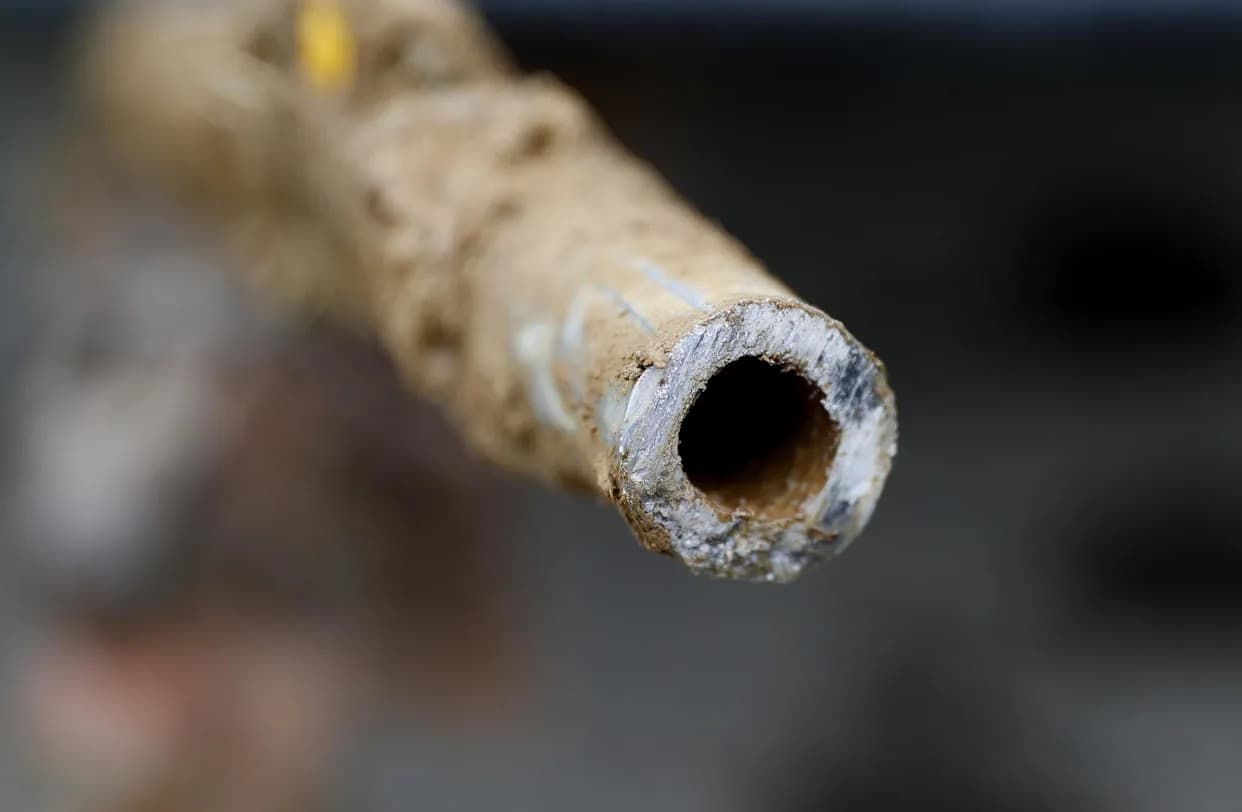
A lead pipe is shown after being replaced by a copper water supply line to a home in Flint, Michigan, on 20 July 2018.Photograph: Paul Sancya/AP(Photograph: Paul Sancya/AP)
There is widespread criticism from lawmakers, public-health advocates and community leaders after the US Congress voted to cut $125 million from funds earmarked to replace toxic lead drinking-water service lines — a change critics say will disproportionately endanger children and low-income communities.
What Happened
The reduction was included in a larger government spending bill and came amid contentious negotiations over funding for Immigration and Customs Enforcement (ICE). The cut removes $125 million from a program created by the 2021 Infrastructure Investment and Jobs Act, which originally set aside $15 billion to replace lead service lines and committed roughly $3 billion per year for five years to states.
Who Is Affected
States with high concentrations of lead service lines — including Michigan, Illinois, Texas and New York — are expected to be hit hardest. Local officials and public-health advocates say millions of Americans continue to face the risks of lead-contaminated water, and that the funding was urgently needed to accelerate replacements.
Health Stakes
The Environmental Protection Agency (EPA) and health experts say no level of lead exposure is safe. The EPA has estimated that fully removing lead service lines could prevent up to 900,000 infants from being born with low birth weight, preserve roughly 200,000 IQ points among children, and avert as many as 1,500 premature deaths from heart disease each year.
“Our work to rapidly replace every lead service line in America is reaching a critical moment, and this is an insult to every one of our communities struggling for access to clean water,” said Rep. Rashida Tlaib, chair of the Get the Lead Out caucus, whose Detroit-area district ranks among the nation’s highest in lead service lines.
Political Context
Lead service-line replacement funding won bipartisan approval in 2021, but money intended for that program was redirected by Republican leaders on the House appropriations subcommittee overseeing the Interior and Environment budget, who moved some of the funds toward wildfire prevention — a decision that drew strong objections from Democrats and public-health groups.
Advocates also note tension between federal rulemaking and shifts in estimates: in 2024 the Biden EPA enacted a rule requiring replacement of all lead lines within 10 years, while earlier federal estimates of how many lines remain have varied. The EPA estimated as many as 9 million lines needed replacement, though a previous methodology revision produced a lower estimate of about 4 million.
Local Impact
Chicago provides a stark example: crews there have replaced under 4% of the city’s roughly 400,000 lead service lines, and officials estimate it would cost about $3 billion to replace the rest. Public-health advocates warn that even relatively small cuts can delay projects and send a negative signal about long-term commitment to remediation.
“You can replace a lot of lead pipes for $125 million,” said Erik Olson, senior adviser to the Natural Resources Defense Council Action Fund. He called the cut “pennywise and pound-foolish,” citing studies that show replacement costs are far lower than the long-term health and social costs of lead exposure.
Outlook
House Democrats, led by Reps. Rashida Tlaib and Debbie Dingell, successfully limited a larger proposed cut — an earlier draft would have slashed $250 million — but advocates say the fight is far from over. Critics warn that repeated clawbacks could make it harder to meet the administration’s 10-year replacement target and risk worsening long-term public-health and economic outcomes.
Republican committee leaders did not respond to requests for comment.
Help us improve.